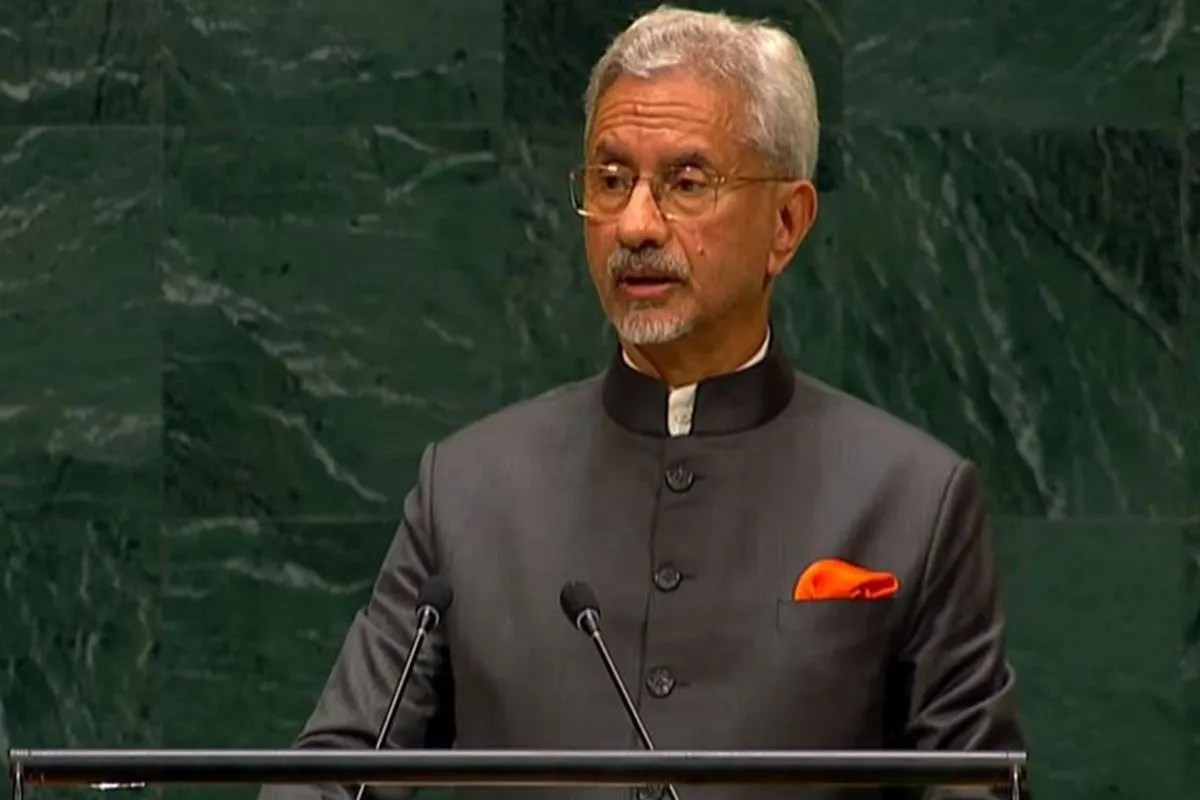
When the external affairs minister of a rising global power stands at the United Nations General Assembly podium and tears into the structural inequalities of modern geopolitics, people listen. Dr. S. Jaishankar did not mince words during his address at the UN, squarely putting the spotlight on what developing nations face daily: the relentless grip of the 4F crisis and the looming digital divide driven by artificial intelligence.
If you think these global diplomatic speeches are just empty rhetoric meant for evening news bulletins, you're missing the bigger picture. They outline the exact economic pressures hitting supply chains, digital independence, and resource distribution worldwide. Let's look at what the 4F crisis actually means, why India is pushing hard for sovereign AI models for the Global South, and why current international structures are failing to keep up. If you liked this piece, you might want to read: this related article.
Decoding the 4F Crisis Facing the Global South
We hear about inflation and supply chain blockages all the time, but the structural bottleneck hitting developing countries goes much deeper. Jaishankar explicitly called out the 4F crisis: Food, Fuel, Fertilizer, and Finance.
These aren't separate issues. They form an interconnected web of vulnerability. When financial markets tighten or international debt burdens explode, governments in the Global South struggle to import basic food supplies and critical agricultural fertilizers. Add climate disruptions, weather anomalies like super El Niño cycles, and ongoing conflicts from the Black Sea to the Middle East, and you get a recipe for systemic instability. For another angle on this development, see the latest update from NBC News.
Hنonestly, traditional multilateral bodies have proven utterly toothless in fixing this. Instead of reliable safety nets, developing nations often face skewed market rules, restricted access to capital, and volatile commodity prices dictated by Western financial centers. When fertilizer supply chains snap, farmers across Asia and Africa pay the ultimate price through crop failures and skyrocketing debt.
The Artificial Intelligence Divide and Sovereignty
Beyond basic survival commodities, a new frontier of inequality has emerged: artificial intelligence. For years, tech giants based in a handful of wealthy nations have tried to position themselves as the sole arbiters of digital progress. They build the models, own the data centers, and expect the rest of the world to simply buy the finished product.
Jaishankar firmly pushed back against this digital neo-colonialism at the UN. His stance is straightforward: every nation has the absolute right to build its own sovereign AI ecosystem and national models.
You can't just treat the Global South as a dumping ground for data collection or a passive consumer market while foundational decisions about algorithms and intelligence happen thousands of miles away. India's push—highlighted by initiatives like the AI Impact Summit—focuses on democratic access to computing resources, trustworthy systems, and localized solutions that target real human problems rather than generic corporate metrics.
When AI is developed without local context, it amplifies biases and undermines mutual respect between nations. That's why building indigenous capacity isn't a luxury; it's a core national security and economic requirement.
Why Current Multilateral Systems Are Cracking
The global order was built in 1945 for a completely different world. Today's reality is aggressively multi-polar, yet the institutions managing global peace and economics remain paralyzed by political self-interest.
We see this paralysis everywhere. From commercial shipping lanes facing security threats to the weaponization of economic dependencies, international rules are frequently bypassed by those who wrote them. Jaishankar's critique of the UN's passive stance on major global crises points to a profound institutional fatigue. When global bodies act as mutes spectators to terrorism, food shortages, and technological monopolies, they lose their legitimacy.
India's strategy in this chaotic environment has shifted toward acting as a reliable first responder and a voice for the marginalized. Whether it's securing maritime trade routes, stepping up energy supplies, or demanding fair representation in high-tech governance, the message from New Delhi is clear: you cannot exclude a massive chunk of humanity from critical decision-making tables and expect global stability to hold.
Take a hard look at how your own business, investments, or policy outlook accounts for supply chain resilience and digital sovereignty. Keep an eye on how regional tech policies evolve away from centralized Western monopolies. The nations that build local resilience today will weather the next wave of global shocks tomorrow.