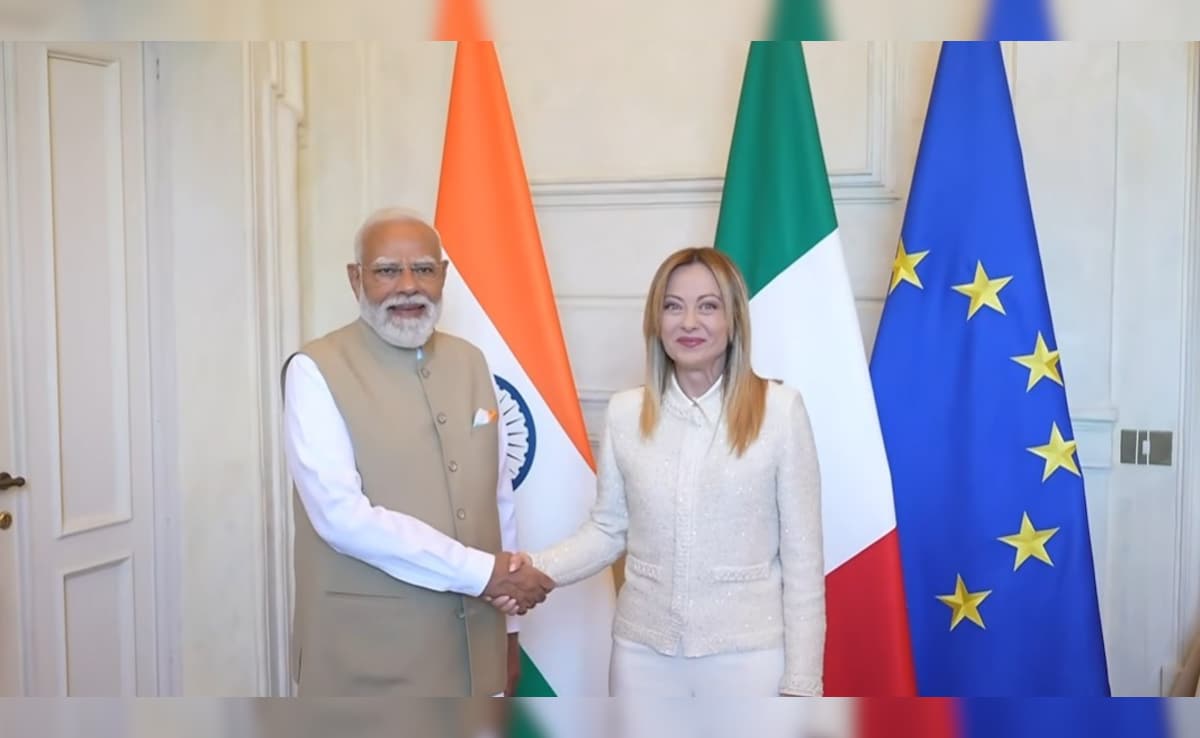
Mainstream financial media loves a good diplomatic handshake. Every time heads of state sign a bilateral cooperation agreement, editorial rooms churn out the same lazy narrative: a historic alignment, a major trade boost, a diversification milestone.
The recent high-profile elevation of ties between New Delhi and Rome follows this exact, tired script. We are told that Italy and India are building a strategic tech partnership that will redraw global supply chains.
It is a comforting story. It is also entirely wrong.
When you strip away the photo-ops and look at the hard economic realities, this sudden romance is not a structural shift in global trade. It is a tactical marriage of convenience between two economies facing severe internal bottlenecks. Calling it a major trade corridor ignores the massive structural frictions that both nations are desperately trying to hide.
The Illusion of the Alternative Tech Corridor
The prevailing narrative suggests that India and Italy are poised to build an alternative manufacturing and technology corridor. This thesis relies on a fundamental misunderstanding of what it takes to build a high-tech manufacturing ecosystem.
National strategies do not override economic geography. Let’s look at the data. Italy’s manufacturing sector is heavily specialized in high-end machinery, automotive parts, and luxury fashion. India is attempting to position itself as a mass-market semiconductor and electronics assembly hub. On paper, this looks complementary. In practice, the friction is immense.
High-tech manufacturing requires three things: cheap, ultra-reliable energy; frictionless logistics; and deep, localized component supply chains.
- The Energy Deficit: High-tech manufacturing plants require uninterrupted power. A single micro-fluctuation in voltage can ruin an entire batch of silicon wafers. India’s grid reliability has improved, but it still lags far behind East Asian benchmarks. Italy, meanwhile, has some of the highest industrial electricity prices in Europe, driven by its precarious energy import dependency.
- The Logistics Chokepoint: Moving goods between Genoa and Mumbai is not getting cheaper or faster. The Mediterranean-Suez-Indian Ocean route is increasingly vulnerable to geopolitical disruptions. Air freighting heavy industrial machinery is cost-prohibitive for mass production.
- The Missing Middle: Italy's industrial strength lies in its highly specialized Flexible Production Networks—small and medium-sized enterprises (SMEs) clustered in northern Italy. These family-owned businesses lack the capital, the risk appetite, and the bureaucratic stamina to navigate Indian state-level regulatory mazes.
I have spent years advising multinationals on supply chain relocation. Companies do not move operations because two prime ministers smiled at each other in front of a flag. They move because the unit economics demand it. Right now, the unit economics of an Italy-India tech corridor do not add up.
Why Italy Needs India More Than India Needs Italy
To understand why this partnership is being overhyped, look at the demographic and economic desperation driving Rome.
Italy is trapped in a structural stagnation trap. Its population is aging rapidly, its domestic market is shrinking, and its public debt is hovering around 140% of GDP. Italian industrial machinery manufacturers are desperate for growth markets because their traditional European buyers are slowing down.
+-------------------------------------------------------------+
|               THE REALITY OF THE TRADE IMBALANCE           |
+------------------------------+------------------------------+
|   Italy's Pain Points        |   India's Real Ambitions     |
+------------------------------+------------------------------+
| * Stagnant domestic market   | * Direct access to US/EU     |
| * Rapidly aging workforce    | * Sovereign tech autonomy    |
| * Desperate for export growth| * Domestic manufacturing base|
+------------------------------+------------------------------+
India represents a massive market of 1.4 billion people. But India is not interested in merely being an export destination for high-end Italian goods. New Delhi’s policy is explicitly protectionist. Programs like Make in India use tariff barriers to force foreign companies to manufacture locally.
This creates an immediate conflict of interest. Italy wants to sell machines made in Emilia-Romagna. India wants those machines made in Tamil Nadu or Gujarat. When Italian SMEs realize that accessing the Indian market requires transferring their intellectual property and setting up factories thousands of miles away, the enthusiasm evaporates.
The Failed Promise of Technology Transfer
The most flawed premise of the current discourse is that Italy will act as a gateway for technology transfer to India. This assumes that technology flows freely across borders via diplomatic decree.
True technology transfer happens through corporate acquisitions, joint ventures, and deep R&D integration. It does not happen through government memorandums of understanding.
Look at the automotive sector. India’s homegrown giants have spent decades developing their own platforms or partnering with Japanese and Korean firms. Italian automotive expertise, outside of niche luxury brands, has struggled to find a mass foothold in India. The historical exit of major Italian brands from the Indian passenger vehicle market highlights a deeper misalignment in consumer preferences and cost structures.
Furthermore, India's tech ambitions are focused on the future: artificial intelligence software, space tech, and green hydrogen. Italy's strengths are largely in legacy industrial engineering. Rome cannot export a digital edge it does not possess.
Dismantling the Common Defenses
Whenever these criticisms are raised, defenders of the bilateral alignment point to a few standard talking points. Let's look at those arguments.
"Bilateral trade numbers are hitting record highs"
This is a classic case of confusing inflation with real volume growth. Global commodity price surges have inflated trade values across the board. If you look at the actual volume of goods moved, the growth is marginal. More importantly, the trade remains heavily skewed toward low-value commodities rather than high-tech goods. India exports refined petroleum, steel, and textiles; Italy exports industrial valves and packaged machinery. This is a 20th-century trade profile masquerading as a 21st-century tech alliance.
"Both nations share a strategic interest in diversifying away from China"
De-risking is a great buzzword for corporate boardrooms, but it rarely survives contact with reality. Italian manufacturers rely heavily on Chinese sub-components. Indian electronics assemblers rely heavily on Chinese components. Trying to build an Italy-India supply chain that bypasses China is like trying to build a house without a foundation. The supply chains of both nations remain deeply tethered to Beijing, regardless of what the communiqués say.
The Real Winner of This Alignment
If the trade corridor is a mirage, who actually benefits from this sudden diplomatic push?
The benefits are almost entirely political. For Rome, aligning with New Delhi provides a geopolitical foothold in the Indo-Pacific, allowing Italy to project relevance beyond Europe. For New Delhi, securing closer ties with a core EU member state offers a valuable diplomatic counterweight and a potential ally in ongoing free trade agreement negotiations with Brussels.
But let’s not mistake geopolitical posturing for commercial reality.
For business leaders and investors, the lesson is clear. Stop tracking diplomatic announcements to guide your capital allocation. Do not build an expansion strategy on the assumption that a new trade era has dawned between Rome and Mumbai.
The structural bottlenecks—regulatory friction, energy disparities, logistical distances, and protectionist mandates—remain completely untouched by diplomatic ink. If you want to build a resilient supply chain, look to the boring, unglamorous regions where infrastructure works, supply ecosystems are already dense, and the economics work without a government press release. Everything else is just noise.
Stop looking at the handshakes. Look at the freight rates, the power grids, and the tariff schedules. That is where the truth lies. And right now, the truth says that this partnership is a ghost ship.


