Forty years ago, the Italian electorate looked at a smoking reactor shell in Ukraine and recoiled in absolute terror. They went to the ballot boxes in 1987 and voted overwhelmingly to shut down their own atomic power stations, effectively exiling the country from the nuclear age. For decades, mentioning uranium or fission in polite Italian society was a political death sentence. The trauma ran deep, sustained by environmental campaigns and a national consensus that safety could never be guaranteed.
That consensus is fracturing.
A new generation of Italians, born long after the fallout settled across Europe, views the anti-nuclear stance not as a badge of ecological wisdom, but as an expensive, fossil-fueled mistake. They are watching energy bills skyrocket, listening to climate warnings grow more dire, and asking a very simple question. Why did we abandon the most reliable clean energy source on the planet because of a Soviet design flaw?
This shift is not merely a youthful rebellion against older voters. It is a calculated economic and environmental awakening driven by the realities of the twenty-first century. Italy remains heavily dependent on imported natural gas, leaving its industrial base vulnerable to geopolitical shocks. To understand how the nation reached this inflection point, one must look past the old political slogans and examine the hard math of modern energy grids.
The Cost of the 1987 Panic
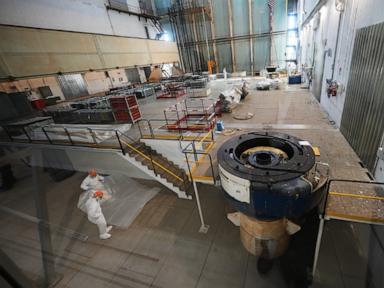
To grasp why young Italians are rethinking atomic energy, you have to look at what replaced it. When Italy decommissioned its four operational reactors—Caorso, Latina, Garigliano, and Trino Vercellese—it did not step into a green utopia. Instead, the country traded nuclear independence for a dangerous addiction to imported hydrocarbons.
Italy currently imports the vast majority of its energy needs. When natural gas prices spike across the European market, Italian manufacturers pay the price. Factories in the industrial north face operational costs that their French neighbors, backed by a fleet of state-owned nuclear plants, simply do not encounter.
The 1987 referendum was born out of a specific historical panic. The Chernobyl disaster occurred in April of the previous year, sending a radioactive cloud over Europe and fueling widespread public anxiety. Italian politicians capitalized on the emotional wave. They framed the vote as a binary choice between safety and catastrophe. Nuance was thrown out the window. The country mothballed functional facilities, retrained engineers for other sectors, and settled into a comfortable denial about where its electricity actually came from.
For a long time, cheap Russian gas masked the foolishness of this decision. That cushion disappeared overnight when geopolitical conflicts severed traditional supply lines. Suddenly, the true price of the 1987 vote became impossible to ignore. Energy poverty crept into households, and heavy industry began sounding alarms about competitiveness.
The Demographic Split
Walk into a university engineering department in Milan or Rome today, and you will find a stark ideological divide. Professors who lived through the Chernobyl fallout still harbor deep skepticism. They remember the panic, the contaminated milk warnings, and the sudden political consensus.
Their students, however, see things differently.
The twenty-somethings leading this new debate were raised on documentaries about climate change rather than news reports about Soviet reactor meltdowns. They understand that solar and wind are vital, but they also understand intermittency. They know that the sun does not always shine and the wind does not always blow. Without grid-scale storage—which remains prohibitively expensive and technologically limited—fossil fuels must fill the gap when renewables falter.
Nuclear power provides the baseload stability that wind and solar lack. Younger Italians recognize this scientific reality without the emotional baggage carried by their parents and grandparents. They view modern reactor designs—such as small modular reactors and Generation IV systems—as entirely different beasts compared to the RBMK reactor that exploded at Chernobyl. These newer designs feature passive safety mechanisms that make catastrophic meltdown physically impossible under the laws of physics, not just human operational discipline.
The Political Re-Alignment
Prime Minister Giorgia Meloni’s government has quietly begun testing the waters for a nuclear renaissance. It is a calculated risk, but public opinion data suggests the political ground has shifted. Confindustria, the influential Italian employers' federation, has been vocal about the necessity of reconsidering atomic power if Italy wants to hit its decarbonization targets without de-industrializing.
Opposition parties still harbor factions reflexively opposed to the technology, but the old knee-jerk hostility is wearing thin. Even among center-left voters, support for clean energy has begun to outweigh historical anxieties. People want lower bills, and they want lower carbon emissions. When presented with the mathematical reality that deep decarbonization is nearly impossible without firm power sources, the ideological resistance begins to crumble.
Yet, political will is only half the battle. Rebuilding a domestic nuclear sector from scratch requires a multi-decade commitment that transcends shifting parliamentary majorities. Italy lacks the supply chains, the regulatory frameworks, and the specialized workforce it once possessed. Training a new generation of nuclear engineers and technicians will take years, and finding sites willing to host radioactive waste repositories remains a monumental domestic hurdle.
The NIMBY Obstacle and the Waste Reality
Even as polls show rising acceptance among the youth, the classic "Not In My Backyard" syndrome remains a formidable adversary. Every Italian region wants cheap, clean electricity, but none of them want the waste facility down the road.
Italy currently struggles to finalize a national repository for its low and intermediate-level radioactive waste, a legacy of its past medical, industrial, and historical research operations. Finding a location for high-level spent fuel from a new generation of reactors will provoke fierce local pushback.
Transparency is the only antidote to this resistance. Past governments handled waste siting with opacity and condescension, treating the public like children who needed to be managed. Modern advocates argue that any future nuclear push must involve binding local economic incentives, absolute scientific transparency, and rigorous oversight. If communities are given a genuine stake in the project and verifiable safety guarantees, the political friction can be managed. If the state reverts to top-down decrees, the backlash will be swift and fatal.
The Broader European Context
Italy is not operating in a vacuum. Its European neighbors are making radically different bets on the future of energy.
France derives the vast majority of its electricity from nuclear power, insulating its economy from certain external shocks while maintaining some of the lowest carbon intensity in the developed world. Germany, by contrast, chose a different path, completely phasing out its nuclear fleet only to find itself increasingly reliant on coal and imported gas during periods of low renewable output.
Young Italians look across the Alps and see the French model providing industrial stability, while the German model offers a cautionary tale of expensive compromise. The contrast is not lost on a generation concerned about employment prospects and economic stagnation. They want an economy that works, powered by energy that is both clean and reliable.
The Long Road Ahead
The resurgence of the Italian nuclear debate is not a guaranteed victory. Rebuilding a high-tech energy sector requires capital, political endurance, and a level of bureaucratic competence that Italian institutions often struggle to muster.
The obstacles are real. The financial outlay is staggering. The timeline is measured in decades.
And yet, the alternative is far more perilous. Clinging to an outdated phobia born in 1986 guarantees that Italy will remain a secondary economic player, beholden to foreign energy suppliers and trapped in an endless cycle of high costs and high emissions. The generational divide is ultimately a fight over realism versus nostalgia. The elders look backward to a disaster that happened forty years ago in a different country, under a different political system. The youth look forward to a century that requires hard choices, steady power, and the courage to correct the mistakes of the past.