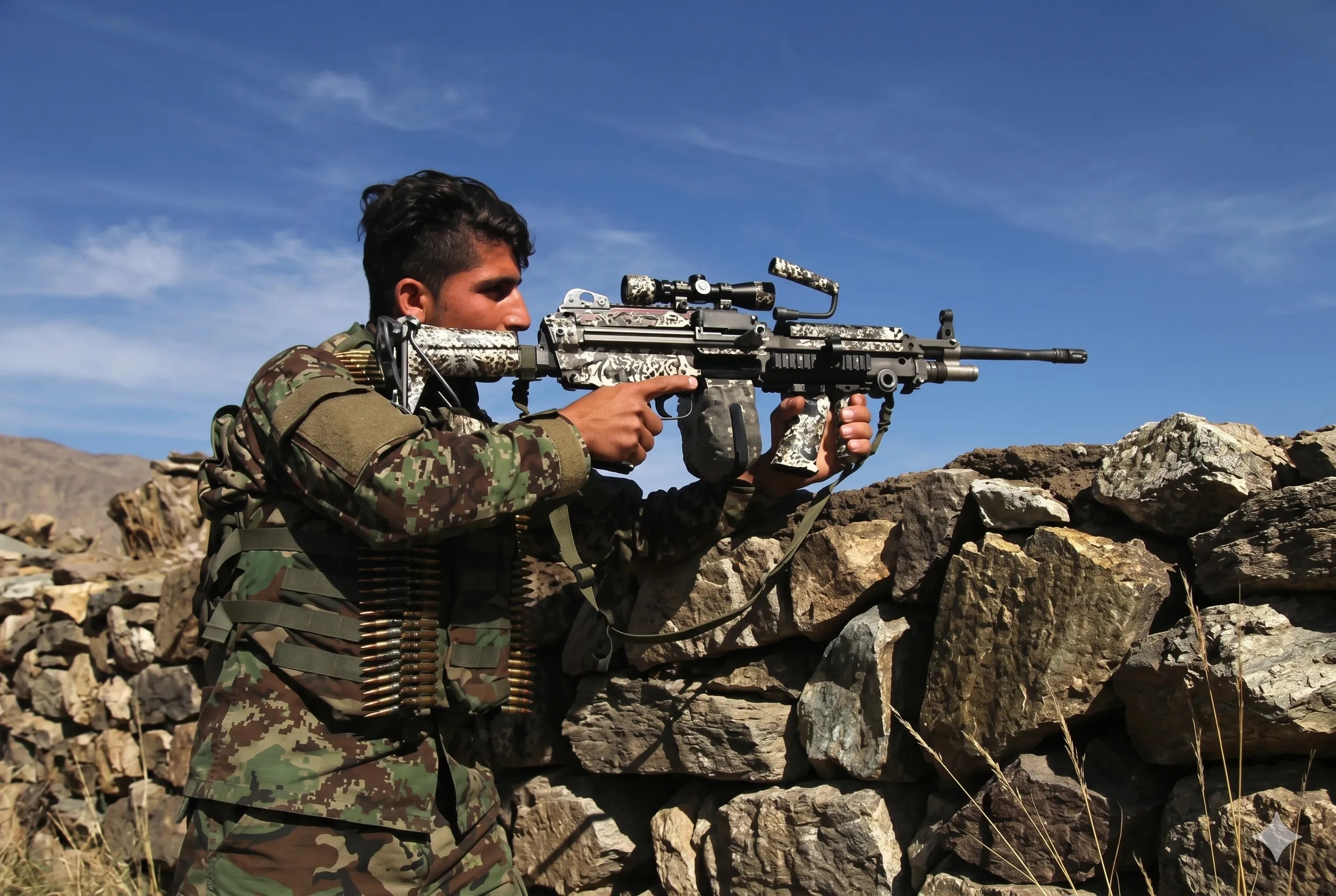
Mainstream media outlets love a sensationalist headline. They see a leaked internal memo from a terrorist organization and immediately spin a narrative about a high-tech asymmetric warfare crisis. Case in point: the recent panic over ISIS warning its operatives about the dangers of Artificial Intelligence. The lazy consensus among defense analysts is that global terror networks are on the verge of weaponizing advanced algorithms to crash grids, automate drone swarms, or automate lone-wolf recruitment. They claim AI is a double-edged sword that will "light up homes but also burn them down."
They are entirely wrong.
This is not a story about terrorists mastering a new weapon. This is a story about institutional paranoia, operational paralysis, and an organization realizing it is fundamentally incompatible with the modern digital world. ISIS is not preparing to deploy AI; they are terrified of it because it dismantles the one thing a clandestine network needs to survive: human trust.
The Paranoia Paradigm: Why Terrorists Hate Automation
Terrorist organizations do not operate like silicon valley startups. They do not look at efficiency metrics or scalability frameworks. They operate on absolute secrecy, rigid hierarchy, and deep ideological vetting.
When ISIS issuing warnings telling its fighters to avoid AI tools, mainstream pundits assume it is because they fear Western intelligence agencies will hack their LLMs (Large Language Models). That is a surface-level misunderstanding. The real crisis inside these networks is internal.
- The Dilution of Ideological Purity: AI generates text based on probability, not faith. When a mid-level operative uses an AI tool to draft a manifesto or a propaganda piece, they are introducing a secular, math-based layer into a system that demands absolute theological rigidity.
- The Operational Footprint: Clandestine cells survive by being invisible. Using commercial or even self-hosted open-source AI models requires computational power, data transfer, and digital footprints. For a group that survived by using couriers and burner phones, AI is an existential tracking beacon.
- The Destruction of Trust: If a cell leader cannot verify whether a strategic plan or a religious edict was written by an emir or generated by a machine, the chain of command collapses.
I have spent years analyzing how extremist groups adapt to consumer tech. They mastered social media encryption because it was a one-way megaphone. AI is different. It is an interactive mirror. It forces the user to input data to get an output. For a terrorist, inputting data into an algorithm is operational suicide.
Dismantling the Myth of the "AI Terrorist"
Let us answer the question that keeps defense bureaucrats up at night: Can terrorists use AI to build weapons?
The short answer is no, not in the way the media wants you to believe. The premise of the question is flawed. People ask, "How do we stop ISIS from using AI to design chemical weapons?" They should be asking, "Why would a terrorist group use an unreliable chatbot to design something they can already find in a 1990s PDF manual on the dark web?"
The LLM Hallucination Problem
Consider the mechanics of generative AI. Large Language Models do not "know" facts; they predict the next logical word in a sequence based on training data. If an operative asks an unfiltered model to optimize a ricin synthesis recipe, the model is just as likely to hallucinate a chemistry step that explodes in the operative's face as it is to provide an accurate schematic.
Thought Experiment: Imagine a lone-wolf actor trying to code a polymorphic malware strain using a jailbroken LLM. The model outputs 90% functional code, but hallucinates a syntax error in the critical payload delivery mechanism. The actor executes the code, it fails locally, alerts the ISP, and federal authorities are at his door within an hour.
AI does not democratize competence. It accelerates existing capability. If a group lacks advanced biochemical labs and PhD-level scientists, an AI chatbot will not magically grant them those assets. It will merely give them a false sense of security that leads to operational failure.
The Western Intelligence Blindspot
While the media frets over ISIS fighters using chatbots, Western intelligence agencies are making a much more dangerous mistake: they are relying on AI to do the job of human analysts.
We are seeing billions of dollars funneled into predictive policing algorithms and automated threat-detection software. The theory is that if we feed enough raw data—satellite imagery, intercepted communications, financial transactions—into a neural network, it will spit out the location of the next terror cell.
This is an expensive illusion. I have watched agencies pour fortunes into these automated systems only to find they generate millions of false positives.
| System Type | Promised Utility | Real-World Operational Failure |
|---|---|---|
| Predictive Threat Models | Flags potential radicalization based on browsing habits. | Floods human analysts with thousands of false flags, causing alert fatigue. |
| Automated Translation/Sentiment | Scans extremist forums for actionable intent. | Misses nuanced cultural idioms, dark sarcasm, and shifting slang used by real operatives. |
| Facial Recognition Networks | Tracks high-value targets across borders. | Easily spoofed by low-tech counters (hats, lighting shifts, basic makeup) while misidentifying innocents. |
When you replace an experienced analyst who understands regional dynamics with an algorithmic dashboard, you do not make the world safer. You just make your bureaucracy look more high-tech while missing the actual plot.
The Real Danger Is Not Weaponization, It Is Noise
If AI will not turn ISIS into a superpower, why should we care? Because the threat has shifted from potency to volume.
The real disruptive force of AI in asymmetric warfare is the weaponization of chaos. A single operative cannot build a dirty bomb using an LLM, but they can use open-source deepfake tools to generate a video of a regional leader declaring martial law or insulting a religious symbol.
They do not need to hack the Pentagon. They just need to flood the information ecosystem with enough synthetic garbage that the public loses faith in any verifiable truth.
- Synthetic Agitprop: The old method of creating propaganda videos required a production crew, editors, and distribution networks. Today, a single person with a consumer-grade GPU can generate thousands of hyper-realistic images and audio clips a day, tailor-made to exploit specific tribal fractures in Western societies.
- Algorithmic Poisoning: Terrorist networks do not need to build their own AI; they can poison the public datasets that Western companies use to train their models. By coordinated posting of specific narratives, altered facts, or skewed translations across open platforms, they can subtly warp the outputs of the tools everyday citizens rely on.
This is not a tactical military threat. It is cognitive sabotage.
Stop Looking for Code; Watch the Culture
The mainstream media wants you to look at AI as a weapon of execution. It is not. It is an environment.
ISIS is telling its operatives to stay away from AI because the leadership understands something Western analysts do not: AI forces centralization. To get the best models, you need massive data centers, stable power grids, and hyper-connected infrastructure. These are all things that exist under the control of sovereign states and massive corporations.
By forcing the conflict into the digital realm of artificial intelligence, the West actually holds the structural advantage. The moment a terrorist group tries to scale their operations using AI, they are playing on our home turf, using our architecture, subject to our surveillance apparatus.
The real vulnerability is our own obsession with automation. We are so eager to remove the human element from intelligence, defense, and analysis that we are creating a fragile system ripe for disruption by low-tech means. A terrorist group does not need an advanced AI to beat a machine; they just need to wait for us to rely on the machine so much that we forget how to think for ourselves.
Stop looking for the AI-engineered super-weapon. It does not exist. Watch the organizations that reject the technology entirely; they are the ones who understand that in a world of automated noise, raw human malice remains the most unpredictable variable.