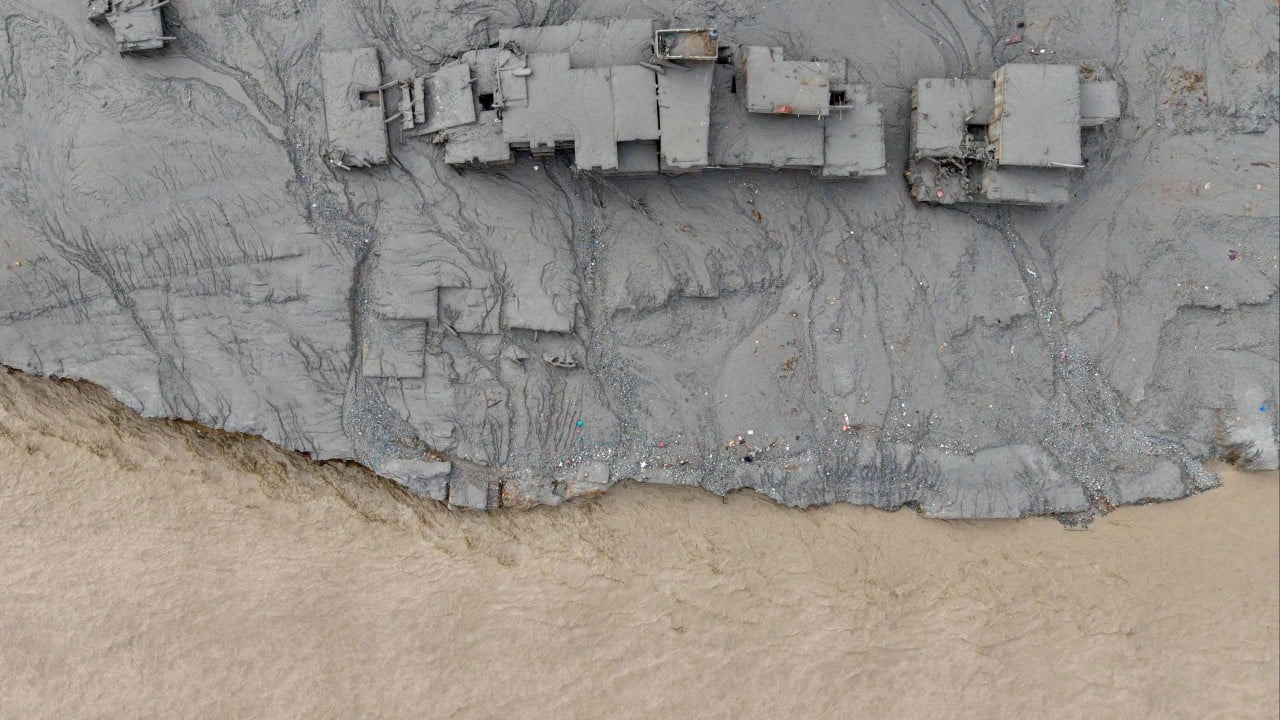
The air up there does not merely chill; it strips the breath from your lungs. At four thousand meters above sea level, every step is a negotiation with gravity. The oxygen is thin, a cruel ghost of what your body expects, and the wind howls down from the Himalayan peaks like an un-appeased ancestor.
For generations, the people of these high valleys lived in an isolation carved by granite and ice. Trade moved at the speed of a mule's hoof, navigating treacherous mountain passes where a single misstep meant a drop into the gray abyss. Then came the promise of steel. Also making news lately: What Most People Get Wrong About the Devastating Nepal Floods.
Maps were unrolled across polished mahogany tables in distant capitals. Engineers traced thick, bold lines across topography that had previously defied human ambition. This was not merely an infrastructure project. It was an engineering epic. A grand iron vein designed to punch through the roof of the world, bridging China and Nepal, stitching together two vastly different spheres of economic and cultural gravity through tunnels of darkness and bridges of suspended vertigo.
They called it progress. More insights regarding the matter are explored by Al Jazeera.
But progress, when forced through the teeth of the world's most unforgiving terrain, demands a toll. And sometimes, the collection starts before the first locomotive ever rolls.
Imagine standing inside a mountain. Not a cozy hillside, but a subterranean vault of fractured gneiss and unstable schist, weeping water from hidden glacial pockets.
(Note: This scene is a narrative recreation based on standard tunneling hazards in high-altitude seismic zones.)
Listen. Can you hear it?
It is not the sound of machinery. It is the low, groaning sigh of the mountain settling. The rock remembers the tectonic collision that thrust it into the sky millions of years ago, and it does not take kindly to men with diamond-tipped drills carving out its core.
When the disaster struck—the sudden, violent collapse in a preliminary excavation zone, triggered by a toxic mix of monsoon saturation and subterranean fault activation—the headlines flashed across international tickers with clinical brevity. Casualties reported. Work suspended. Delays anticipated.
Dry facts. Disinfected numbers.
Numbers do not bleed. Numbers do not scream in the dark while rescue teams fight against suffocating mud and falling debris.
Behind the corporate press releases and the optimistic geopolitical commentary lies a starker, heavier truth. The China-Nepal railway corridor is an extraordinary feat of modern civil engineering, relying on hyper-advanced tunneling technology and immense financial capital. Yet, mountain ranges do not care about budgets. They do not respect diplomatic treaties. When you tunnel through the Himalayas, you are picking a fight with an active geological beast.
Consider what happens next.
Every major engineering undertaking of this scale reaches a crucible moment. For the Channel Tunnel, it was the financial near-collapse and safety reviews following early fires. For the Qinghai-Tibet railway, it was conquering the permafrost. For this trans-Himalayan iron highway, the recent disaster is that crucible.
It forces a reckoning.
Can safety protocols written for lowland plains ever truly suffice when applied to vertical verticality? The answer, whispered by veteran geologists who have spent decades dodging rockfalls in Tibet and Nepal, is an uncomfortable no. Standard engineering models fail when confronted with micro-seismicity, erratic hydro-geology, and altitude sickness that degrades human reaction times at the working face.
When workers step into those helmets each morning, they are placing their lives on the line not just against nature, but against the relentless pressure of corporate and national timelines. Deadlines do not breathe at four thousand meters. Oxygen does not negotiate.
And yet, the project will not stop. The geopolitical gravity is too strong. Beijing and Kathmandu are tethered by necessity—trade, diplomacy, and the quiet competition for regional influence. The rail line represents jobs, commerce, and a shifting balance of power in South Asia.
So the engineers go back to the drawing boards. They redesign support structures. They inject more high-strength grout into the porous rock. They install advanced seismic sensors that can listen to the micro-fractures of the stone before it breaks.
They try to outsmart the mountain.
The sun dips below the jagged horizon, casting a bloody light across the frozen peaks of Langtang. Down in the valley, the lights of the construction camp flicker like distant stars against an immense, indifferent dark.
The steel will come. The tunnels will pierce the granite. Locomotives will eventually rumble through the heart of the roof of the world, carrying cargo and passengers across boundaries that once seemed insurmountable.
But the mountain remains. It stands silent, scarred by concrete and ambition, guarding its ancient secrets while the world below races toward tomorrow, leaving a trail of iron in its wake.