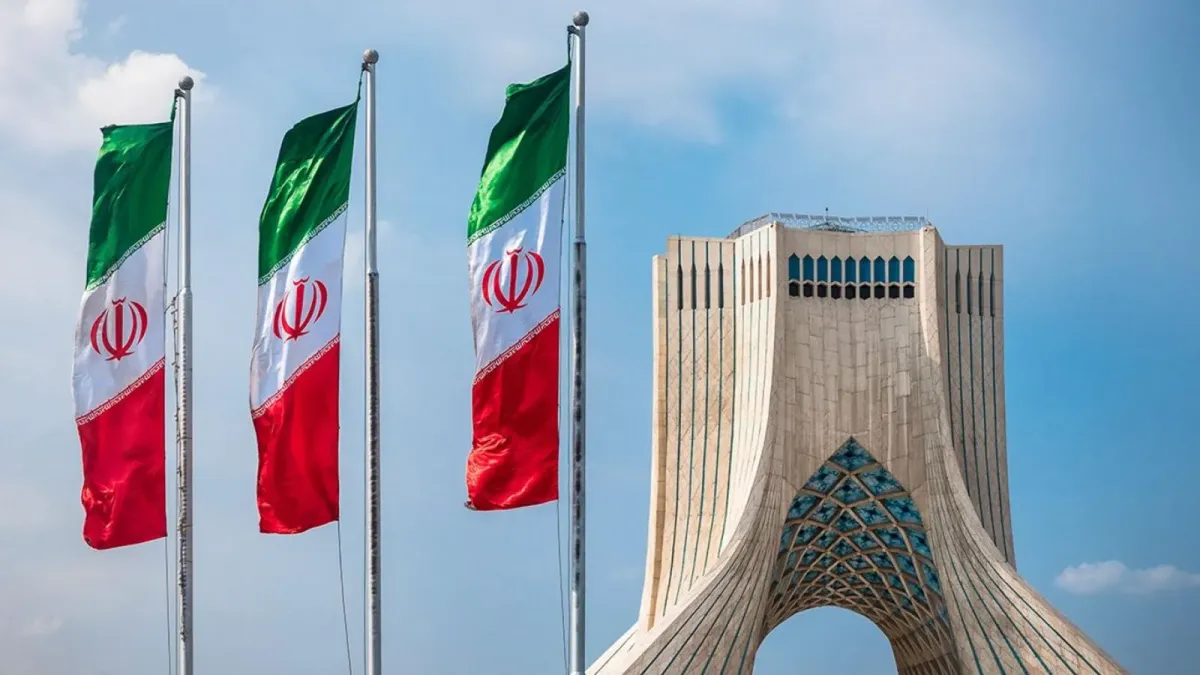
Mainstream foreign policy coverage treats the Strait of Hormuz like a loaded gun pointed at the global economy, with Tehran’s finger resting casually on the trigger. Every time an Iranian official floats a conditional peace framework—like keeping a two-day de-escalation plan on the table while linking maritime security to American concessions—the financial press panics. Analysts dutifully recite the statistics: roughly twenty percent of global petroleum liquids pass through that narrow twenty-one-mile chokepoint. They frame the standoff as a simple extortion racket where Iran threatens to sink tankers unless Washington lifts sanctions or backs down on regional demands.
This narrative is entirely backwards. For a closer look into this area, we suggest: this related article.
Tehran is not threatening to close the Strait of Hormuz because Tehran cannot afford to close the Strait of Hormuz. Linking maritime security to American demands is not a display of asymmetric dominance; it is a desperate diplomatic bluff designed to extract concessions using an asset Iran relies on more than the United States ever will.
The Myth of the Chokepoint Doomsday Button
In twenty years of tracking maritime risk and energy logistics across the Persian Gulf, I have watched commodity desks and corporate boards burn millions of dollars hedging against a phantom blockade. Every geopolitical flare-up triggers the exact same reflex. Traders buy out-of-the-money call options on Brent crude, shipping insurers slap war-risk premiums onto hulls transiting the Gulf of Oman, and pundits dust off Cold War wargames predicting $150 oil within forty-eight hours. For additional information on this issue, in-depth reporting can also be found at Al Jazeera.
They all miss the fundamental physics of energy geography.
A naval blockade is a suicide pact for the blockader when that blockader’s entire economy depends on the very waterway it is mining. Iran’s survival—both economically and politically—runs through Hormuz. Virtually all of Iran’s crude oil exports, including the discounted barrels flowing to independent refiners in China, must transit the strait. Worse for Tehran, Iran lacks the refining capacity to meet its own domestic fuel needs without steady maritime logistics and imported condensate components.
If the Islamic Revolutionary Guard Corps (IRGC) drops sea mines into the shipping lanes or fires anti-ship ballistic missiles at Very Large Crude Carriers (VLCCs), the global oil market will certainly spike. Brent will gap up violently. Inflation expectations will surge.
And within seventy-two hours, Iran’s own revenue stream drops to absolute zero.
Compare that to the United States. Thanks to the shale revolution, the U.S. is the largest producer of crude oil and natural gas on earth. Domestic refineries on the Gulf Coast run primarily on North American grades from the Permian Basin and Western Canada. While oil is a globally priced commodity—meaning an international supply shock still hurts American drivers at the pump—the physical security of U.S. energy supply does not depend on the Strait of Hormuz. The countries that actually depend on those shipments are China, India, Japan, and South Korea.
Imagine a scenario where Tehran actually executes a total closure of the waterway. Washington wouldn't even need to bear the sole diplomatic burden of assembling a coalition. Beijing—Iran’s sole economic lifeline and largest crude buyer—would be forced to intervene immediately to stop its own industrial base from starving of energy. Tehran knows this. Washington knows this. Only the headlines pretend otherwise.
Decoding the Two-Day Plan Bluff
When Iranian diplomats state that a short-term de-escalation framework remains on the table, while explicitly tying Hormuz security to American concessions, they are practicing classic coercive diplomacy. Political scientist Thomas Schelling defined this decades ago: the power to hurt is most effective when held in reserve, not when expended. Once you pull the trigger, your bargaining power vanishes.
By keeping a two-day proposal alive in the press, Tehran achieves three specific objectives without firing a single shot:
- Manufacturing Negotiating Currency: Iran enters diplomatic talks with severe structural disadvantages—crippling financial isolation, domestic currency collapse, and degraded regional proxies. By artificially linking routine maritime transit to nuclear or sanctions relief, Tehran creates a bargaining chip out of thin air. They are offering to sell Washington something Washington already has: an open waterway.
- Exploiting Western Risk Aversion: Democratic administrations and European allies are hypersensitive to energy price spikes ahead of election cycles or during periods of sticky inflation. Tehran does not need to sink a tanker to inflict political pain on the White House; it only needs to make Lloyd’s of London raise insurance rates enough to spook energy futures.
- Projecting Domestic Strength: Hardline factions inside Tehran require constant proof that the regime is dictating terms to Washington rather than capitulating to economic pressure. Framing maritime security as a favor granted conditionally by Iran satisfies domestic political theater while diplomatic backchannels remain open.
The lazy consensus in newsrooms treats Iran's statement as an ultimatum. In reality, it is a plea for relevance. If Iran truly possessed the escalation dominance to dictate terms in the Persian Gulf, it wouldn't need to beg for a two-day window to trade maritime safety for sanctions relief.
What Everyone Gets Wrong About Asymmetric Naval Warfare
Whenever analysts push back against the blockade myth, they inevitably retreat to the asymmetric warfare argument. They point to the IRGC Navy’s fleet of fast-attack craft, midget submarines, coastal anti-ship cruise missiles, and swarm drones. The argument goes that Iran doesn't need to defeat the U.S. Fifth Fleet in a symmetrical battle; it just needs to make the Strait of Hormuz uninsurable for commercial shipping.
This is technically true in the short term and strategically irrelevant in the medium term.
First, commercial shipping does not simply vanish when risk rises; it adapts. During the Tanker War of the 1980s—when both Iran and Iraq actively attacked hundreds of commercial vessels—oil never stopped flowing out of the Persian Gulf. Ships were reflagged, naval escorts were organized under Operation Earnest Will, and freight rates adjusted to compensate crews for the hazard. Even during recent Red Sea disruptions caused by Houthi missile attacks, global trade rerouted or absorbed the friction without triggering a systemic collapse.
Second, modern maritime domain awareness has radically altered the survivability of swarm tactics. The U.S. Fifth Fleet, headquartered just across the water in Bahrain, operates integrated unmanned surface vessels, persistent overhead surveillance, and layered air defenses designed specifically to neutralize low-cost drone and fast-boat threats before they reach commercial shipping lanes.
Third, there is a massive operational difference between harassing a single vessel and closing a maritime chokepoint. Harassing a tanker—seizing a vessel over a manufactured legal dispute or buzzing a destroyer with drones—is calibrated friction. It keeps oil prices elevated by five to ten dollars a barrel, acting as an invisible subsidy for Iranian crude exports. Closing the strait entirely crosses the threshold into full-scale regional war, triggering overwhelming kinetic retaliation against Iran's naval bases, radar installations, and remaining export terminals on Kharg Island.
To be fair, relying on rational deterrence always carries a tail risk. Miscalculation is real. An overzealous local commander in Bandar Abbas could misread radar signatures, sink a commercial vessel, and trigger an escalation spiral nobody in Tehran or Washington actually wanted. That is the legitimate danger of keeping military forces in tight proximity during diplomatic standoffs. But confusing accidental escalation with a deliberate strategic capability is bad analysis.
Stop Asking If Iran Will Close the Strait
If you are an executive, an investor, or simply a reader trying to make sense of Middle Eastern geopolitics, you are asking the wrong question. Stop asking whether Iran will close the Strait of Hormuz. Start asking how much friction Iran needs to maintain to maximize its own oil revenue without triggering military retaliation.
Let's dismantle the common myths driving bad decisions right now:
- Does a stalemate in talks mean $120 oil is inevitable? No. Global crude markets are currently buffered by spare production capacity sitting in Saudi Arabia and the United Arab Emirates, alongside resilient non-OPEC supply growth from the Americas. Unless physical barrels are permanently removed from the market—not merely delayed by a few days—price spikes from diplomatic posturing fade rapidly.
- Can the U.S. Navy guarantee zero disruption to commercial tankers? No. No naval force can prevent a determined coastal actor from launching a drone or seizing a slow-moving merchant ship in littoral waters. Security in Hormuz is about deterrence and rapid response, not an impenetrable shield.
- Are bypass pipelines enough to render Hormuz obsolete? Not completely, though they blunt the impact. Saudi Arabia’s East-West Pipeline (Petroline) and the UAE’s Habshan-Fujairah pipeline can bypass the strait, moving several million barrels per day directly to the Red Sea and the Gulf of Oman. They cannot absorb the entirety of Gulf exports, particularly liquefied natural gas (LNG) from Qatar, which has no pipeline alternative.
How to Actually Read Geopolitical Energy Headlines
If you want to navigate energy markets or international business without getting whipsawed by every diplomatic cable out of Tehran or Washington, ignore the press releases and track physical realities.
Watch the physical freight spreads, not the headlines. When diplomatic tensions are genuinely approaching a kinetic breaking point, Very Large Crude Carrier (VLCC) day rates on the Middle East Gulf-to-China route surge before the news hits mainstream media. If diplomats are trading threats about Hormuz security, yet tanker charter rates remain flat, the market is telling you the threat is pure theater.
Track Iranian floating storage. When Tehran genuinely expects military strikes or a blockade, it accelerates loading onto tankers and moves them out of the Persian Gulf into floating storage off Malaysia and Singapore to protect its cash flow. When Iranian tankers sit calmly at Kharg Island loading terminals, Tehran has zero intention of shutting down the waterway.
Fade the initial geopolitical spike. Over the past decade, buying crude oil on the morning of a Middle Eastern diplomatic ultimatum has been one of the fastest ways to lose money in commodities. Without physical destruction of export infrastructure, geopolitical risk premiums decay within days as traders realize supply chains remain intact.
Tehran will continue to dangle two-day peace plans, issue conditional warnings, and link the safety of global shipping lanes to its own list of grievances. Washington will continue to posture, deploy carrier strike groups, and reject extortion. Both sides understand the exact boundaries of the game. The Strait of Hormuz stays open not because diplomats reach an agreement, and not because Iran shows restraint, but because closing it destroys the only economy Tehran actually cares about saving.


