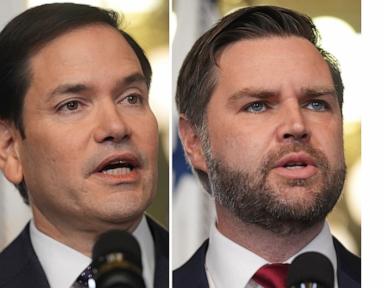
Don't let the public smiles fool you. The battle to inherit the MAGA movement is playing out right now in the high-stakes world of Middle East diplomacy.
While President Donald Trump dominates the headlines, Vice President JD Vance and Secretary of State Marco Rubio are quietly positioning themselves for 2028. The current crisis with Iran isn't just a national security headache. It's a live-fire audition for the next leader of the Republican Party.
On the surface, both men insist they're just executing Trump's directives. They deny any rift. But look closely at how they're handling the tense negotiations with Tehran and the cracks in their unified front become glaringly obvious. They represent two fundamentally different philosophies trying to coexist under one administration.
The Pragmatist vs the Traditionalist
The divide isn't about loyalty to Trump. It's about how they view the world and America's role in it.
JD Vance represents the populist, anti-interventionist wing of the party. He’s a child of the Midwest and a Marine Corps veteran who built his brand on the idea that foreign wars have bled America dry. For Vance, avoiding protracted conflicts isn't a tactic. It's the whole point.
Marco Rubio comes from a completely different school of thought. The son of Cuban immigrants, Rubio spent over a decade in the Senate building a reputation as a traditional foreign policy hawk. He views American power through a lens heavily influenced by the Ronald Reagan era. He believes in a global order where American strength checks hostile actors.
Dan Fried, a former assistant secretary of state now with the Atlantic Council, captured the dynamic perfectly. He noted that Rubio speaks within the construct of the free world and its importance. Vance, on the other hand, rejects that construct. He doesn't want to fight for what he considers abstractions.
Two Different Paths in the Middle East
The tension between these two worldviews is playing out in how the administration divides its labor in the Middle East. Right now, Vance is leading the direct diplomacy with Iran, while Rubio is managing the delicate situation with Lebanon and Israel.
Look at the timeline of the recent peace talks:
- April 2026: Trump administration officials revealed that Rubio was highly skeptical of getting a solid deal with Iran. He flat-out declined to lead the U.S. delegation to the first ceasefire negotiations in Islamabad, Pakistan.
- Spring 2026: Vance stepped into the vacuum. He flew to Pakistan to spearhead those inconclusive talks.
- June 2026: Vance led the U.S. team to Switzerland. This trip followed the signing of a highly fragile memorandum of understanding between the U.S. and Iran.
Vance is betting big on diplomacy. He has repeatedly talked up the chances of securing a broad agreement with Tehran. It’s a massive political gamble. Trump even joked recently that he would blame Vance if the Iran talks fell apart. That looks a lot like a political setup where Vance takes the fall if things go south.
Meanwhile, Rubio is playing a much more cautious, agnostic game. He's keeping his distance from the fragile Iran truce, which has already been tested by repeated exchanges of fire. Instead, Rubio focused his energy on a preliminary framework agreement regarding Lebanon. He also spent time touring Arab Gulf countries like Bahrain to shore up traditional alliances.
The Secret Battle Over Israel and Spheres of Influence
The most shocking policy divergence is how both men view America's closest ally in the region: Israel.
Vance has broken with traditional Republican orthodoxy by openly criticizing Israel’s military actions in Lebanon. He publicly claimed that Trump is frustrated with Israeli operations against Hezbollah. Vance's logic? Those strikes anger Iran and make a broader diplomatic deal with Tehran nearly impossible to reach.
Rubio has stayed fiercely loyal to the traditional pro-Israel line. He’s held his tongue on Israel's aggressive posture, preferring to work behind the scenes on regional frameworks that don't give concessions to Tehran.
This points to a deeper strategic disagreement. Foreign policy experts worry that the administration is drifting toward a "sphere of influence" model. Under Vance's diplomatic approach, Iran might emerge weaker but ultimately better off than before because Washington is willing to tolerate its regional dominance in exchange for a temporary peace. That's a concession a traditional hawk like Rubio would never willingly accept.
Rubio Moves His Pieces on the Board
Vance has the higher-profile role right now, but Rubio is playing the long game inside the Washington bureaucracy.
While public attention is fixed on Vance's flights to Switzerland, Rubio has quietly been remodeling the National Security Council. He’s used his dual leverage as Secretary of State and a key national security advisor to install close allies in top White House positions.
Rubio's aides are quick to tell reporters that he will defer to Vance if the Vice President decides to run in 2028. Don't buy it. You don't reshape the White House national security apparatus unless you plan on wielding serious power for a long time.
What This Means for the GOP
The Iran crisis has stripped away the illusion that the post-Trump Republican Party will have a single, unified foreign policy. The debate between Vance's populist realism and Rubio's peace-through-strength internationalism is the defining ideological struggle of the modern GOP.
If Vance pulls off a lasting, historic deal with Iran, he locks down his status as the natural heir to the MAGA crown. He proves that "America First" diplomacy can yield results without launching new wars.
If the truce collapses and Iran escalates its aggression, Rubio’s skepticism will look prophetic. He will be vindicated as the adult in the room who warned against trusting an adversary.
Pay close attention to the diplomatic cables coming out of Washington and the Middle East over the next few months. The future of American foreign policy—and the 2028 Republican primary—is being written right now in the details of the Iran negotiations. Watch which side of the party blinks first.