The foreign policy establishment is panic-buying antacids again. Following statements from Iran’s envoy to Moscow suggesting Tehran might "allow" transit through the Strait of Hormuz in exchange for transit fees, the predictable chorus of doom-mongering has begun. Mainstream analysts are frantically calculating the shock to global oil supply, predicting a catastrophic spike in crude prices, and treating this diplomatic trial balloon as an unprecedented structural shift in maritime law.
They are missing the entire point.
The lazy consensus treats this "Hormuz Toll Booth" concept as a terrifying new geopolitical reality. In truth, it is a desperate financial gambit wrapped in a logistical impossibility. More importantly, it exposes the massive, unexamined vulnerability not of the West, but of Iran’s own economic life support system.
If you are rewriting your energy portfolio or advising clients to hedge against a permanent closure or state-enforced toll system in Hormuz, you are reacting to the noise. Let us look at the signal.
The Legal and Practical Myth of the Toll Gate
Let us address the legal reality immediately. The mainstream media loves to point out that the shipping lanes in the Strait of Hormuz lie within the territorial waters of Iran and Oman. From this, they deduce that Iran has the sovereign right to demand a cover charge.
This ignores the United Nations Convention on the Law of the Sea (UNCLOS). Specifically, it ignores the regime of transit passage through straits used for international navigation.
The Mechanics of Transit Passage: Under international maritime law, ships enjoy the right of unimpeded transit passage through such straits solely for the purpose of continuous and expeditious transit. Coastal states cannot suspend this passage, nor can they levy taxes or tolls simply for the act of passing through.
Iran signed UNCLOS in 1982 but never ratified it. However, the United States and the vast majority of the maritime world view these provisions as customary international law.
I have spent years analyzing maritime risk and trade flows. When a state attempts to unilaterally rewrite customary international law by dropping a toll booth into a chokepoint that handles over 20% of the world’s petroleum liquids, they are not executing a policy. They are launching an extortion racket.
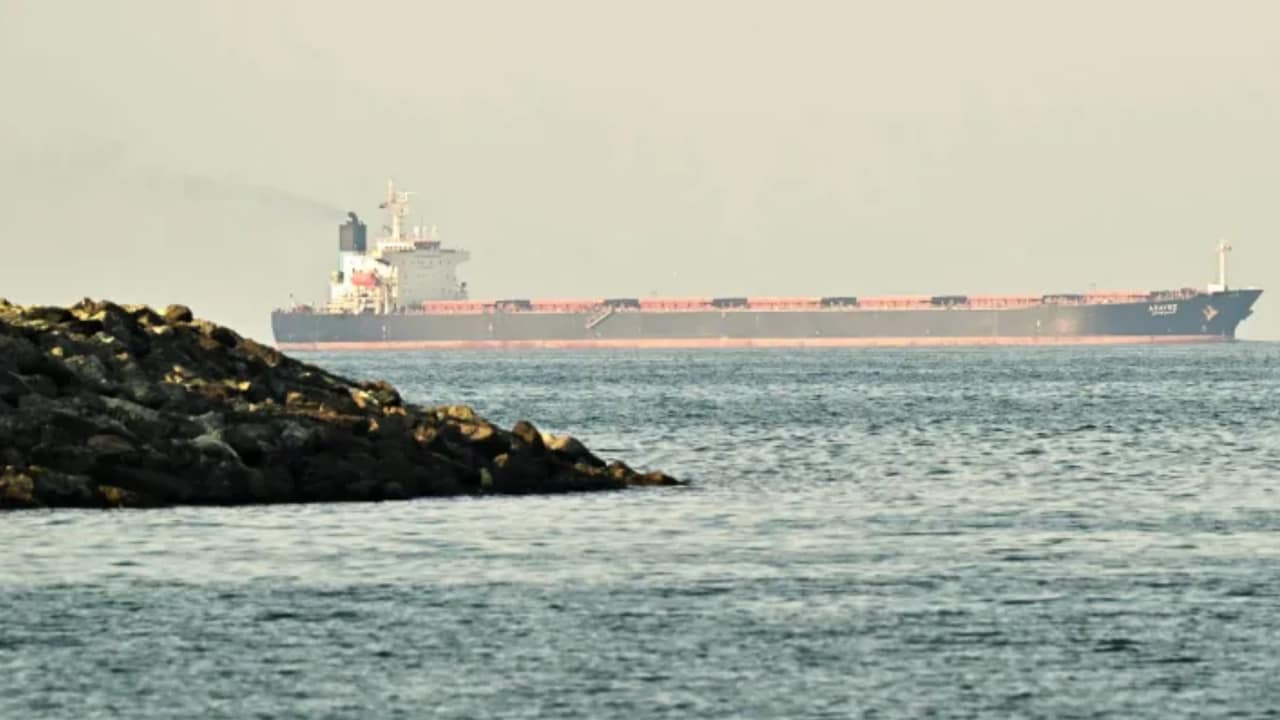
To enforce a fee, you must possess the unchallenged ability to collect it. Imagine the actual mechanics of this scenario:
- An oil tanker flying a Panamanian flag, owned by a Greek conglomerate, chartered by a Chinese state enterprise, carrying crude to Japan, enters the strait.
- The Iranian Revolutionary Guard Corps (IRGC) demands a transit fee via radio.
- The captain, acting on corporate orders to avoid recognizing a rogue tariff, refuses.
What happens next? Does Iran board the vessel? Does it seize a Chinese-bound cargo?
If Tehran enforces the toll by force, it triggers an immediate insurance default. The Joint War Committee in London would instantly skyrocket Hull and Machinery (H&M) premiums to prohibitive levels. Shipping companies would refuse to enter the Gulf without naval escorts.
The moment the US Navy, alongside international coalitions, begins escorting commercial shipping through the strait—as they did during Operation Earnest Will in the 1980s—the Iranian toll booth evaporates. Tehran knows this. The envoy’s statement is not an operational plan; it is a diplomatic poker chip.
The Hidden Victim of a Hormuz Crisis is Iran
The conventional narrative assumes that Iran holds all the cards because it sits on the northern bank of the chokepoint. The assumption is that Western economies suffer while Iran sits back and watches the world burn.
This is a fundamental misunderstanding of energy codependency.
Iran’s economy is fundamentally broken, hollowed out by decades of sanctions and systemic mismanagement. Its primary economic lifeline is the export of crude oil and petroleum products, overwhelmingly directed toward China via a complex network of dark fleet tankers.
Where do those tankers load their cargo? Kharg Island, Caspian ports, and various terminals inside the Persian Gulf.
+-------------------------------------------------------------+
|                THE HORMUZ DILEMMA FOR IRAN                  |
+-------------------------------------------------------------+
|  If Iran chokes the Strait to collect tolls:                |
|                                                             |
|  1. Insurance rates skyrocket for ALL vessels.              |
|  2. The "Dark Fleet" carrying Iranian crude refuses to risk  |
|     seizure or exorbitant premiums.                         |
|  3. Beijing pressures Tehran to stop disrupting Chinese     |
|     energy imports.                                         |
|                                                             |
|  Result: Iran suffocates its own economy to spite the West. |
+-------------------------------------------------------------+
If Iran disrupts transit through the Strait of Hormuz by demanding illegal fees or threatening non-compliant vessels, it directly chokes its own economic throat.
The dark fleet tankers that carry Iranian crude rely on anonymity and low-profile operations. They are not built to navigate contested military zones where navies are actively boarding ships to check toll receipts. If the strait becomes a hot zone, the risk premium for transporting Iranian oil becomes untenable even for the most daring smugglers.
Furthermore, consider the Chinese angle. Beijing is the largest importer of Persian Gulf crude. It buys from Saudi Arabia, Iraq, the UAE, and Iran. A unilateral Iranian toll that disrupts this flow directly harms Chinese economic interests.
Do you truly believe Tehran will risk the wrath of its only major geopolitical patron and economic buyer just to collect a few million dollars in maritime protection money? Absolutely not.
Dismantling the Premise of the "Fragile Global Economy"
Every time an Iranian official mentions Hormuz, the market reacts with a predictable, knee-jerk spike in Brent crude futures. Algorithms are programmed to fear the chokepoint.
But the global energy landscape is not what it was in 1973, or even 2003. The premise that a disruption in Hormuz automatically breaks the global economy is outdated.
1. Redundant Infrastructure Exists
Saudi Arabia possesses the East-West Crude Oil Pipeline (Petroline), which can move up to 5 million barrels per day from its eastern oil fields directly to the Red Sea port of Yanbu, bypassing Hormuz entirely. The UAE operates the Habshan–Fujairah pipeline, capable of moving 1.5 million barrels per day directly to the Gulf of Oman, well outside the strait. While these pipelines cannot handle the entire volume of Gulf exports, they provide a massive safety valve that prevents absolute market starvation.
2. Strategic Reserves Are Weaponized
The United States and other IEA member nations hold billions of barrels in Strategic Petroleum Reserves (SPR). While the US SPR has been drawn down significantly in recent years, the collective western inventory remains a potent tool to blunt short-term supply shocks. A politically motivated toll scheme would trigger coordinated international releases, flooding the market and neutralizing the price impact Iran hopes to achieve.
3. The Structural Shift in US Production
The United States is the world's largest producer of crude oil. It is no longer the captive buyer it was during the twentieth century. A price spike caused by Iranian posturing hurts consumers at the pump, yes, but it also incentivizes a massive surge in domestic fracking and drilling, ultimately reducing OPEC and Iranian market share permanently.
The Dangerous Downside of Dismissing the Threat
To be absolutely fair, taking a contrarian stance does not mean assuming zero risk. There is a scenario where this posturing turns ugly, and we must analyze it without emotion.
If Iran, pushed to the brink by domestic unrest or a total collapse of its proxy networks, decides to execute an irrational economic kamikaze strategy, they will not use a polite system of "transit fees." They will use asymmetric warfare.
- Smart Sea Mines: The IRGC possesses thousands of advanced, bottom-dwelling acoustic and magnetic mines. Dropping these into the shallow shipping lanes of the strait takes hours but takes months to clear.
- Swarm Boats: Fast attack craft armed with anti-ship missiles can saturate the defenses of commercial tankers.
- Loitering Munitions: Low-cost drones launched from the Iranian coast can strike the bridges of tankers, rendering them unnavigable.
If Tehran chooses this path, it is not trying to collect a toll. It is trying to burn the global financial system down with it.
But writing an article about "transit fees" to Moscow is the exact opposite of this kamikaze strategy. It is the action of a state that desperately wants to monetize its geographic position because its internal finances are in shambles. It is a confession of economic weakness, not a demonstration of military dominance.
The Correct Question to Ask
The financial press is asking: "How much will the Hormuz toll cost shipping companies?"
The correct question is: "Why is Iran trying to negotiate a maritime shakedown through a Russian intermediary right now?"
The answer lies in the changing dynamics of global sanctions evasion. As Western sanctions on Russian oil forced Moscow to develop its own massive dark fleet, Russia and Iran began competing for the same subterranean logistics networks and the same Chinese buyers. Tehran is feeling the squeeze.
By floated the idea of a toll booth in Hormuz via its envoy in Moscow, Iran is signaling to Russia—and by extension, China—that it demands a cut of the broader Eurasian economic realignment. It is an admission that its oil revenue alone is no longer sufficient to sustain the regime.
Stop reading the mainstream headlines that treat every pronouncement from a diplomat as an existential threat to global commerce. The Strait of Hormuz remains open because Iran cannot afford to close it, and they lack the power to tax it.
The next time an algorithm sells off your energy assets based on a headline about Iranian transit fees, buy the dip. The toll booth is a phantom, the threat is an economic suicide pact, and the market consensus is, as usual, completely blind to the mechanics of reality.