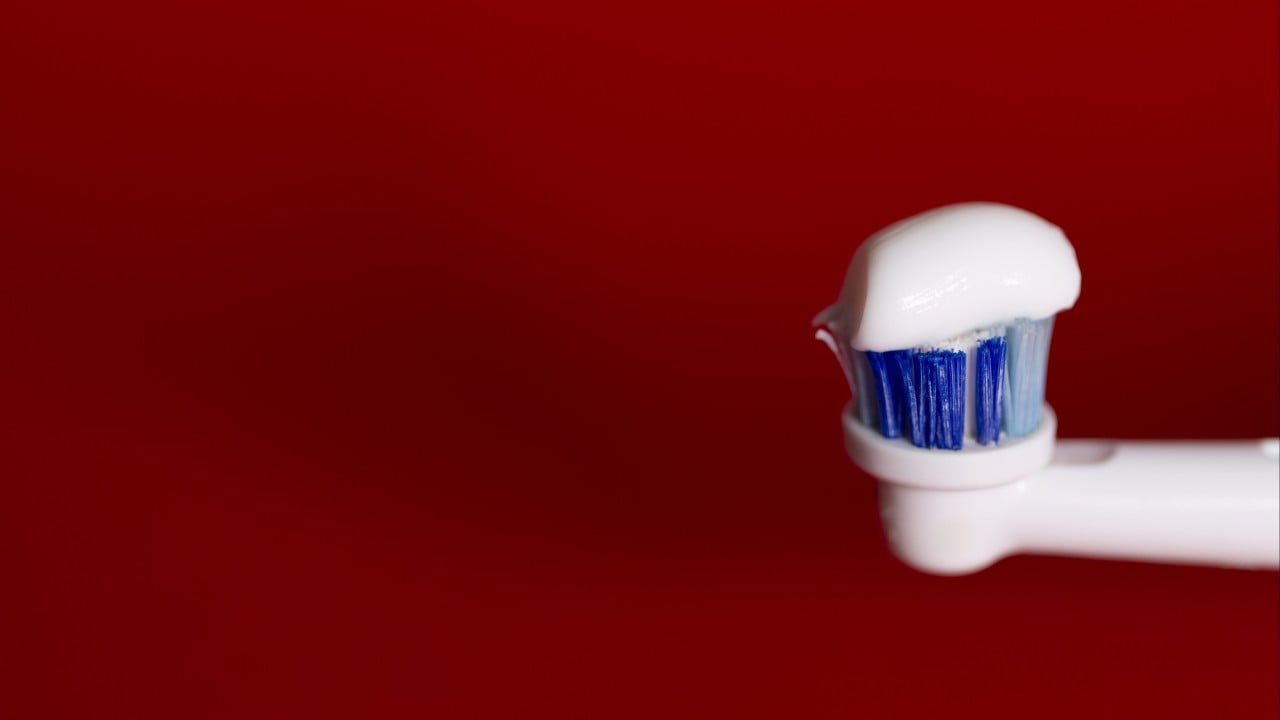
Two minutes. Twice a day. That is the deal we all signed around age six, standing on a plastic step stool, squinting into a bathroom mirror while a parent timed us with a tiny hourglass.
We were told the rules were simple. Apply paste. Scrub in circles. Rinse. Repeat until the end of time. Meanwhile, you can explore related stories here: Stop Blaming Hospital Staff When Families Are Ignored Before a Tragedy.
Yet, I still remember the specific, cold dread of sitting in a dental hygienist’s chair at twenty-eight, gripping the vinyl armrests while a metal scaler scraped against my lower molars with a sound like a fingernail on a chalkboard. I brushed religiously. I flossed until my gums bled. I bought the seventy-dollar sonic brushes that buzzed like angry hornets. Still, the hygienist sighed, tapped her chart, and pointed to the faint, yellowing fortress clinging to my gumline. "You're missing the back," she said, with the gentle pity reserved for people who try very hard and still fail.
If you have ever felt that quiet shame—the sense that your own biology is sabotaging you despite your best efforts—you are not alone. Nearly half of all adults over thirty suffer from some form of periodontal disease, according to the Centers for Disease Control and Prevention. We spend billions of dollars a year on bristles, pastes, rinses, and motorized handles, operating under a single, deeply flawed assumption. To explore the full picture, check out the detailed analysis by World Health Organization.
We think dental plaque is dirt.
It is not dirt. You cannot simply sweep it away like dust off a hardwood floor. And recently, a team of researchers in China decided to stop scrubbing altogether and start fighting a completely different kind of war.
The Fortress You Cannot See
To understand why your toothbrush is failing you, we have to shrink down to the microscopic level. Imagine, as a working analogy, that your teeth are not smooth porcelain statues, but vast, limestone cliffs overlooking a warm, nutrient-rich ocean.
Every time you swallow, drink coffee, or eat a piece of bread, you are feeding an ecosystem of over seven hundred species of bacteria. Left alone for just a few hours, these microbes begin to build a city. Scientists call it a biofilm. We call it plaque.
A biofilm is not a loose pile of germs sitting on your enamel. It is a fortified, three-dimensional bunker. The bacteria secrete a sticky, glue-like matrix made of sugars and proteins—extracellular polymeric substances, if you want the clinical term—that anchors them to your teeth like barnacles to a ship's hull. Inside this slimy armor, the bacteria communicate, share nutrients, and multiply. Worse, they produce acid as a waste product, slowly dissolving the mineral structure of your enamel while triggering an inflammatory panic in your gums.
Now, picture what happens when you attack this bunker with a standard nylon toothbrush.
Scrub. Scrub. Scrub.
You shear off the top layer of the city. Your teeth feel slick for an hour. Your breath smells like peppermint. But down in the microscopic crevices, along the gumline, and in the tight valleys between your molars, the foundation remains intact. Worse, if you scrub too hard—driven by the very human instinct that more force equals more clean—you begin to sandblast away your own gum tissue and enamel.
I spent years doing this. By thirty-two, I had brushed so aggressively with medium-bristle brushes that my gums had receded, exposing the sensitive roots of my teeth. Cold water felt like an electric jolt. I was destroying the house to get rid of the termites.
We have been trying to solve a biochemical and electrical problem with brute mechanical force. We got it completely backward.
A Tiny Spark in the Dark
Consider a hypothetical character—let's call her Elena. Elena is thirty-five, a graphic designer who drinks three iced lattes a day, hates the dentist with a visceral passion, and has mild arthritis in her wrists that makes vigorous brushing a daily chore. For Elena, oral hygiene is a source of low-grade, chronic anxiety. Every twinge in her jaw feels like a ticking financial time bomb.
What if Elena didn't have to scrub at all? What if, instead of scraping the bacteria off her teeth, she could simply convince them to let go?
This is the exact question that led a team of Chinese scientists—specifically researchers at Jiangnan University and collaborating institutions—to rethink the basic architecture of the toothbrush. Rather than designing a better bristle or a faster motor, they looked at the fundamental physics of how bacteria stick to surfaces in the first place.
Microbes have an electrical charge. So does the surface of your tooth. The bond between a bacterial biofilm and your enamel isn't just sticky; it is electrostatic. The negatively charged bacterial cells and the proteins in your saliva engage in a complex microscopic tug-of-war that locks them into place.
So, the researchers built a toothbrush that fights fire with fire. Or rather, charge with charge.
On the surface, it looks unremarkable. No bulky battery packs, no intimidating wires trailing into the sink. Embedded within the head of the brush, however, is a clever piece of materials engineering: a piezoelectric or triboelectric system—essentially, materials that generate a tiny, localized electrical current simply from the physical pressure and friction of moving the brush against your teeth and gums.
Think of it like shuffling your socks across a wool carpet on a dry winter morning, except scaled down to a fraction of a volt and directed with surgical precision.
What Happens When the Current Flows
Let's be honest about the immediate, visceral reaction most people have when they hear the words "electric shock" and "mouth" in the same sentence.
It sounds terrifying. We are hardwired from childhood to keep electricity far away from water, and especially far away from the wet, sensitive mucous membranes of our faces. Even writing about this, I felt a phantom twitch in my molars, a sudden memory of biting down on a stray piece of aluminum foil as a kid.
If you are skeptical, or slightly horrified, you should be. Healthy skepticism is the only sensible response when someone suggests running a current across your gums.
Here is what the science actually shows, stripped of the sensationalism.
The current generated by these experimental brushes is measured in microamperes—millionths of an ampere. To put that in perspective, a standard household outlet delivers fifteen to twenty amperes, enough to stop a human heart. A static shock from a doorknob is brief, sharp, and noticeable. A microcurrent of a few dozen microamperes, by contrast, sits well below the threshold of human pain perception. You do not feel a zap. You do not twitch. At most, users in similar bioelectric dental studies report a faint, almost imperceptible tingling, like the fizz of flat club soda.
To the bacteria, however, that tiny electrical field is an earthquake.
When the brush head glides over the teeth, the gentle mechanical pressure triggers the embedded materials to release a mild electrical charge into the moist environment of the mouth. This microcurrent disrupts the electrostatic bond holding the biofilm together. It interferes with the bacterial cell membranes, scrambling their ability to cling to the enamel and halting their metabolic frenzy.
In laboratory tests and animal models—including experiments on rabbits with induced dental plaque and gum inflammation—the results were striking. The microcurrent-generating brush didn't just match the cleaning power of traditional brushing; it dismantled the bacterial fortresses in areas the bristles barely touched. Inflammation in the gum tissue dropped dramatically. The enamel remained completely unscathed because the physical scrubbing required was minimal.
You are not scraping the barnacles off the hull anymore. You are changing the polarity of the hull so the barnacles simply drift away into the tide.
The History of Trying to Electrify Our Teeth
If this sounds vaguely familiar, there is a reason. The idea of using electricity to clean teeth is not entirely new—it has actually haunted the fringes of dentistry for over a century.
In the late nineteenth century, inventors patented "electric" toothbrushes that relied on small magnetic coils or dubious galvanic metals, claiming they could cure everything from toothache to scurvy. They were mostly snake oil, driven by the Victorian obsession with electricity as a magical life force.
Decades later, in the 1990s, a Japanese company introduced a brush containing a tiny titanium dioxide rod that, when exposed to light and water, triggered a mild electrochemical reaction designed to break down plaque. It had a cult following, though it required ambient light to work and never quite cracked the mainstream market.
What makes the recent breakthrough by the Chinese research team fundamentally different is autonomy and efficiency.
Previous attempts required batteries, charging docks, or specific lighting conditions to generate a reaction. They were clunky, expensive, or fragile. By using smart materials that harvest the kinetic energy of your own hand—converting the gentle, natural motion of brushing directly into a targeted microcurrent—the brush becomes its own self-contained power plant. No lithium-ion batteries to degrade in a landfill. No charging cables cluttering your bathroom counter. Just physics doing the heavy lifting.
Why This Matters Beyond Your Smile
It is easy to treat dental technology as a trivial lifestyle upgrade, something slotted neatly between whitening strips and charcoal toothpaste. That is a mistake.
The mouth is not a sealed vault. It is the front door to the rest of your body.
When plaque hardens into tartar and triggers chronic gum disease, the bleeding gums create microscopic open wounds. Every time you chew, bacteria from those biofilms slip directly into your bloodstream. Over the last twenty years, cardiologists, neurologists, and immunologists have traced a disturbing, undeniable line from oral bacteria to systemic disease.
Chronic periodontal inflammation is strongly linked to an increased risk of cardiovascular disease, stroke, and poorly controlled diabetes. Researchers have even found Porphyromonas gingivalis—one of the primary villains in gum disease—inside the brains of deceased Alzheimer's patients, raising urgent questions about whether chronic oral infections contribute to neurodegeneration.
Now think back to Elena, our hypothetical graphic designer with the aching wrists. Or think about your aging parents, whose dexterity is fading. Think about children who refuse to brush for more than twenty seconds, or hospital patients who cannot physically scrub their own teeth.
For millions of people, the manual dexterity required to effectively clear a biofilm with mechanical bristles is simply out of reach. When the tool itself does the biochemical work of dismantling plaque—requiring only gentle contact rather than rigorous scrubbing—oral hygiene stops being an athletic endurance test. It becomes accessible.
The Questions Nobody Asks at the Dentist
Still, standing in front of the mirror, practical doubts creep in. If a brush uses electricity to kill bacteria, does it wipe out the good bacteria too?
Your mouth, much like your gut, relies on a delicate balance of beneficial microbes to keep fungal infections at bay and help begin the process of digestion. Scorched-earth tactics—like harsh, alcohol-based mouthwashes—often backfire by sterilizing the mouth indiscriminately, allowing aggressive pathogens to colonize the empty territory first.
Mild microcurrents appear to operate with far more nuance. Because pathogenic, acid-producing plaque bacteria rely heavily on dense biofilm structures to survive and cause damage, disrupting the biofilm strips them of their primary weapon without necessarily sterilizing the entire oral ecosystem. Free-floating, benign bacteria are simply swallowed or rinsed away naturally, allowing a healthier microbial balance to reestablish itself.
What about fillings, crowns, or metal braces?
This is where engineering meets messy human reality. Anyone with a mouth full of silver amalgam fillings or orthodontic brackets knows that metal and electricity can interact in unpredictable ways—the classic "galvanic shock" you get when two dissimilar metals touch in saliva. While the microcurrents generated by piezoelectric brushes are extraordinarily low, researchers still have to prove through large-scale, long-term human clinical trials that the technology is universally comfortable and safe across every combination of dental work, from ceramic veneers to titanium implants.
And perhaps the hardest hurdle of all has nothing to do with physics: human psychology.
We are addicted to the sensation of friction. We associate squeaky-clean with aggressive effort. When toothpaste manufacturers first removed foaming agents like sodium lauryl sulfate from sensitive formulas, consumers complained that the paste "wasn't working," even though foam has zero cleaning power. Convincing millions of people that a gentle, barely-there electrical current is outperforming their frantic scrubbing will require unlearning decades of bathroom conditioning.
A Different Kind of Morning
I still have that lingering sensitivity on my lower left canine—a permanent souvenir from the years I spent treating my teeth like dirty grout. Every time I drink ice water, it reminds me that force is a blunt, unforgiving instrument.
Science, at its best, does not ask us to try harder. It changes the rules of the game so that effort actually yields results.
Picture a morning five years from now. You wake up, groggy, the familiar fuzzy film coating your teeth. You pick up a simple, lightweight brush. You do not time yourself with a stopwatch. You do not press the bristles into your gums until they blanch white. You simply glide the head softly along your teeth, letting the quiet, invisible current pass through the water, unraveling the microscopic cities built while you slept.
No scraping. No bleeding. No dread of the hygienist's metal hook. Just a faint, silent spark in the dark, doing what brute force never could.