The workbench in an aerospace assembly plant smells like cool machine oil and burnt copper. I watched a machinist named Marcus run his calloused thumb over a turbine blade carved from a superalloy that cost more than its weight in gold. He didn't look like a soldier. He looked like a clockmaker with grease under his fingernails. But Marcus was holding the physical bottleneck of the modern superpower.
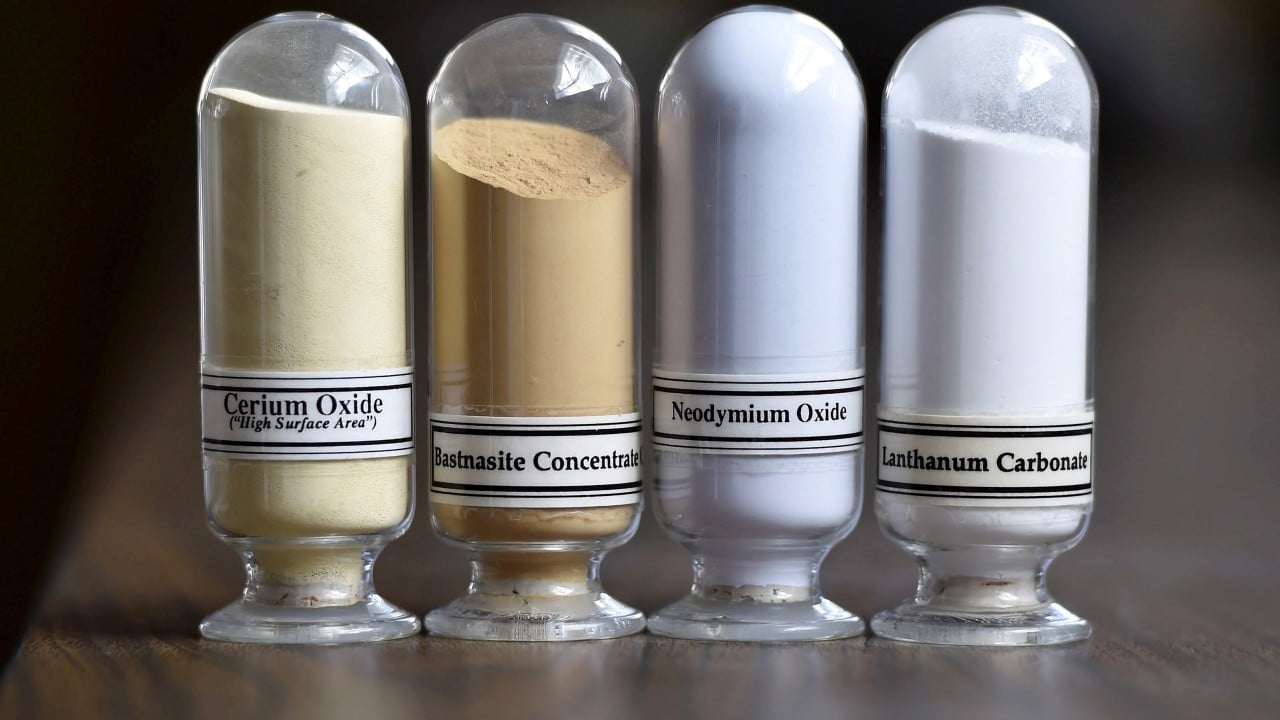
Inside that single blade, locked in a tight, microscopic embrace with nickel and cobalt, sat a fraction of an ounce of rare earth elements. Specifically, neodymium and yttrium. Without them, the jet engine overheats at Mach 2. Without them, the guided missile loses its track halfway across a desert night.
For decades, Washington bought these metals in bulk, cheap and unasked, from a single superpower half a world away. It felt like smart economics. Buy low. Keep the ledgers clean. Let someone else handle the toxic sludge left behind when you dissolve mountain rock to extract seventeen stubborn elements that the periodic table hid at the very bottom of the page.
Then reality tapped the Pentagon on the shoulder.
Decoupling is a neat word used by bureaucrats in windowless conference rooms. It sounds clean. Like unplugging a heavy appliance from the wall. But real decoupling is messy, expensive, and smells like sulfuric acid.
Consider what happens next: the United States military is attempting to untangle a supply chain that has been woven into Beijing's industrial engine for thirty years. Every F-35 fighter jet, every Virginia-class submarine, every night-vision goggle relies on magnets and phosphors that largely originate, or are refined, in Chinese provinces.
To understand why this is terrifying, you have to look at the chemistry. Rare earths are not actually rare. They are scattered through the earth's crust like salt in a loaf of bread. The hard part is not digging them up. The hard part is separating them.
Imagine trying to sort a billion grains of sand by hand, where every grain looks identical, except one is slightly magnetic, one dissolves in weak vinegar, and three others require a bath in boiling nitric acid to give up their secrets. That is separation chemistry. It is filthy work. It ruins water tables. It requires massive environmental trade-offs that wealthy nations spent decades exporting to developing ones.
China didn't win this monopoly by accident. They won it because forty years ago, Deng Xiaoping looked at the grey sludge of Baotou and said, "The Middle East has oil; China has rare earths." While the West chased software margins and financial services, China subsidized the dirt, the acid, the poisoned rivers, and the engineering PhDs necessary to turn dirt into high-tech magic.
Now, the bill has arrived.
The Pentagon recently mandated that by 2026, defense contractors must completely phase out Chinese magnets in major weapon systems. It is a hard deadline. It is also an almost impossible math problem.
I talked to a supply chain analyst last autumn who pulled up a spreadsheet that made him wince. He pointed to a small box representing domestic heavy rare earth production capacity in the United States. It was nearly a flat line. Then he pointed to a facility in California—Mountain Pass—the lone major American rare earth mine. For years, Mountain Pass dug up raw ore and promptly shipped it across the Pacific in shipping containers just to be refined, because the United States had forgotten how to do the chemistry at scale.
We were exporting the rock, buying it back as refined metal, and calling it trade.
That cycle is breaking. New processing plants are rising in Texas and Estonia and Australia. Engineers are retrofitting old factories. Geologists are mapping remote ridges in Wyoming and Alaska, looking for monazite sands.
Yet, money alone cannot bend chemistry to its will. You cannot print a chemical engineer with ten years of specialized experience in solvent extraction. You cannot fast-track the environmental permitting process for a refinery that handles radioactive thorium waste—a natural byproduct of rare earth mining—without local communities staging fierce, righteous protests.
This is the tension at the heart of the modern defense apparatus. We want pristine rivers, green energy, and high-tech defense shields, but we are deeply reluctant to live next door to the industrial violence required to build them.
Marcus dropped the turbine blade back into its foam-lined slot. The metallic clink echoed in the cavernous factory.
"If the supply cuts off tomorrow," I asked him, "how long before the line stops?"
He didn't hesitate. "Six weeks. Maybe eight if we scavenge from the scrap bins. After that, we are building very expensive paperweights."
That is the true weight of the decoupling effort. It is not just a trade war or a tariff dispute. It is a race against time to rebuild an entire industrial ecosystem from the ground up, starting with the dirt.
The strategy requires accepting ugly truths. Refineries pollute. Processing is dangerous. Independence demands sacrifice, not just in defense budgets, but in ecological compromise and industrial patience.
The ships are turning around. The factories are being built. But out on the assembly floors, beneath the harsh fluorescent lights, the workers are still waiting for the day when the metal in their hands belongs entirely to the soil beneath their feet.