A captain stands on the bridge of a massive container ship, peering through the humid haze of the Strait of Hormuz. Beneath his feet, millions of dollars in cargo—electronics, grain, crude oil—thrum with the rhythm of the engines. He isn't just navigating a waterway; he is threading a needle that connects the energy reserves of the Middle East to the hungry grids of the Western world. To his left lies the coast of Oman. To his right, the jagged shoreline of Iran.
This stretch of water is barely twenty-one miles wide at its narrowest point. It is a choke point. If the global economy has a pulse, you can feel it beating here, where one-fifth of the world’s total oil consumption passes through every single day.
For decades, the "rules of the road" in these waters have been governed by international maritime standards. But Iran is currently rewriting the script. They aren't doing it with warships or sea mines this time. They are doing it with data, digital tracking, and a new mandatory "maritime system" that signals a profound shift in who holds the keys to the world's most sensitive corridor.
The Digital Net
The Iranian Ports and Maritime Organization recently announced the implementation of a new local tracking and reporting system for all vessels entering their territorial waters. On the surface, the announcement sounds like typical bureaucratic record-keeping. The official line mentions "safety," "environmental protection," and "enhanced coordination."
But look closer.
Under the new mandate, ships are required to report their positions, cargo details, and destinations directly to Iranian authorities through a localized framework that mirrors—but operates independently of—the traditional international Automatic Identification System (AIS). By creating a parallel digital infrastructure, Tehran is effectively building a "smart border" in the sea.
Consider the logistical reality for a ship’s officer. Usually, navigating international waters relies on a shared, global understanding of transparency. You broadcast your position so everyone stays safe. Now, there is a second knock at the door. To pass through the Strait, you must now acknowledge a specific, local digital authority. It is the maritime equivalent of a country suddenly deciding that every car on an international highway must install a specific, state-monitored GPS tracker just to use a five-mile stretch of road.
Why Data is the New Deterrent
Control in the 21st century doesn't always look like a blockade. It looks like a database.
By mandating this new system, Iran gains a granular, real-time map of every moving piece in the Strait. They aren't just seeing blips on a radar; they are collecting a massive library of economic intelligence. They know which companies are moving what volume of goods, where those goods are headed, and exactly how long the transit takes.
This isn't about safety. It’s about leverage.
In a world defined by sanctions and "maximum pressure" campaigns, information is the only currency that doesn't lose value. If you know exactly which tanker is carrying oil for a specific rival, and you have a legal, system-based reason to query that ship's data or flag a "discrepancy" in its reporting, you have the power to slow down the gears of global commerce without ever firing a shot.
The Strait of Hormuz has always been a theater of physical tension. We’ve seen the headlines of seized tankers and drone strikes. But this digital pivot is more subtle and, in many ways, more effective. It creates a "new normal" where Iranian oversight is baked into the very software of maritime transit.
The Ghost in the Machine
Shipping companies now face a grueling dilemma. On one hand, the maritime industry thrives on predictability. Anything that streamlines traffic in a crowded waterway should be a good thing. On the other hand, there is the persistent shadow of "cyber-sovereignty."
When a state creates its own proprietary tracking system, it creates a "walled garden." This allows for a level of selective enforcement that international systems are designed to prevent. If a ship’s local transponder "fails" or if the data doesn't match the state's internal records, the legal pretext for an inspection or a delay becomes much easier to justify.
The stakes for the average consumer are invisible but immense. You don't feel the tension in the Strait when you fill up your gas tank or buy a new smartphone, but the cost of "uncertainty" is always added to the bill. Insurance premiums for tankers are calculated based on risk. When a regional power asserts a new level of digital control over a primary trade route, the risk profile changes. The "war risk" surcharges creep up. The cost of shipping rises.
Eventually, that cost lands on your doorstep.
A Fragmented Ocean
What we are witnessing is the "splinternet" of the seas. Just as different regions of the world are beginning to wall off their internet behind national firewalls, we are seeing the emergence of national maritime zones that demand their own specific technological allegiance.
For the men and women working the decks of these tankers, the ocean is getting smaller. The vast, open freedom of the high seas is being replaced by a series of digital checkpoints.
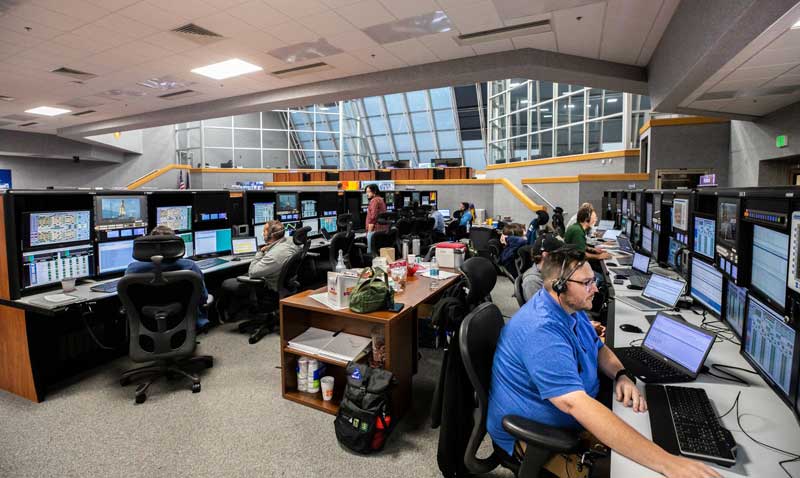
Imagine a hypothetical navigator, let’s call him Elias. Elias has spent twenty years at sea. He remembers when the Strait of Hormuz was just a place you watched the radar and kept a sharp eye out for small boats. Now, Elias sits in a darkened bridge surrounded by screens. He has to manage the global AIS, the company’s private tracking, and now, a specific set of requirements from a local power that views his presence with historical suspicion.
Elias knows that a single data entry error—a typo in a cargo manifest or a delayed position report—could now lead to a radio call that changes the course of his month. It is a high-stakes game of "Mother May I" played with 100,000-ton vessels.
The Long Game
Tehran’s bet is that the world will complain, then comply. Because the alternative—avoiding the Strait—is economically impossible. You cannot move the geography of the Persian Gulf. You cannot move the oil fields of Kuwait, Iraq, or Saudi Arabia.
This maritime system is a masterpiece of "gray zone" strategy. It sits perfectly in the space between peace and conflict. It doesn't violate international law in a way that triggers a kinetic response, yet it fundamentally alters the balance of power. It turns a transit corridor into a controlled environment.
The shift suggests a future where maritime power isn't measured solely by the tonnage of a navy, but by the sophistication of its servers. The ability to see, track, and digitally "tag" every visitor is a form of presence that never has to go back to port for refueling. It is an eternal, digital sentinel.
As the first ships begin to integrate with this new Iranian framework, the invisible lines on the water are hardening. The Strait of Hormuz remains a narrow passage of rock and water, but it is becoming a complex labyrinth of code and compliance.
The captain on the bridge looks at his monitors. The blue dot representing his ship moves slowly toward the narrowest point. He checks the new system. He hits "send." He waits. In the silence of the bridge, the only sound is the hum of the cooling fans on the computer rack, processing the data that now dictates his right to pass.