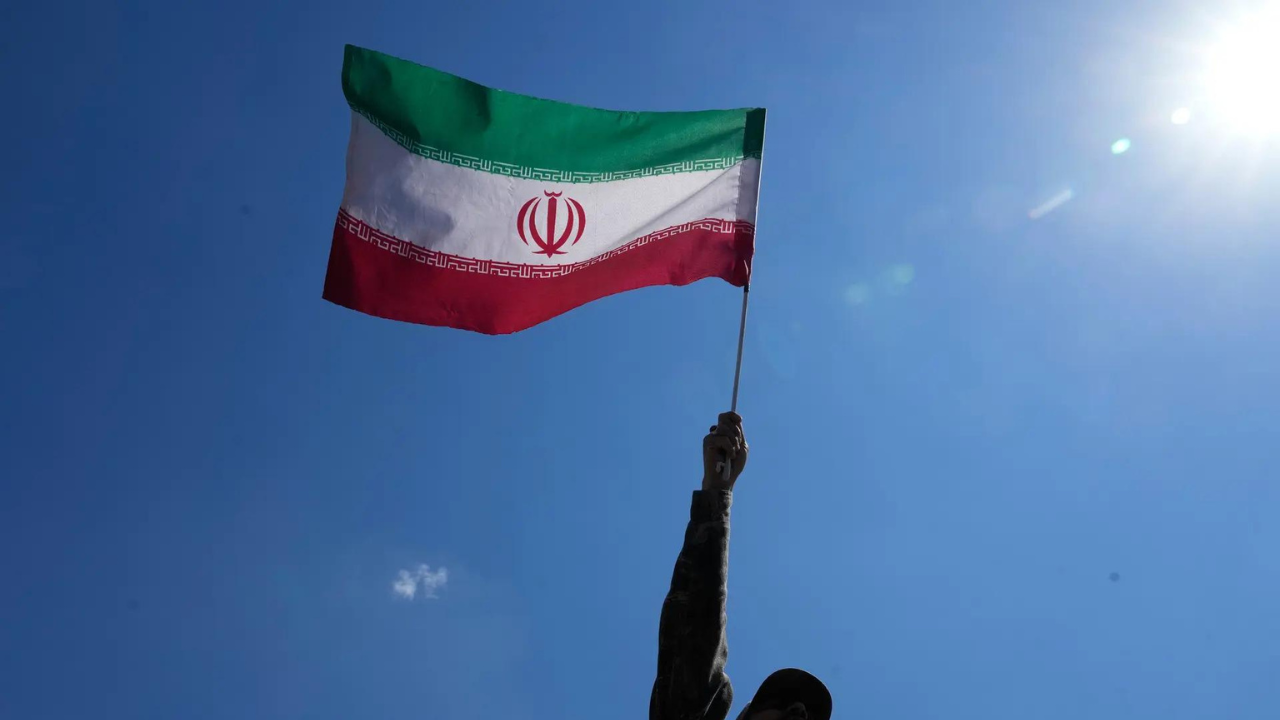
The recent execution of an alleged Mossad operative in Iran marks a grim but predictable escalation in a decades-long intelligence conflict. While the official judiciary reports focus on the finality of the sentence, the real story lies in the mechanics of the arrest and the message it sends to the domestic population. Tehran claims the individual provided classified information to Israeli intelligence, specifically targeting sensitive military sites. This is not a singular event but part of a rhythmic cycle of espionage and counter-espionage that defines the modern Middle East.
The Iranian state media apparatus often uses these executions as a public display of strength. By framing the accused as a direct threat to national sovereignty, the government justifies its expansive internal security measures. However, the details of these cases are rarely made public, leaving a vacuum that is filled by international skepticism and human rights critiques. For the veteran observer, these trials are less about the specific crimes of an individual and more about the broader geopolitical chess match played between the Islamic Republic and the Mossad.
The Architecture of Secret Trials
The Iranian legal system handles national security cases through Revolutionary Courts. These proceedings are opaque. Defense attorneys are often restricted, and the evidence is frequently based on confessions that international observers claim are coerced. When an individual is accused of "corruption on earth" or "waging war against God," the legal threshold for conviction shifts from evidentiary proof to ideological alignment.
The specific timing of these executions is rarely accidental. They often coincide with periods of heightened tension in the region, such as a breakdown in nuclear talks or a series of suspicious explosions at Iranian industrial sites. By carrying out a death sentence, the Iranian Ministry of Intelligence signals to its rivals that its domestic net is tightening. It serves as a deterrent to other potential recruits who might be tempted by the lucrative offers of foreign agencies.
Recruitment in the Shadows
How does a foreign agency like the Mossad penetrate a society as heavily monitored as Iran? It usually starts with a digital footprint. Intelligence agencies have moved away from the classic "dead drop" methods of the Cold War. They now look for individuals with access to technical data—engineers, low-level military clerks, or logistics managers.
Social media is the new hunting ground. An agent posing as a corporate recruiter or a scientific researcher can strike up a conversation with a target. Over months, they build a rapport. They offer small payments for seemingly innocuous tasks, such as taking photos of a public building or translating a technical manual. Once the target accepts money, the trap is set. They are now an asset, and the "handler" can use that initial payment as blackmail to demand more sensitive information.
The Cost of the Information War
The intelligence war is not fought with tanks, but with flash drives and encrypted satellite links. When Iran loses a scientist or a centrifuge facility is sabotaged, it is a massive blow to their strategic goals. The execution of a spy is a reactive measure. It is an admission that the perimeter was breached.
The human cost is absolute. For the accused, there is no appeal process that holds weight. For the intelligence agencies, the asset is often considered "burned" long before the arrest. The cynical reality of espionage is that once an individual is caught, they are of no further use to their handlers. They become a footnote in a briefing file, while the agency moves on to the next recruit.
Technology as both Shield and Sword
Iran has invested billions in its "National Information Network," a localized version of the internet designed to monitor and control data flow. This digital iron curtain makes it harder for foreign agents to communicate with their headquarters. Every encrypted message sent via a non-sanctioned app is a red flag for the Cyber Police.
Yet, technology also favors the infiltrator. Artificial intelligence can now scrub massive amounts of public data to identify people with financial vulnerabilities or political grievances. Satellite imagery has reached a resolution where a "spy" on the ground is almost redundant for basic surveillance. The value of a human asset today lies in providing "intent"—what is happening inside the rooms that satellites cannot see.
The Targeted Sectors
The Mossad and other Western agencies have a clear list of priorities when operating inside Iranian borders.
- Nuclear Enrichment Facilities: Tracking the purity levels of uranium and the health of the centrifuges.
- Ballistic Missile Development: Monitoring the supply chain of solid-fuel components.
- Regional Proxy Logistics: Identifying the routes used to ship weaponry to groups in Lebanon, Syria, or Yemen.
- Internal Political Stability: Assessing the morale of the Revolutionary Guard and the security forces.
The Geopolitical Ripple Effect
Executions like these ripple far beyond the walls of Evin Prison. They complicate diplomatic efforts. When Western nations are trying to negotiate a return to a nuclear agreement, a high-profile execution of a "spy" provides ammunition for hardliners on both sides. In Washington and Jerusalem, it is cited as proof of Tehran's brutality. In Tehran, it is cited as proof of Western meddling.
This cycle creates a permanent state of emergency. A government that is constantly under the threat of infiltration becomes increasingly insular. This paranoia can lead to "friendly fire" in the intelligence world, where loyal citizens are caught in the dragnet of a desperate security service.
The Myth of the Master Spy
Popular culture portrays espionage as a glamorous endeavor involving high-tech gadgets and narrow escapes. The reality is far more mundane and much darker. It involves middle-aged men and women making desperate financial decisions. It involves long hours of boredom interrupted by moments of sheer terror when a black sedan pulls up outside a home at 3:00 AM.
The individuals executed are rarely the "James Bond" figures the media likes to imagine. They are usually the weak links in a massive bureaucracy. They are people who thought they could play both sides and realized too late that they were outmatched. The "definitive proof" cited by the judiciary is often a confession written under extreme duress in a windowless room.
Analyzing the Counter-Intelligence Failure
Every time a spy is caught and executed, it represents a failure of the Iranian counter-intelligence apparatus to prevent the recruitment in the first place. The fact that foreign agencies can still find people willing to risk the gallows for a few thousand dollars suggests deep-seated economic and social issues.
If a nation's security depends on the threat of the noose, it is a fragile security. A more effective defense would be to address the grievances that make citizens susceptible to foreign recruitment. Instead, the response is more surveillance, more arrests, and more executions. This does not stop the espionage; it only raises the stakes.
A War Without an End Date
There is no "victory" in this shadow war. There are only temporary advantages. When a spy is executed, the Mossad begins looking for their replacement. When a facility is hardened, the intelligence agencies find a new vulnerability. It is a perpetual motion machine fueled by regional rivalry and historical animosity.
The execution of the unnamed man in Iran is a single data point in a vast, complex graph. It tells us that the tension is not subsiding. It tells us that the Iranian state feels vulnerable. And it tells us that the invisible front lines of this war are closer to home for the average Iranian than they might like to admit. The surveillance cameras, the internet filters, and the Revolutionary Court sessions are the permanent features of a society that believes it is under constant siege.
The silence that follows an execution is not peace. It is the sound of the next operation beginning.