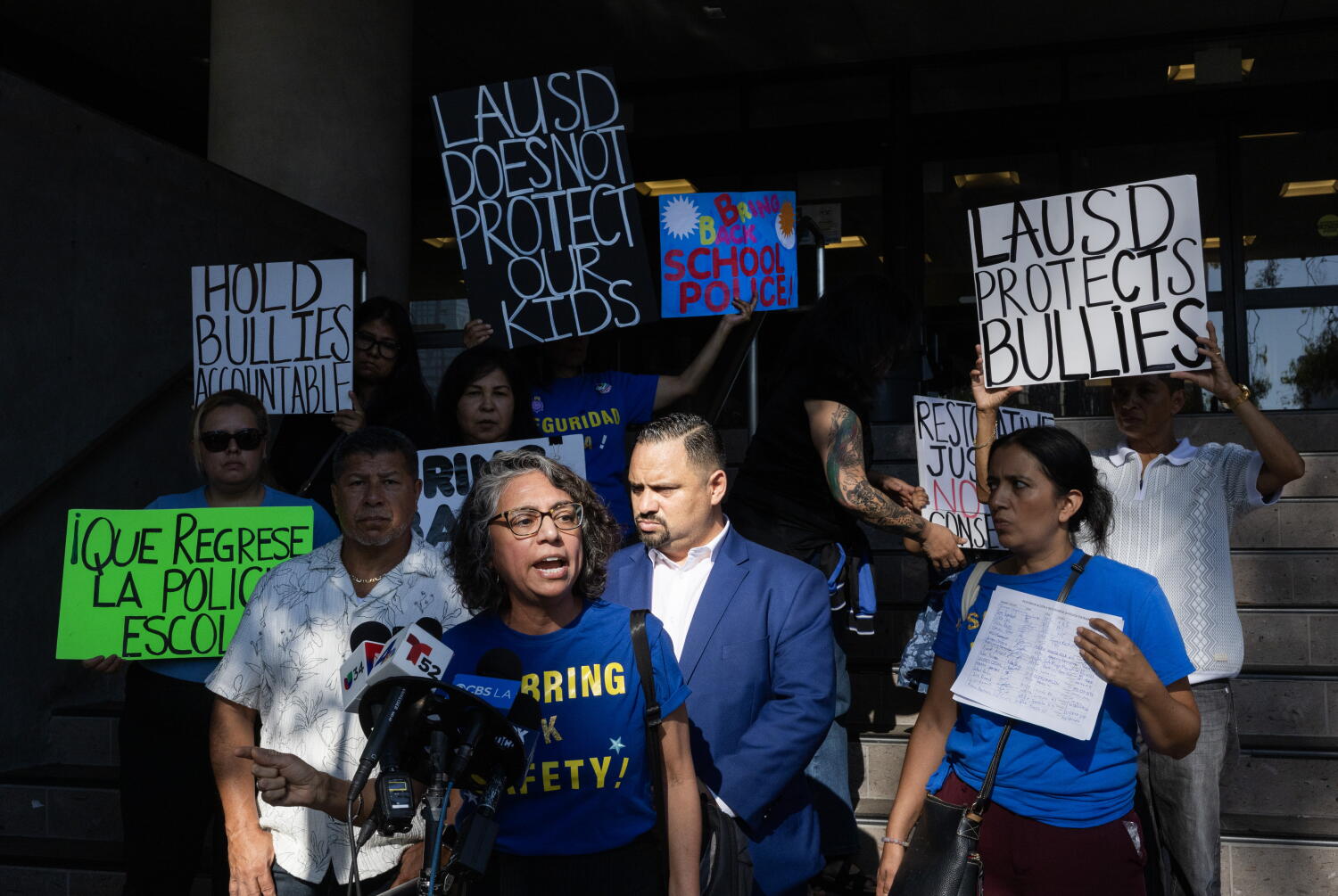
The debate surrounding campus safety infrastructure within the Los Angeles Unified School District highlights a fundamental tension between bureaucratic policy shifts and reactive public demands. When institutional frameworks alter their security posture in response to shifting political or ideological pressures, the resulting operational vacuum typically manifests as an increase in localized incidents, followed by community mobilization for the reinstatement of prior protocols. Deconstructing this dynamic requires an analysis of the structural trade-offs inherent in urban public education security architectures.
The Operational Cost of Security Reductions
The decision by large urban school districts to alter or downsize dedicated campus police presences is rarely an isolated tactical adjustment. It represents a systemic shift in how risk is distributed across an institution. When armed or specialized security personnel are removed or reassigned, the operational burden shifts directly to administrative staff, teachers, and external municipal law enforcement agencies.
This shift introduces specific operational friction:
- Response Latency: Municipal police departments operating outside the immediate perimeter of a school campus experience significantly higher response times for internal altercations compared to dedicated on-site personnel who understand campus topography and student dynamics.
- Administrative Diversion: School principals and vice principals absorb security management duties, pulling them away from curriculum oversight, teacher evaluation, and academic administration.
- Escalation Thresholds: Without trained security intermediaries capable of de-escalating low-level conflicts, minor behavioral infractions cross the threshold into criminal incidents requiring external intervention more frequently.
The Mechanics of Community Reactive Demand
Public pressure for the return of school police following high-profile incidents—such as the mourning periods observed at schools like Franklin High—follows a predictable behavioral economic curve. When a security buffer is removed, the baseline probability of severe incidents increases. Because human risk assessment is heavily weighted toward recent, salient events rather than statistical baselines, a single critical incident triggers an immediate spike in perceived institutional vulnerability.
Parents and community stakeholders evaluate safety not through long-term aggregate data, but through the variance of outcomes. A system that maintains a low average disruption rate but permits high-variance, catastrophic failures will face immediate demands for structural reversion. The institutional response typically involves a binary choice: either rebuild the specialized security apparatus or deploy alternative intervention models that often lack the immediate containment capacity of dedicated personnel.
Alternative Intervention Models and Their Limitations
Proponents of removing school police generally advocate for restorative justice practices, increased mental health staffing, and campus climate coordinators. While these models address root causes of behavioral friction over long horizons, they exhibit structural limitations in acute, high-stress scenarios.
- Temporal Lag in Behavioral Modification: Restorative practices require consistent, multi-year engagement to alter peer cultures. They offer minimal utility in neutralizing immediate, volatile physical threats.
- Capacity Constraints: Urban districts frequently face severe staffing shortages for specialized mental health professionals, resulting in high student-to-clinician ratios that render preventative intervention reactive rather than proactive.
- Boundary Management: Urban campuses often feature porous perimeters. Without physical security infrastructure and trained personnel to monitor access points, unauthorized individuals can enter school grounds, bypassing internal behavioral support structures entirely.
Strategic Resource Allocation and Institutional Trade-offs
Reintegrating or restructuring school police forces involves navigating a complex matrix of political alignment, financial constraints, and liability management. Districts must evaluate whether the political cost of maintaining armed officers on campus outweighs the operational cost of managing elevated baseline violence and subsequent community backlash.
The optimal configuration depends on localized threat assessments rather than district-wide ideological mandates. Campuses with documented histories of localized gang friction or high perimeter vulnerability require a fundamentally different security calculus than suburban or low-density facilities. Failing to differentiate security architecture by local risk profiles guarantees systemic friction, regardless of whether a police presence is maintained or dismantled.
Establish a localized security audit for each campus facility to measure baseline incident rates, perimeter permeability, and administrative burden before implementing district-wide policy shifts.