The United States border system just achieved what no striker in Africa could manage. It sidelined Omar Abdulkadir Artan, the continent’s reigning referee of the year, days before the opening match of the 2026 FIFA World Cup.
Artan, selected by FIFA as the first Somali in history to officiate at a men’s World Cup, arrived at Miami International Airport with a valid visa, official tournament credentials, and a lifetime of preparation. He left eleven hours later in the back of a commercial airliner bound for Istanbul. Federal immigration officials pulled him into an interrogation room, grilled him on militant insurgencies, declared him inadmissible due to vague vetting concerns, and locked him in a holding cell.
With that single bureaucratic stroke, the administrative apparatus of the host nation overrode the global governing body of soccer. FIFA immediately dropped Artan from the tournament roster, muttering familiar platitudes about respecting domestic sovereign laws. While Washington flexes its geopolitical muscles and Mogadishu throws a hero’s welcome for a favorite son who returned in defeat, the incident reveals a much deeper, uglier reality. The 2026 World Cup, sold to the public as a monument to global unity and cross-border cooperation, is buckling under the weight of hardline domestic security policies.
The Miami Dragnet
The official explanation from Customs and Border Protection came wrapped in the cold prose of national security. An anonymous administration official later told journalists that additional screening unearthed derogatory information, alleging an association with suspected members of terror organizations. Under Section 235 of the Immigration and Nationality Act, that was enough to trigger an expedited removal.
To anyone familiar with the realities of life in Mogadishu, the charge of association is a devastatingly broad brush. Artan is a professional who reached the pinnacle of his field by navigating a landscape torn apart by civil strife. He has openly described changing his daily commuting routes to soccer stadiums to avoid improvised explosive devices planted by al-Shabab. In a city where terrorist networks operate in the shadows of everyday civic life, ordinary citizens, merchants, and sports figures cross paths with danger by mere survival.
When border agents interpret the proximity of survival as a security threat, the screening process ceases to be a filter for genuine danger. It becomes a blunt instrument.
Artan spent nearly half a day defending his integrity to agents who seemed entirely indifferent to the pile of FIFA documentation sitting on the table. He showed them photographs of his career. He walked them through his matches, including the high-pressure African Champions League final he marshaled just weeks prior in Morocco. None of it mattered. The law is the law, the head of the agency later remarked to a Washington think tank, stating explicitly that a traveler’s profession guarantees no special dispensation.
The Fiction of the World Cup Passport
The treatment of Artan exposes the empty promises made during the bidding process for this tournament. When the United States, Canada, and Mexico lobbied for the hosting rights, a core tenet of their pitch was the guarantee of unhindered access for all qualified participants, officials, and ticket-holding fans.
The reality of the current political environment has shattered that illusion. A sweeping travel ban enacted last year targets over thirty nations, with Somalia sitting squarely near the top of the restricted list. While the executive order contains written exemptions specifically carved out for World Cup athletes, coaches, and essential support staff, it leaves an enormous loophole. Frontline immigration officers retain absolute, unreviewable discretion at the port of entry.
Consider how this mechanism operates in practice. A player or referee spends months securing an official visa from an American embassy abroad, a process that already involves extensive background checks by the Department of State. They board a flight believing their paperwork is immaculate. Yet, the moment they step off the jet bridge on American soil, they are subjected to an entirely separate, redundant vetting process run by a completely different federal department with an entirely different political mandate.
Artan is merely the most high-profile casualty of this structural disconnect. Behind the scenes, soccer federations from the Middle East and Africa are wrestling with a logistical nightmare. Several Iranian team officials and technical staff members have faced severe delays or outright denials. Even those who successfully enter the country are discovering their visas are limited to a single entry.
If an African or Asian squad plays a group-stage match in Miami, travels to Vancouver or Mexico City for a knockout fixture, and attempts to return to the United States for the later rounds, they risk being locked out at the border. The tournament’s multi-nation design, once praised as a triumph of logistical planning, has become a compliance trap.
FIFA and the Cost of Complicity
Throughout this brewing crisis, the silence from FIFA headquarters in Zurich has been deafening. The organization’s response to Artan’s detention was a masterclass in corporate cowardice. Within hours of his deportation, FIFA issued a perfunctory statement washing its hands of the matter, stating it remains uninvolved in host-country immigration procedures.
This hands-off posture contradicts the aggressive stance the governing body takes when dealing with smaller, less powerful nations. When a government in Africa or South America attempts to interfere in the internal elections of a local football association, FIFA routinely threatens a blanket ban from international competition, citing a strict defense of the sport’s autonomy. But when a geopolitical superpower disrupts the integrity of the World Cup referee pool by deporting one of its elite officials, Zurich blinks.
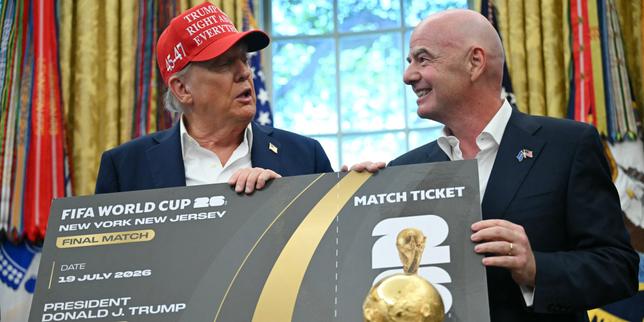
The reason for this compliance is purely financial. FIFA president Gianni Infantino has spent years cultivating close ties with Washington, recognizing that the North American market represents the most lucrative commercial frontier in the history of the sport. Corporate sponsorships, television broadcasting rights, and stadium luxury suite revenues for this expanded 48-team tournament are projected to break every financial record in existence.
To safeguard that revenue pipeline, FIFA has chosen a policy of absolute appeasement. By deferring completely to domestic security agencies, the organization has effectively established a dangerous precedent. The host nation, not the football governing body, now holds a veto over who gets to participate in the world’s game.
A Hero’s Welcome in a Broken System
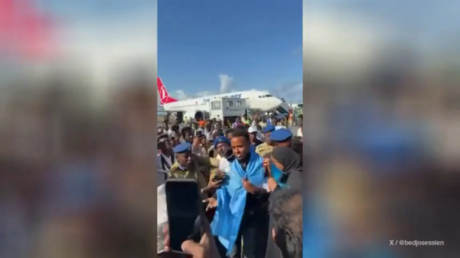
When Artan’s plane touched down at Aden Adde International Airport in Mogadishu, the scene was a stark contrast to the sterile, hostile corridors of the Miami airport terminal. Hundreds of fans filled the streets, waving blue and white flags. The Somali Prime Minister hosted him for an official reception, declaring that the referee had already won the hearts of millions and secured his place in history by merit alone.
This adoration is understandable. In a country that has spent decades synonymous with piracy, famine, and state collapse, Artan represented a rare, beautiful counter-narrative. He was living proof that a young man from Mogadishu could rise to the very top of a highly competitive global meritocracy through sheer discipline and talent.
Yet, the emotional celebration back home cannot mask the bitter truth of what occurred. The international sports community failed him. The institutional framework designed to protect the integrity of the game collapsed under the first sign of geopolitical pressure.
Artan handled his expulsion with remarkable dignity, releasing a carefully managed statement through FIFA channels wishing his colleagues success and vowing to focus on the next cycle. But the damage to the tournament’s credibility is already done. As the opening whistle blows and the cameras pan across pristine, multi-billion-dollar American stadiums, an invisible line has been drawn around the pitch. The world's greatest sporting event has made it clear that some passports matter far more than performance.