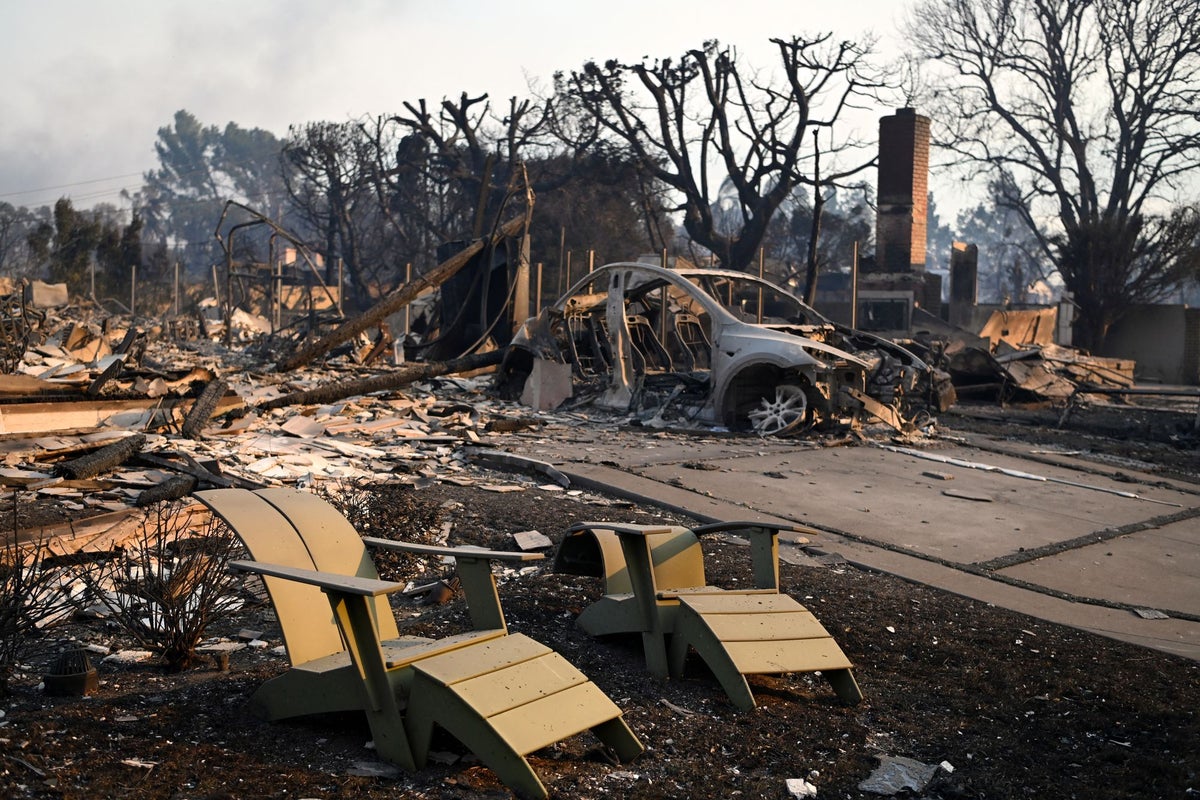
The global wildfire narrative just fractured. A major scientific analysis released at the end of May revealed that 2025 recorded the second-lowest total area burned worldwide since 2002, yet it simultaneously became the costliest year on record for insured wildfire losses.
This paradox exposes a brutal reality. Wildfires no longer need to consume millions of remote hectares to inflict unprecedented economic devastation; they simply need to strike the fragile friction zones where suburban expansion meets fire-prone wilderness. Driven by the catastrophic Palisades and Eaton fires in Los Angeles, which racked up $40 billion in insured losses alone, the financial architecture designed to manage climate risk is warping under the pressure.
The industry can no longer blame raw acreage for these staggering balance-sheet failures. Instead, the crisis is being propelled by a dangerous convergence of shifting ecological biomes, aggressive residential encroachment into high-risk zones, and an insurance underwriting model that relies too heavily on backward-looking data.
The Myth of the Quiet Fire Year
For decades, the standard metric for wildfire severity was total land area consumed. By that metric, 2025 was an objective success. Globally, 335 million hectares burned, a figure sitting 16 percent below the long-term average. Fire-related carbon emissions dropped to 11 billion tonnes, marking the third-lowest output since the turn of the century.
Then the bill arrived.
The financial damage completely decoupled from the ecological footprint. Wildfires accounted for a stunning 38 percent of all insured natural hazard losses globally in 2025. This structural imbalance occurred because fires have shifted away from the vast, unpopulated African savannahs, where large burns carry minimal financial consequences, toward fuel-rich, high-value temperate and boreal zones in North America, Europe, and South Korea.
Consider the sheer asymmetry of the January 2025 Los Angeles disaster. The fires burned roughly 23,000 hectares. In the grand scheme of global geography, it was a pinprick. Yet, because those flames tore through the ultra-high-value wildland-urban interface, they destroyed nearly 12,000 homes, killed dozens of residents, and forced the evacuation of 150,000 people.
The economic fallout reached $140 billion in total losses, with $40 billion covered by commercial insurers. It became the fifth most expensive natural disaster in global insurance history.
Why the Secondary Peril is Subverting the System
In the specialized vocabulary of global reinsurance, primary perils are the lumbering monsters of the catastrophe world. These are the major landfalling hurricanes and massive tectonic earthquakes that traditionally dictated reinsurance pricing and capital reserves.
Wildfires, alongside severe convective storms and flash floods, were long categorized as secondary perils. They were treated as localized, high-frequency but low-severity events. They were the background noise of risk management.
That hierarchy is dead.
Data from the Swiss Re Institute shows that secondary perils accounted for an all-time high of 92 percent of global insured natural catastrophe losses in 2025, which totaled $107 billion. Because the year lacked a singular, massive US hurricane landfall, the financial void was entirely filled by these smaller, hyper-destructive events. Wildfires alone grew at an annual insured loss rate of 14 percent in North America over recent cycles.
The structural danger is that secondary perils are far harder to model than a single Category 5 hurricane. A hurricane can be tracked across the Atlantic for a week, its storm surge calculated against static bathymetry maps. A wildfire in the wildland-urban interface is a chaotic agent. It relies on the micro-dynamics of wind gusts, localized fuel loads, and human ignition sources.
When a secondary peril behaves like a primary peril, the entire underwriting framework breaks down. Insurers find themselves exposed to aggregated losses they never priced into their premiums.
The Flawed Underwriting Engine
The insurance industry is fundamentally backward-looking. Actuaries analyze twenty or thirty years of historical data to predict the probability of next year's losses. This method works perfectly in a stable climate, but it fails completely when ecological baselines are shifting in real-time.
The unprecedented fire recurrence in Canada’s boreal forests provides an instructive case. Between 2023 and 2025, Canadian wildfires released more carbon dioxide than they did during the entire preceding 15-year period. Provinces like Saskatchewan, Manitoba, and Ontario are experiencing repeated burns in ecosystems that historically adapted to multi-decade fire intervals.
When forests burn before they can properly regenerate, the fuel profile changes, and traditional fire-behavior models become obsolete.
The Technological Disconnect
To combat this unpredictability, the financial sector has turned toward predictive technology. Companies use satellite imaging and machine-learning algorithms to assess individual property risks. If a house sits on a tertentu slope or within a specific radius of dense brush, the algorithm flags it.
However, these digital models frequently ignore the human element of mitigation. A homeowner who spends thousands of dollars installing a metal roof, ember-resistant vents, and a defensible concrete perimeter is often treated exactly the same by the algorithm as a neighbor with overhanging pine branches and wood-shingle siding.
Because the models are coarse, insurers are choosing mass retrenchment over precision underwriting. Entire ZIP codes are being blacklisted, pushing desperate homeowners into state-backed insurer-of-last-resort pools. These pools were designed to hold a tiny fraction of high-risk properties, but they are now swollen with tens of thousands of policies, creating a massive, hidden fiscal liability for state governments.
The True Cost of Air Pollution
The financial metrics compiled by global reinsurers tell only half the story. The $40 billion insured loss figure from the Los Angeles fires captures brick, mortar, vehicles, and commercial business interruption. It completely misses the broader, uninsurable societal damage.
The 2025 fires produced a toxic plume of fine particulate matter, known as PM2.5, that blanketed an area home to 10 million residents. The economic drag of a prolonged regional air quality crisis is massive, yet it rarely appears in catastrophe reports.
- Workforce Attrition: White-collar productivity drops as outdoor laborers face mandatory work stoppages, and service industries shutter due to hazardous air.
- Healthcare Surges: Emergency room admissions for acute asthma, cardiovascular distress, and respiratory infections spike immediately during smoke events, overwhelming regional medical infrastructure.
- Supply Chain Choke Points: Major logistics hubs and freight corridors face delays due to zero-visibility conditions, disrupting the movement of goods far beyond the burn zone.
These are the invisible costs that the United Nations Office for Disaster Risk Reduction is attempting to quantify. When a city is choked in toxic smoke for weeks, the economic losses ripple through municipal budgets via lost tax revenue and increased public health expenditures. None of this is covered by a standard property casualty policy.
The Illusion of Favorable Variability
There is a dangerous sentiment whispering through corporate boardrooms that because total global insured losses fell slightly to $107 billion from the previous year's $137 billion, the underlying risk might be stabilizing.
It is an illusion.
The drop was the result of favorable weather variability, specifically the lack of a major hurricane hitting a major US metro area. The structural risk drivers—climate-driven drought, rising global temperatures, and unchecked real estate development in fire-prone zones—are continuing to accelerate.
If long-term trends hold, normal historical volatility will return with a vengeance. Underwriters estimate that a return to long-run averages could easily push insured losses to $148 billion. If a peak-loss scenario occurs—such as a major hurricane striking the Gulf Coast in the same season that an extreme heatwave ignites the Pacific Northwest—global insured losses could rocket past $320 billion within a single calendar year.
The global capital markets are not prepared for a shock of that magnitude.
Redefining Adaptation or Facing Incurability
The path forward requires abandoning the fantasy that traditional firefighting and standard insurance pricing can contain this transformation. The global protection gap—the divide between total economic losses and what is actually covered by insurance—hovered at 51 percent. While this means insurance covered half the damage, the remaining uninsured losses represent ruined families and bankrupted small businesses.
We are rapidly approaching a threshold where certain regions will become fundamentally uninsurable. When private capital retreats completely, property values collapse, local tax bases erode, and communities enter a economic downward spiral.
Preventing this outcome requires shifting capital away from post-disaster recovery and into aggressive, systemic pre-disaster adaptation. This means enforcing strict building codes that mandate ignition-resistant construction materials for any new development. It means regional governments must implement aggressive land-use zoning that outlaws the expansion of suburban subdivisions into deep wildland zones, regardless of the short-term tax incentives.
Municipalities must invest in defensive green infrastructure, treating controlled burns and mechanical fuel thinning as essential public utilities rather than optional conservation projects.
The data from 2025 proves that the size of the fire no longer dictates the size of the catastrophe. The financial systems shielding our societies are running out of room to maneuvers, and the cost of inaction is written in clear, undeniable red ink.