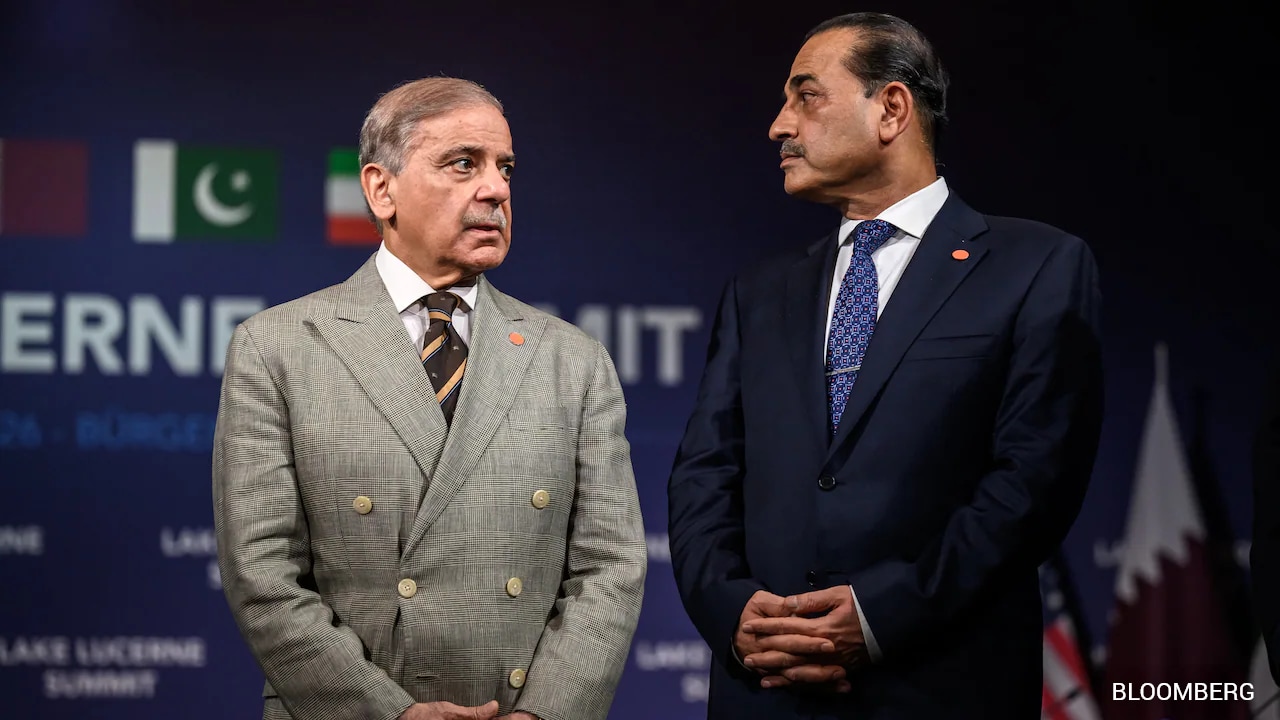
Foreign policy in Washington is rarely decided by presidential fiat alone. When the Oval Office rolls out the red carpet for foreign military strongmen, the assumption in foreign capitals is that a grand strategic realignment has taken place. But seasoned observers of the American national security state know a fundamental truth. Presidents come and go, yet the entrenched machinery of the civil service, the intelligence apparatus, and Capitol Hill bureaucratic gatekeepers remain.
The recent high-profile engagement between the White House and Pakistan's military leadership exposed a deep institutional fault line. While executive leadership sought a transactional partnership based on immediate geopolitical deliverables, the permanent bureaucracy inside the State Department, the Pentagon, and congressional committees viewed the overtures with profound skepticism. This institutional friction is not an accident of personality. It is the result of decades of policy fatigue, unmet expectations, and divergent views on regional stability.
To understand why presidential affection for foreign generals so often stalls in Washington, one must look closely at how the machinery actually operates below the level of the executive.
The Anatomy of Institutional Memory
The career foreign service officer does not operate on the four-year electoral cycle. Analysts who have spent thirty years tracking South Asian security dynamics carry a institutional memory that easily punctures optimistic diplomatic narratives.
When directives emerge from the top to embrace Pakistan's military establishment, mid-level bureau chiefs and regional desks immediately evaluate those directives against historical precedent. They recall billions in disbursed aid that yielded ambiguous counterterrorism outcomes. They track domestic crackdowns on civilian political opposition. More importantly, they maintain rigorous statutory obligations regarding human rights and arms sales oversight.
When a foreign military chief visits Washington expecting unconditional support, the red carpet rolled out by political appointees often contrasts sharply with the closed-door meetings held with career officials. In those rooms, checklists of demands regarding governance, judicial independence, and non-proliferation take precedence over vague assurances of regional partnership. The bureaucracy possesses quiet, persistent veto power through delayed clearances, rigorous vetting, and congressional reporting requirements.
The Limits of Transactional Diplomacy
Presidential diplomacy often favors personal chemistry and transactional bargains. The logic is straightforward. If a foreign actor can promise cooperation on specific regional flashpoints, wider domestic governance concerns are minimized.
Yet, the American administrative state is structurally designed to resist purely transactional foreign policy when it conflicts with statutory mandates and long-term institutional interests. Career defense planners evaluate military partners not by their public alignment with U.S. executive priorities, but by interoperability, institutional transparency, and reliability. When a military command structure relies on internal repression to maintain order, institutional risk analysts within the Pentagon flag those vulnerabilities as liabilities rather than assets.
This creates a dual-track foreign policy. On one track, high-level photo opportunities project alignment. On the other track, operational cooperation remains heavily restricted, conditioned, and scrutinized by officials who have witnessed previous diplomatic openings collapse under the weight of domestic political volatility in South Asia.
Legislative Checkpoints and Capitol Hill
The bureaucratic resistance to executive overreach in foreign partnerships extends directly into the legislative branch. Congressional committees retain powerful oversight tools that can effectively freeze or condition military assistance, regardless of executive branch enthusiasm.
Lawmakers sensitive to democratic norms and international human rights find natural allies within the foreign policy bureaucracy. When executive overtures toward authoritarian military figures outpace domestic political consensus, congressional pushback invariably follows. Legislative mechanisms allow committees to stall foreign military financing, demand rigorous accounting of internal security operations, and elevate the voices of exiled or imprisoned civilian political figures.
The reality on the ground in Islamabad or Rawalpindi often looks very different when viewed through the prism of a congressional committee room. While military leaders attempt to position themselves as the sole stable anchor for Western interests, American legislators increasingly question the long-term viability of a state where civilian democratic structures are systematically sidelined.
The Structural Impasse
Ultimately, the friction between presidential ambition and bureaucratic realism highlights a permanent tension in American foreign policy. A leader can invite a foreign general to the Oval Office, praise their utility in backchannel diplomacy, and articulate a vision for a renewed alliance.
Yet, the bureaucracy ensures that no partnership becomes absolute or immune to accountability. Career civil servants, intelligence analysts, and legislators control the slow-moving gears of actual implementation, licensing, and funding. Until the underlying structural contradictions of governance and security in the region are resolved, any diplomatic thaw engineered at the top will remain continuously checked by the quiet resistance of the administrative state below.