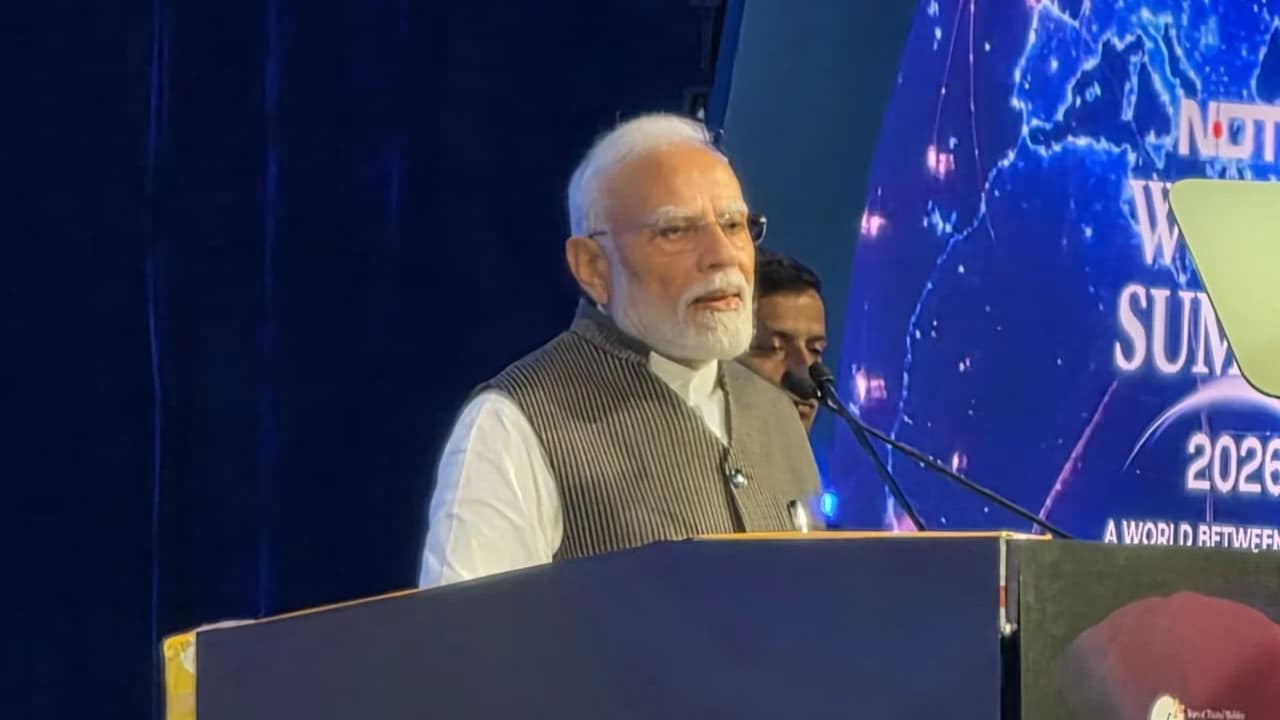
When Indian Prime Minister Narendra Modi took the stage at the NDTV World Summit in New Delhi on October 22, 2026, he framed Viksit Bharat—the multi-decade project to turn India into a developed nation—not merely as a domestic upgrade, but as a "guarantee for a better world". Summits love a grand thesis. Politicians need them, television panels repeat them, and quote roundups package them into neat bullet points. Yet behind the applause lines lies a sharper question for anyone tracking global economics and power: can a country climb into the top rank of global economies while presenting its own rise as a gift to everyone else, at a moment when trade, technology, and shipping lanes are turning into instruments of leverage?
Look closely at what Modi actually argued in New Delhi. He pointed to Indian engineers working on 2-3 nm chip design. He said India is shifting from a "back office" to a "brain office" for the world. He warned that trade is becoming a tool of weaponisation, technology is becoming an arena of competition and conflict, and sea routes are turning into flashpoints of geopolitical strain. At the same time, he insisted that a stronger Indian economy and a skilled Indian youth workforce expand global capacity rather than shrinking someone else's share.
After decades covering industrial policy, trade disputes, and political theater across capitals, I have learned to treat lofty summit promises with a healthy dose of skepticism. Promises are cheap on stage. Balance sheets, supply chains, export competitiveness, and institutional bottlenecks settle the score later.
What Summit Quote Roundups Miss
Most coverage of a prime ministerial address treats the speech like a menu of soundbites. Pick ten quotes, paste a headline, move on to the next news cycle. That approach misses the tension built right into the speech itself.
On one side sits cooperative multilateralism. Modi called for stronger global institutions, a bigger voice for the Global South, and international cooperation that holds up during crises rather than fading when pressure mounts. He argued that legacy institutions such as the United Nations show clear limits when global power shifts faster than decision-making rules.
On the other side sits hard-edged competition. In the very same remarks, he noted that trade links, technology, and maritime corridors are facing fresh friction and weaponisation. You cannot have both an era where every nation's gain automatically lifts all boats and an era where supply chains, export controls, and chip design are contested strategic assets without friction along the way.
That contradiction is not a slip of the tongue. It is the central dilemma of modern statecraft. Every rising power tells nervous trading partners that its growth is stabilizing and constructive. Every rival watches factory capacity, intellectual property, and maritime routes to see where leverage shifts.
From Back Office to Brain Office
The phrase that drew instant attention in New Delhi was Modi's declaration that India is moving from "talent at scale" to "thinking at scale," collaborating with the world not merely as a back office, but as a brain office.
There is real substance behind why that line resonates in boardrooms. For years, India's IT services model thrived on scale, cost arbitrage, and execution for global clients. Moving up the value chain into high-end engineering, artificial intelligence, and 2-3 nm chip design changes what kind of value stays onshore. Designing sub-3-nanometer silicon requires specialized electronic design automation tools, deep talent pools, patient capital, and tight integration with global ecosystems.
Still, designing a chip and manufacturing it at commercial yield are two very different mountains. Design is only one link in a sprawling semiconductor chain that spans specialty chemicals, ultra-pure gases, precision lithography equipment, wafer fabrication, packaging, and testing. Celebrating early design ambitions and student chip initiatives is one thing. Matching the scale, capital intensity, and reliability of established East Asian and Western hubs is quite another.
Consider a hypothetical example to see how the distinction plays out in practice. Suppose an engineering team in Bengaluru completes the architecture for a next-generation processor chip. Even with world-class circuit designers, the company still depends on foreign software licenses, specialized fabrication capacity overseas, and global customers willing to bet on a newer supplier. Reaching "brain office" status in high-complexity hardware requires years of compounding execution, not just ambitious targets.
Trade Friction and the Global South Pitch
Modi's appeal for a stronger voice for the Global South touches a genuine nerve. Many developing economies feel that post-World War II institutions still mirror an older distribution of economic and diplomatic weight. When supply shocks hit food, energy, or credit, smaller nations often absorb the worst blow with the least say in rule-making.
Yet championing the Global South carries its own test. Developing nations are not a single bloc with identical interests. A commodity exporter facing tariff barriers, a manufacturing hub competing for foreign direct investment, and an island state worried about maritime security and climate finance do not always want the exact same trade rules.
A rising power wins lasting trust not by repeating slogans about shared prosperity, but by proving its market, standards, and institutions stay open and predictable when disputes flare.
Moreover, when trade becomes a tool of weaponisation, as Modi warned, middle powers face pressure to pick sides or hedge carefully. Tariffs, subsidies, screening rules on foreign investment, and tech restrictions force companies to reroute supply chains. India has sought to position itself as a vital partner across multiple groupings while pursuing its goal of becoming a top-3 economy. Maintaining that balancing act gets harder every time major powers tighten rules around critical technologies and strategic minerals.
Domestic Politics on a Global Stage
One detail that stood out in the NDTV World Summit coverage was how quickly global statecraft pivoted to domestic political combat. After talking about a shifting world order, multilateral reform, and India's economic trajectory, Modi took sharp aim at the Congress party, accusing rivals of seeking foreign intervention and harming India's international standing.
Politicians routinely blend foreign policy and domestic scoring at high-profile forums. To supporters, calling out critics who air grievances abroad defends national pride during turbulent times. To critics, conflating political opposition with anti-national behavior narrows room for legitimate debate over governance, institutions, and economic trade-offs.
For outside observers—investors, diplomats, and analysts—that mix is part of the operating environment. You read the grand vision for Viksit Bharat alongside domestic political realities, regulatory predictability, and court or administrative friction on the ground. Vision sets direction; day-to-day execution determines whether capital sticks.
Why "Not Just For Us" Faces a Reality Check
There is an appealing generosity in the idea that India's rise is a guarantee for a better world. A growing economy of more than 1.4 billion people offers market demand, engineering talent, digital public infrastructure lessons, and alternative supply options. During moments of global strain, a large, capable economy can indeed help stabilize certain needs.
At the same time, economic history rarely moves on altruism alone. Industrial policy is designed to build domestic capability, protect strategic sectors, and capture higher-margin work at home. When a large economy pushes hard on domestic manufacturing, subsidies, and self-reliance, trading partners inevitably weigh both the opportunity of a bigger market and the competition from more capable domestic rivals.
| Dimension | Summit Promise | Hard Reality Test |
|---|---|---|
| Global Order | Reform institutions and amplify the Global South | Divergent interests across developing nations and slow institutional reform |
| Tech & Chips | Shift from back office to brain office, including 2-3 nm chip design | High capital intensity, supply chain dependencies, and fierce global competition |
| Trade & Routes | Counter weaponisation of trade, tech, and sea lanes | Rising tariffs, industrial subsidies, and geopolitical chokepoints |
| National Growth | Viksit Bharat as a benefit for all humanity | Balancing domestic industrial protection with open, predictable trade |
Watch what happens over the next few years in three concrete places rather than in summit speeches: export and import data across manufacturing sectors, actual commercial milestones in semiconductor design and ecosystem building, and how trade negotiations unfold when tariffs or supply bottlenecks bite. Those numbers will tell you far more than any headline quote about how Viksit Bharat reshapes both India and the wider world.