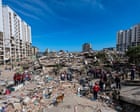
The double-strike earthquakes that ripped through north-central Venezuela on June 24, 2026, have triggered a humanitarian disaster that outpaces the immediate capacity of international aid. A magnitude 7.2 foreshock followed just 39 seconds later by a magnitude 7.5 mainshock along the San Sebastián fault system has left at least 1,430 people dead and tens of thousands missing. While global headlines focus on the arrivals of elite search-and-rescue units, a deeper, structural failure threatens to sabotage the relief effort before the critical 72-hour survival window slams shut. The arrival of aid is only half the battle; the real crisis lies in a collapsed infrastructure incapable of absorbing it.
The Logistical Bottleneck
More than 2,200 specialized international personnel and 140 search dogs from 27 countries have descended on the region. This massive surge of personnel has overwhelmed local coordination networks. Under normal international disaster protocols, incoming Urban Search and Rescue (USAR) units rely on a pre-established local framework to assign grids, process incoming data, and clear transportation arteries. In Venezuela, those frameworks do not exist in a functional capacity.
Satellite data verified by the United Nations Development Programme points to massive power grid blackouts across Carabobo, La Guaira, Caracas, and Aragua. When electricity fails, localized telecommunications fail with it. Foreign teams carrying high-tech acoustic listening devices and thermal imaging gear are burning daylight waiting for basic geographic assignments because the local emergency command centers cannot reliably communicate with field units.
The physical terrain presents an even tougher challenge. The coastal strip of La Guaira, which bore the brunt of the violent ground shaking, is effectively cut off by land. Major roads traversing the mountain range between Caracas and the coast are blocked by massive landslides triggered by the doublet quake. This leaves the sea and limited air corridors as the only entry points for heavy equipment.
A Preexisting Crisis Magnified
Disasters do not happen in a vacuum. To understand why the rescue operation is stalling, one must look at the state of Venezuelan infrastructure before the first tremor hit on Wednesday evening. The UN estimates direct physical damage at roughly $6.7 billion, representing nearly 6% of the country's gross domestic product. However, the economic metric tells only part of the story.
The national health system was already under profound stress from years of economic volatility and resource scarcity. According to early assessments from the Pan American Health Organization, 91 emergency hospitals are located within the severe shaking zone. Of those, 20 are in areas that experienced extreme intensity.
+-----------------------------------------------------------------+
|               EARTHQUAKE IMPACT METRICS (JUNE 2026)             |
+------------------------------------+----------------------------+
| Metric                             | Current Estimate           |
+------------------------------------+----------------------------+
| Primary Tectonic Event             | M7.2 & M7.5 Doublet        |
| Confirmed Fatalities               | 1,430+                     |
| Estimated Missing / Unaccounted    | 46,000 - 68,000            |
| Direct Physical Asset Damage       | $6.7 Billion               |
| Impacted Emergency Care Hospitals  | 91 Facilities              |
+------------------------------------+----------------------------+
Hospitals that survived structural damage are now facing a secondary collapse. Overcrowding has caused a complete breakdown of basic biosafety measures. Surgical backlogs for trauma, orthopedics, and neurosurgery are mounting by the hour because facilities lack the stable electricity, clean water, and medical oxygen required to operate continuously. Compounding this is the collapse of forensic and morgue services, preventing proper casualty registration and compounding the chaos for families searching for the missing.
Geopolitics on the Rubble Pile
The geopolitical dimension of this disaster is stark. In a rare pivot born of sheer desperation, the Venezuelan government requested sweeping international assistance, bringing old adversaries onto the same soil.
The U.S. Military’s Southern Command deployed around 100 airmen to expand air traffic control capacity at the main airport, alongside 130 Marines tasked with clearing and reopening the maritime port at La Guaira. The amphibious transport dock USS Fort Lauderdale and Army helicopters are executing transport missions alongside rescue teams from El Salvador, Mexico, Colombia, and various European nations.
Yet, historical mistrust introduces friction. Field reports indicate that coordination between Western military assets, local civil protection agencies, and domestic military forces remains deeply fractured. While American teams celebrate miraculous rescues, such as pulling a mother and her nine-month-old baby from a collapsed structure in the capital, these successes remain isolated triumphs rather than the result of a seamless, integrated network.
The Reality of the Golden Window
Disaster response experts place immense emphasis on the first 72 hours after a collapse. This is the period during which trapped victims can survive without water and before exposure or crush injuries turn fatal. That critical window has closed.
The strategy must now shift from rapid surface extrication to deep trenching and heavy technical lifting. This transition requires heavy machinery—excavators, hydraulic cranes, and concrete cutters—items that cannot be easily airlifted via standard humanitarian flights. The bottleneck at the port of La Guaira means this machinery is sitting on ships or stuck in logistics hubs while rescuers are left using hand tools and light equipment.
Furthermore, domestic communication policies have hindered the response. The tracking of missing individuals relies heavily on informal networks; citizens are using WhatsApp and social media to post digital flyers of missing relatives. However, persistent domestic restrictions and monitoring of digital platforms have slowed down the organic verification of these crowdsourced missing-persons lists, leaving international teams working from outdated or inaccurate intelligence grids.
An abrupt reality confronts the rescue effort. The international community proved it could mobilize thousands of specialists within 48 hours to a geopolitical hotspot. But sending elite teams into an area without functioning power, open ports, or unified command systems is like trying to pour a gallon of water through a needle's eye. The crisis in Venezuela is no longer a search-and-rescue problem. It is a logistical failure that will ultimately dictate the final, tragic scale of the loss.