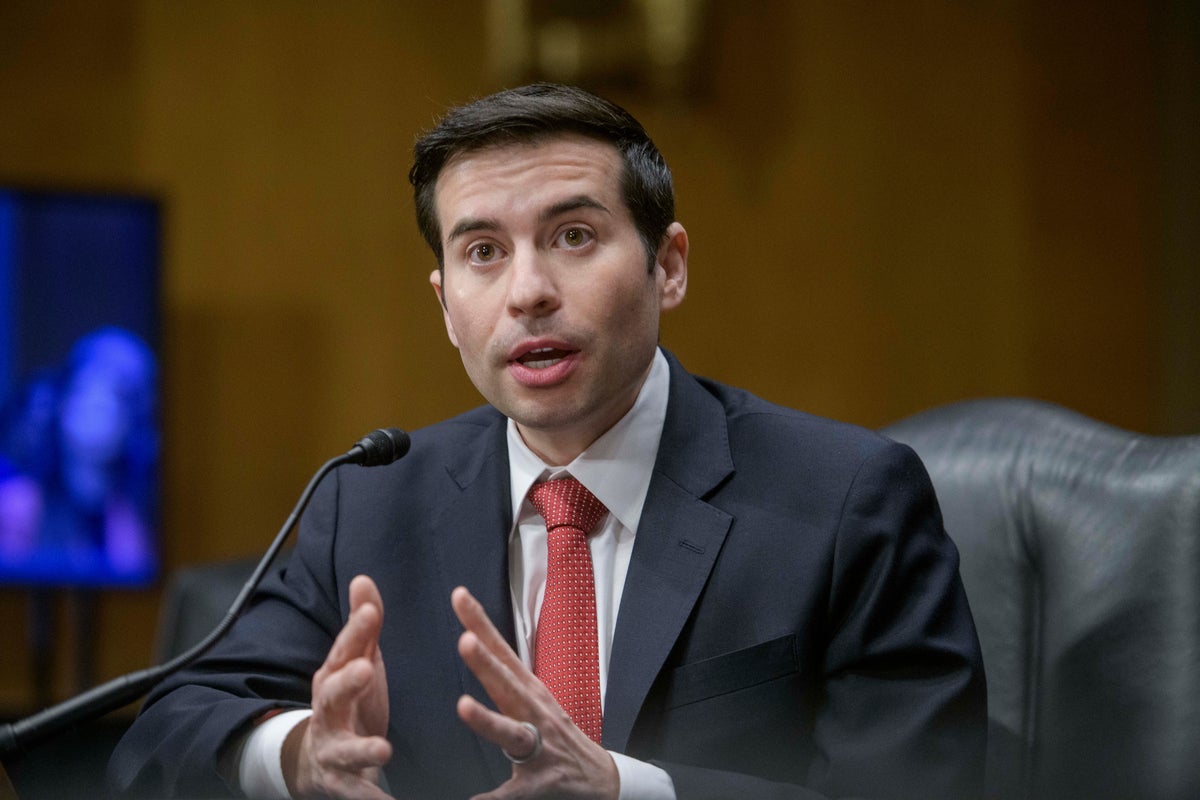
The federal government has officially run out of patience with state-run safety nets. In a sweeping ultimatum issued to governors across the nation, the U.S. Department of Labor declared that states must immediately overhaul their leaking unemployment systems or face aggressive financial clawbacks. Acting Labor Secretary Keith Sonderling explicitly put states on notice, warning that the administration is ready to withhold vital administrative funding from any state failing to curb systemic waste and identity theft.
This is not a routine bureaucratic warning. It is a fundamental shift in how Washington polices the billions of dollars it distributes to local capitals. For decades, the federal government looked the other way as long as states processed claims quickly. Now, the emphasis has shifted entirely to accountability, leaving state labor agencies trapped between outdated infrastructure and punitive federal mandates.
The political undertones of the crackdown are impossible to ignore. The administration has zeroed in heavily on major Democrat-led states, specifically citing California, New York, and Illinois for high improper payment rates and outstanding federal debts. Yet a closer look at the data reveals that this is far from a partisan issue. The crisis spans the entire political spectrum, exposing a structural decay that threatens the survival of the American safety net.
The Broken Machinery of State Overhaul
State unemployment agencies are trying to fight twenty-first-century international cybercriminals using twentieth-century technology. When the federal government threatens to cut off administrative funding, it attacks the very resources needed to fix the underlying problem.
Most state agencies rely on ancient COBOL-based mainframes. These systems were built for data entry, not real-time fraud detection or sophisticated identity verification. When billions of dollars in emergency federal cash flooded these networks, global crime syndicates exploited the lack of digital barriers. They did not just cheat the system; they overwhelmed it.
The federal clawback strategy creates a dangerous paradox.
If Washington starves a state of its administrative budget, that state cannot afford to hire investigators, update its software, or train staff to spot sophisticated identity theft. Security experts argue that pulling funds right now is equivalent to taking away a fire department's water supply because the blaze is growing too large.
The Reality of the Numbers
The political rhetoric surrounding the crackdown paints a picture of blue-state incompetence. The Department of Labor frequently points to California’s $20 billion outstanding pandemic loan and its elevated improper payment rates. However, the federal government's own tracking data presents a much more complicated reality.
Independent analysis reveals that some of the highest rates of improper payments are found in deep-red states. Consider the numbers.
| State | Improper Payment Rate (Recent Average) |
|---|---|
| Florida | 36.43% |
| California | 16.85% |
Florida’s rate is more than double that of California, despite the Sunshine State's aggressive rhetoric regarding government efficiency. This discrepancy underscores a uncomfortable truth. Fraud and administrative failure do not respect state lines or party affiliation.
The Government Accountability Office estimates that between April 2020 and May 2023, nationwide unemployment insurance fraud swallowed between $100 billion and $135 billion. While the Labor Department argues that this estimate might be slightly overstated, the sheer scale of the loss is unprecedented in the history of American social programs.
The Unintended Victims of the Crackdown
The immediate consequence of federal pressure is a sudden, defensive tightening of state eligibility rules. Desperate to lower their error rates and avoid federal penalties, state administrators are deploying aggressive automated fraud filters. These algorithms are notoriously imprecise.
When a system flags a legitimate claim as fraudulent, a real worker suffers. A single mother who lost her job due to corporate restructuring can find her benefits frozen for months because an automated system flagged her address as suspicious. She cannot reach a human being because the phone lines are jammed with thousands of other citizens facing the exact same automated lockout.
The policy shift also creates significant friction for local businesses. To verify claims and catch fraudsters, states are shifting the bureaucratic burden onto employers. Companies are now inundated with complex, mandatory reporting requirements regarding job separations, wage verification, and employment offers.
Failure to respond to these inquiries with absolute precision can result in steep state fines, creating a secondary economic headache for small businesses.
The Structural Trap
The federal government's latest threat follows a pattern of financial tightening. In May 2025, the Department of Labor ordered states to return all unspent administrative funds previously allocated under the American Rescue Plan Act. That move drew fierce criticism from workforce policy experts, who warned it would derail ongoing modernization projects.
States were right in the middle of rebuilding their digital infrastructure when those funds were clawed back. Without that federal cash, modernization ground to a halt. Now, the federal government is punishing the states for using the exact same broken systems they were prevented from fixing.
True reform requires more than threatening letters and political posturing. It demands a centralized, federally managed identity verification framework that states can plug into seamlessly. Until Washington addresses the structural vulnerability of fifty separate, outdated state systems trying to defend themselves against coordinated global cybercrime, the cycle of fraud and punishment will continue. States cannot build a modern fortress while under siege and starved of resources.