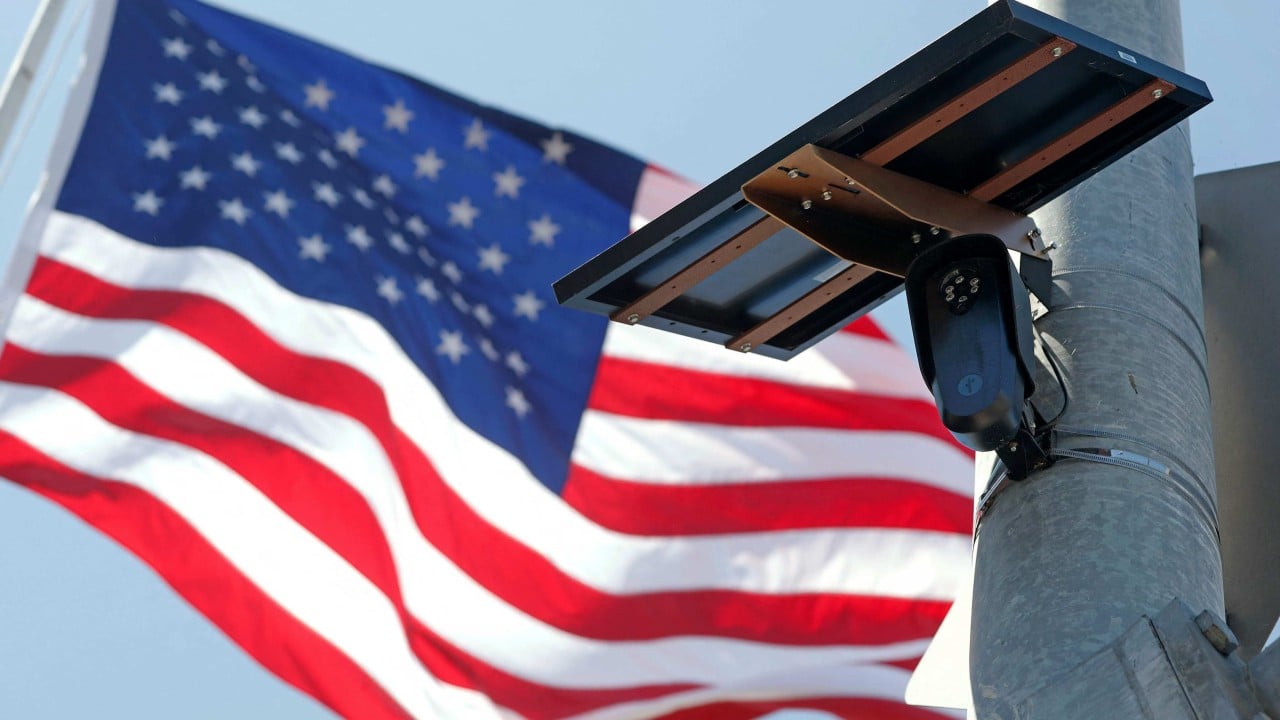
Across the United States, an underground network of citizens has turned against the electronic panopticon on their street corners. Armed with cordless reciprocating saws, cans of spray paint, and customized mechanical obstructions, anonymous operators are methodically disabling automated license plate reader (ALPR) cameras by the dozens. This is not ordinary teenage vandalism. It is a targeted, politically cross-cutting sabotage campaign directed primarily at corporate-backed surveillance hardware manufactured by firms like Flock Safety. As local municipalities rush to contract out public safety to private vendors, a loose coalition of constitutional conservatives, privacy-minded progressives, and anti-surveillance libertarians have decided that passive resistance is no longer enough.
The primary driver behind this friction is the quiet, unfettered expansion of persistent tracking in everyday spaces. Private automated license plate readers do not merely capture speeding motorists or red-light runners. They log every vehicle passing their field of view, converting human movement into searchable, permanent digital records that aggregate coordinates, timestamps, and behavioral patterns.
The Anatomy of the Surveillance Grid
To understand why citizens are climbing poles under the cover of darkness, one must look closely at the hardware itself. Companies like Flock Safety have deployed over one hundred thousand cameras across thousands of American cities and neighborhoods. These devices are sleek, solar-powered, and LTE-connected, designed to anchor effortlessly to utility poles, traffic lights, and municipal property without requiring complex local infrastructure.
Each time a vehicle drives past, the camera captures more than just a license plate. Computer vision algorithms parse the make, model, color, roof racks, bumper stickers, and state of issuance. This data is uploaded immediately to cloud-based servers, cataloged, and cross-referenced against law enforcement hotlists.
The pitch to local governments and homeowners associations is alluringly simple. Vendors market these networks as digital force multipliers capable of tracking stolen vehicles, locating missing children, and solving violent crimes within minutes. Police departments point to empirical wins where rapid data retrieval helped intercept suspects fleeing major crime scenes.
Yet, this operational utility comes with a profound structural flaw. The exact same network that flags a stolen sedan also logs the daily movements of thousands of law-abiding citizens who happen to commute down the same stretch of public asphalt. Commuters taking their children to school, couples driving to medical appointments, and citizens exercising their First Amendment rights are all swept into a passive intelligence-gathering apparatus.
The Convergence of Strange Bedfellows
Resistance to this digital footprint has fractured traditional political alignments. In small towns and major metropolitan suburbs alike, opposition to automated tracking brings together demographics that rarely agree on anything else.
Constitutional conservatives view the proliferation of private-public surveillance as a direct assault on the Fourth Amendment and personal liberty. To this camp, the accumulation of historical location data by corporate entities without a judicial warrant represents a slippery slope toward authoritarian control.
Concurrently, progressive activists warn of mission creep and systemic bias. Public records requests across various jurisdictions have repeatedly revealed that ALPR databases, ostensibly installed for property crime reduction, have been queried for civil immigration enforcement or shared across state lines in ways that bypass local sanctuary policies. When data is gathered indiscriminately, the mechanisms of enforcement invariably drift away from their stated intent.
Frustrated by unresponsive city councils and opaque municipal contracting processes, a faction of this movement has moved past attending public comment sessions. They have adopted direct action.
Tactics of the Underground
In Minnesota, Texas, California, and Florida, law enforcement agencies report a steady escalation of physical attacks on municipal hardware. Some individuals use specialized poles with cardboard attachments to temporarily blind the sensors. Others deploy industrial spray paint to coat lenses, or utilize battery-powered saws to sever mounting poles entirely.
An online subculture has emerged to support these efforts. Anonymous forums and social media channels share blueprints for 3D-printed shields designed to slip over camera housings without triggering destruction-of-property statutes. Instructional videos detail how to defeat solar power feeds, while crowdfunding campaigns spring up to cover the legal defense fees of activists caught on municipal security feeds.
The corporate response has been defensive yet adaptive. Executives have occasionally labeled the saboteurs using sharp rhetoric before walking back those statements under public relations pressure. Simultaneously, vendors are rushing to patch software vulnerabilities, adjusting data retention defaults, and stripping controversial experimental features—such as audio monitoring intended to detect human distress—to placate jittery city planners.
The Policy Vacuum
The physical destruction of cameras is a symptom of a deeper governance failure. Lawmakers at both the state and federal levels have consistently failed to establish comprehensive baseline privacy protections for public spaces.
When technology outpaces statute, citizens are left with a stark binary choice. They can passively accept the slow erosion of public anonymity, or they can fight back outside the boundaries of the law. Municipalities that sign multi-year contracts with surveillance vendors frequently discover local opposition only after the poles are already cemented into the earth. By then, public investment has locked communities into systems that are legally difficult to disentangle and politically toxic to defend.
The underground campaign against automated license plate readers will likely persist as long as local governments treat mass data collection as a neutral public utility rather than an aggressive encroachment on civil liberties. Until clear legislative frameworks mandate strict data minimization, mandatory deletion timelines, and explicit warrant requirements for historical queries, the electric saws will keep humming in the dark.


,webp/024/329/201/v2/2560x1440.212.webp)