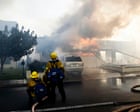
When Turkish police enter a television newsroom and pull the plug on a live transmission, the shockwaves rarely stay inside the control room. The immediate headline focuses on a Turkish police raid on an opposition TV station halting live broadcasts, yet the real machinery of pressure operates through licensing rules, financial audits, and signal control long before boots cross a threshold.
I have watched press crackdowns unfold across volatile media markets for more than twenty-five years. The pattern rarely begins with a midnight door-breach. It begins quietly with a compliance notice, a tax inquiry, or an equipment seizure that makes tomorrow’s broadcast slightly harder than today’s. If you enjoyed this article, you should look at: this related article.
When a raid happens in full view, it is often a visible punctuation mark in a much longer campaign. Viewers see dark screens and agitated anchors. Industry analysts see a test of how much disruption the market, the courts, and the public will absorb before resistance fractures or adapts.
How a Newsroom Goes Dark Without Cutting Every Wire
A modern television station is not a single room with a camera and an antenna. It is a chain of dependencies linking studio floor, master control, satellite uplinks, fiber backbones, and advertiser accounts. For another look on this event, see the latest update from Associated Press.
Interrupting a live feed can look dramatic on camera. Behind the scenes, the mechanics are surprisingly granular.
- Physical access stops at the studio door. Officers can detain staff, confiscate servers, or order an evacuation, turning a live debate into dead air within seconds.
- Signal routing creates hidden choke points. Even if cameras keep rolling on a phone or backup unit, routing video through third-party playout centers or uplink partners introduces points where contracts can freeze or connections can drop.
- Legal pretexts shape the timing. Authorities frequently pair operational actions with investigations into alleged offenses, incitement, or corporate irregularities, forcing executives to fight on legal and operational fronts at once.
- Financial chill follows the footage. Sponsors grow skittish when a channel faces active state scrutiny, turning a single broadcast halt into a multi-month revenue squeeze.
Consider a hypothetical example to see how quickly a single raid cascades through a medium-sized broadcaster. Suppose a regional opposition channel airs a sharp investigative report at nine in the evening, and officers arrive at the facility before midnight to inspect records and halt live programming. Even if staff return the next morning, insurance carriers may review coverage, banks may ask compliance questions, and advertisers may pause scheduled spots until the legal dust settles. That secondary friction often hurts more than the hour of lost airtime.
The Regulatory Vise Around Independent Broadcasters
To understand why a raid on an opposition TV station carries such weight, you have to look at the broader broadcasting architecture. Television in Turkey sits inside a tightly regulated environment where state oversight agencies hold sweeping authority over licenses, fines, and content standards.
When state pressure is applied evenly or predictably, businesses can price the risk. When oversight feels selectively sharp against critical outlets, every rundown becomes a calculated gamble.
Fines for alleged violations, temporary blackouts of specific programs, or license reviews create a slow-drip cost structure. Over time, owners face an uncomfortable choice between toning down coverage to protect payroll and maintaining editorial edge while absorbing relentless financial and legal blows.
Why Broadcast Television Still Matters in a Digital Feed
Critics sometimes assume that blocking a television signal matters less now that people watch clips on social platforms. That assumption misses how news agendas are set.
Television remains a primary anchor for shared public attention, especially among older demographics and viewers outside major urban centers. A live broadcast creates a simultaneous civic moment that a fragmented social feed struggles to replicate.
When a live show stops mid-sentence, the absence itself communicates power. It signals to rival outlets, junior reporters, and corporate partners where the boundaries sit.
At the same time, digital distribution complicates total silence. Clips circulate rapidly across messaging apps and independent online channels, meaning a physical raid can sometimes amplify the very story authorities wanted to contain. The tension between physical control and digital spillover is one of the defining features of contemporary media pressure.
What Competitors Miss About Media Crackdowns
Standard coverage of a raid usually treats the event as an isolated clash between state security and press freedom. That framing is true as far as it goes, yet it leaves out commercial and institutional dynamics that determine who survives.
Media ownership in polarized markets is rarely pure philanthropy. Stations carry debt, vendor obligations, union or staff salaries, and political ties that complicate simple narratives of pure resistance or pure capitulation.
A balanced assessment also has to acknowledge gray areas. Legal systems everywhere claim mandates to investigate crimes, enforce broadcasting codes, and maintain public order. Outside observers and domestic critics often dispute whether those powers are applied neutrally or selectively, and proving political motive in court is notoriously difficult when formal procedures are cited.
Ignoring those nuances makes analysis sound partisan rather than sharp. The stronger analytical question is not merely what happened during the raid, but which institutions blinked afterward and which ones held firm.
Comparing Pressure Points Across Media Channels
Different platforms face different vulnerabilities when tensions spike. A television channel with physical studios and broadcast permissions operates under constraints that a small encrypted newsletter does not.
| Medium | Primary Vulnerability | Typical Immediate Impact | Long-Term Survival Factor |
|---|---|---|---|
| Opposition TV station | Physical facilities, broadcast licenses, ad contracts | Halted live broadcasts, equipment or record checks | Diversified revenue, legal stamina, audience loyalty |
| Independent news websites | Hosting, domain pressure, ad networks, traffic dips | Slowdowns, blocked links, demonetization | Reader subscriptions, mirror infrastructure, credibility |
| Social media accounts | Platform moderation, account restrictions, throttling | Sudden reach drops, removed clips | Cross-platform presence, direct subscriber lists |
| Print publications | Printing presses, distribution networks, paper costs | Delayed print runs, newsstand gaps | Loyal subscribers, digital transition, lean overhead |
No single channel is immune. Yet television combines high visibility with high fixed costs, making any interruption immediately obvious to the public and expensive for the operator.
The Ripple Effect on Journalists and Markets
When security forces step into a newsroom, the psychological toll on reporters and producers is immediate. Even journalists who were not on shift that night feel the proximity of risk.
Younger reporters learn self-censorship fast if senior editors hesitate. Veteran producers often double-check sourcing and legal phrasing with extra care, which can improve rigor in some cases and slow down breaking news in others.
International observers, diplomatic missions, and press freedom groups usually issue statements condemning actions that halt live broadcasts. Those statements matter for diplomatic records and public scrutiny, though they rarely reverse an operational action on their own.
Investors and international advertisers watch the signal too. A climate where a Turkish police raid can abruptly interrupt a broadcaster raises questions about predictability and institutional checks across the broader business environment.
How Newsrooms Adapt Under Pressure
Survival in a high-pressure media market requires operational discipline rather than heroics alone. Outlets that endure usually prepare before a crisis hits.
Redundant recording systems, off-site backups, clear legal escalation contacts, and multi-platform simulcasts keep a newsroom functioning when primary channels stall. None of those measures eliminates risk, and none guarantees immunity from state action.
What they do is deny a single disruption the power to erase an entire operation. When a live broadcast goes down, a prepared team can pivot to backup feeds, document events carefully, and keep reporting without losing its evidentiary footing.
Reading the Next Signal
Every time a live broadcast stops under police presence, the immediate drama fades within days while the structural consequences linger for months. Watch the court dockets, the regulatory filings, and the advertising schedules rather than just the initial footage. Those quieter indicators show whether the interruption was a temporary shock or a permanent shift in how news reaches the public.