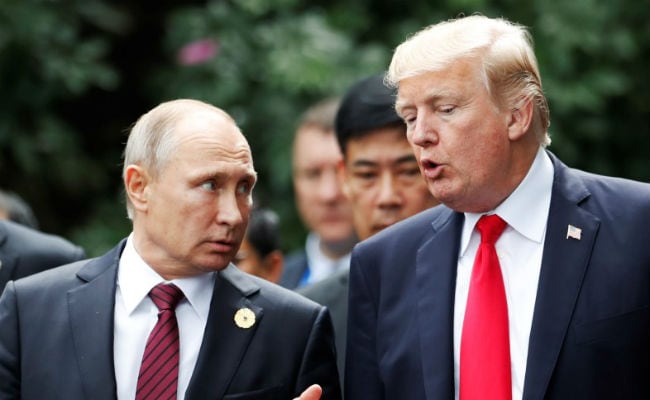
The backchannel diplomacy aimed at ending the war in Ukraine has hit a wall, frozen by a major geopolitical shift in the Middle East that has forced Washington to reorder its priorities.
Despite public declarations from Kyiv about "positive" momentum and upcoming settlements, Kremlin spokesman Dmitry Peskov confirmed on Tuesday that no phone conversation between U.S. President Donald Trump and Russian President Vladimir Putin is scheduled. Furthermore, the high-stakes visit of American envoys Jared Kushner and Steve Witkoff to Moscow remains entirely without a timeline.
While the official narrative from Moscow frames this as a routine operational pause, the underlying reality points to a systemic breakdown. The direct channel that led to the Anchorage summit last year has stalled. Washington’s sudden military focus on Iran has sidelined the Eastern European peace track, leaving a vacuum that neither side seems capable of filling without a fundamental recalibration.
The Secret Channels that Dissolved in the Desert
For months, Kushner and Witkoff operated in the shadows, executing a transactional style of diplomacy that bypassed traditional State Department architecture. They treated the conflict not as an ideological battleground, but as a complex corporate restructuring.
That framework collapsed in February. When the United States and Israel launched joint military action against Iran, the diplomatic oxygen in Washington was instantly redirected to the Persian Gulf.
The consequences for Eastern Europe were immediate. It is impossible to run a high-intensity, multi-theater diplomatic press when your primary negotiators are consumed by a potential regional war in the Middle East. Russia recognized this shift instantly. Moscow views American attention as a finite resource; when that resource was diverted to Tehran, the Kremlin adjusted its posture from active negotiation to strategic patience.
The Disconnect Between Kyiv and Moscow
The current diplomatic impasse is defined by a striking contradiction in messaging between the key players.
On Monday, Ukrainian President Volodymyr Zelenskyy told reporters he had a highly positive conversation with Kushner and Witkoff. He signaled that the American side was ready to push through a settlement within weeks. Zelenskyy’s recent flurry of direct correspondence to both Trump and Putin was a calculated attempt to pull Washington's eyes back to Europe, keeping the spotlight on Ukraine’s urgent need for advanced anti-ballistic missile systems.
The response from the Kremlin was cold. Peskov noted flatly that the United States had not even bothered to inform Moscow about the call with Zelenskyy.
"The mediation process on the Ukrainian track has been paused," Peskov told reporters in Moscow. "Starting mediation efforts by putting forward certain conditions to Russia is likely illogical and wrong."
This rhetorical gap reveals the core flaw in the current peace process. Kyiv is projecting urgency, hoping to leverage its American connections before domestic political willpower shifts. Moscow, conversely, feels no such pressure. By dismissing Zelenskyy's open letters as "boorish" and insisting on a comprehensive settlement rather than a temporary truce, Putin is signaling that Russia will not be rushed to the table by a distracted White House.
The Mirage of Billion Dollar Integration
While the political track is frozen, economic actors are still trying to build bridges, creating an bizarre contrast between front-page hostility and back-page ambitions.
Just days ago, Putin’s special envoy Kirill Dmitriev was boasting of plans to sign an agreement regarding a multi-billion-dollar tunnel linking Chukotka and Alaska across the Bering Strait. Talk of a $12 trillion economic cooperation package and documents outlining Russia’s reintegration into the global economy continue to float through diplomatic circles.
These grand infrastructure projects are a classic Kremlin diversion. They are designed to project normalcy and long-term stability to the global market while the fundamental security architecture remains broken. A nation cannot realistically design a transcontinental tunnel with an adversary while simultaneously refusing to schedule a phone call between their heads of state.
Why European Mediation is Dead on Arrival
With Washington distracted by Iran and the Kushner-Witkoff track on life support, some Western analysts have suggested that European powers should step into the vacuum.
The Kremlin has explicitly ruled this out. Peskov described European involvement as completely unacceptable, claiming that European capitals are far more inclined to focus on continuing the conflict than facilitating a genuine settlement.
This rejection is rooted in a hard calculation. Russia knows that Europe lacks the unified military leverage and the financial weight to enforce a grand bargain. For Moscow, there is only one conversation worth having, and it belongs to Washington. If the White House is too busy dealing with Tehran to pick up the phone, Putin is content to let the front lines harden while he waits for the American focus to shift back.
The illusion of an imminent breakthrough has dissipated. The hard truth of international diplomacy is that proximity does not equal progress. Kushner and Witkoff may well maintain open phone lines with their counterparts, but without the direct, active involvement of the American president, those channels are merely spinning their wheels. Until Washington resolves its entanglements in the Middle East, the road to a settlement remains completely blocked.



:max_bytes(150000):strip_icc():focal(665x0:667x2)/gettyimages-50733149-2000-8b129a2475974982a915418ce92a73d8.jpg)