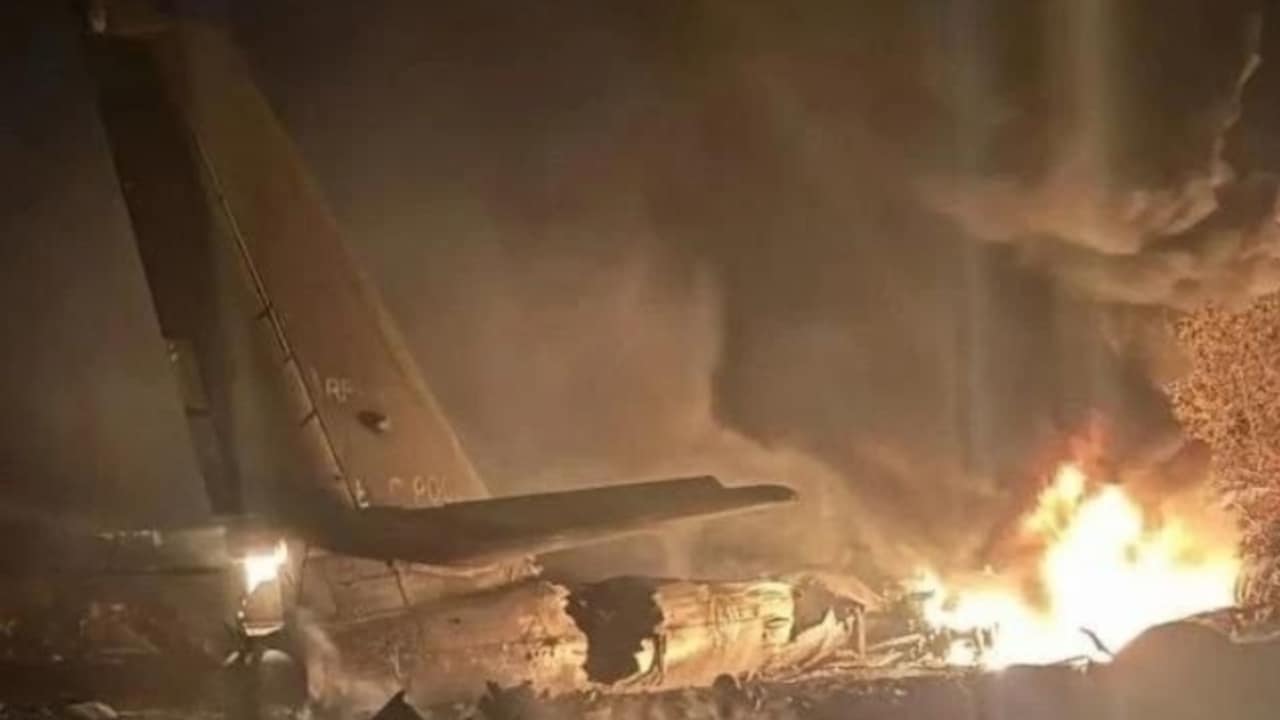
Military aviation accidents rarely happen in a vacuum. When a Tupolev Tu-95MS strategic bomber went down in Russia's far-eastern Amur region during a routine training mission, it wasn't just a localized tragedy. It marked another permanent subtraction from an irreplaceable fleet of Cold War-era nuclear-capable aircraft. Six crew members lost their lives, and one survived with injuries.
If you look past the standard defense ministry press releases, this incident exposes the grinding reality of keeping vintage aviation technology airborne under immense operational pressure. Also making news in related news: Inside the Brooklyn Democratic Party Power Struggle That Forced Frank Seddio Out.
Why the Tu-95MS Matters More Than Ever
The aircraft involved was a Tu-95MS—NATO reporting name "Bear"—a swept-wing turboprop monster first introduced in the mid-1950s. Think about that timeline for a second. While modern air forces retired their mid-century platforms decades ago, Russia's military still relies heavily on these noisy, counter-rotating turboprops to patrol borders and launch long-range cruise missiles.
The flight took off near the Ukrainka air base without any weapons on board. It came down in an uninhabited area near Krasnoyarovo, sparing civilians on the ground. Yet, the strategic cost to Moscow is severe. Russia cannot build new Tu-95 airframes. Every hull lost to mechanical failure or accident is gone forever, forcing the Aerospace Forces to stretch an aging, finite inventory even thinner. More information regarding the matter are detailed by NPR.
The Hidden Costs of Heavy Operational Tempo
You don't need to be a defense analyst to understand what happens when old machines are pushed past their design limits. Since the escalation of the conflict in Ukraine, the operational tempo for Russia's strategic aviation wing has skyrocketed. Crews fly more missions, maintenance cycles get compressed, and spare parts become harder to source reliably under heavy international sanctions.
Accidents like this one point to a compounding series of pressures:
- Airframe fatigue: These planes have been in service for decades, accumulating thousands of flight hours.
- Maintenance strain: Mechanics are forced to service complex, legacy systems with dwindling stocks of factory-original components.
- Intense flight schedules: Regular training rotations must continue regardless of weather or component wear, increasing human and mechanical error.
While a commission of the Russian Aerospace Forces investigates the official cause—with early unverified reports pointing toward engine failure—the underlying vulnerability remains obvious. You can patch an airframe and overhaul an engine, but you can't outrun the clock.
The loss of six experienced aviators is an immediate human blow. For the broader military apparatus, every crash chips away at the dwindling margin of error remaining for Russia's long-range nuclear deterrent.


