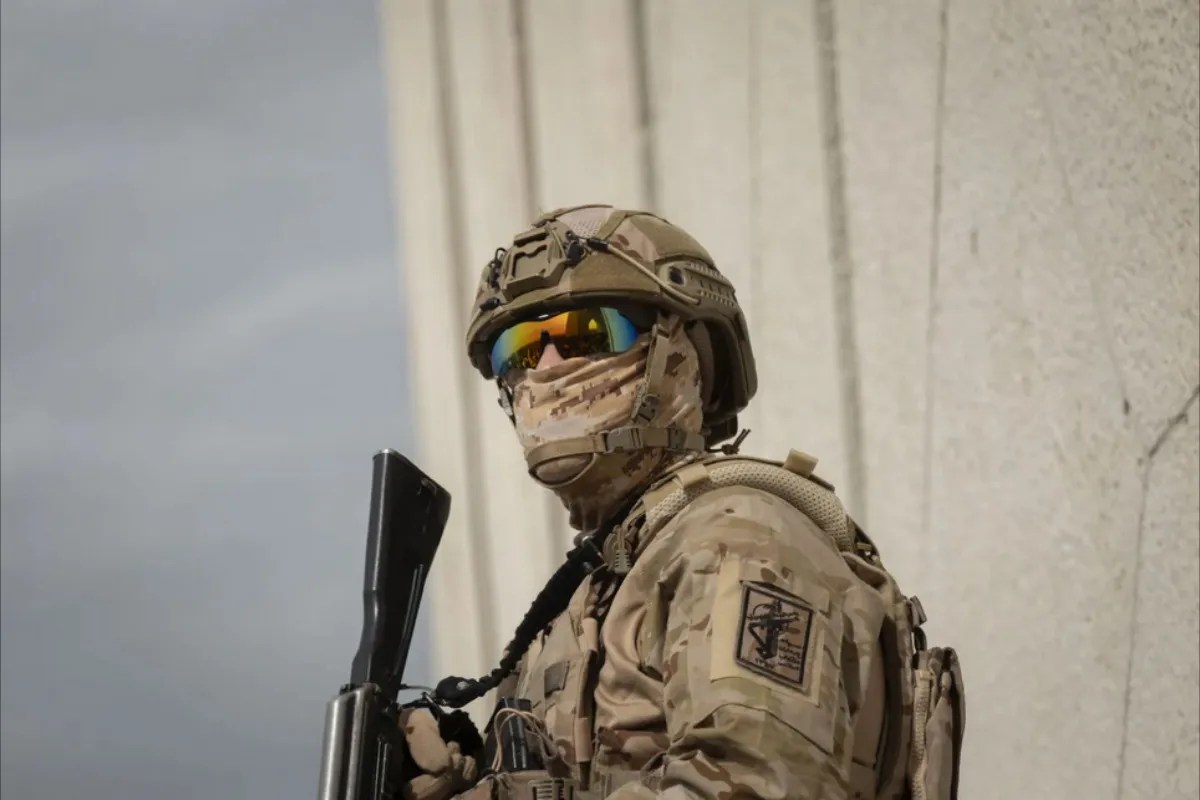
The shadows are getting darker along Iran's southeastern frontier. When the Islamic Revolutionary Guard Corps (IRGC) announced that two suspects tied to American and Israeli intelligence agencies were neutralized in Sistan and Baluchestan, it wasn't just a routine security update. It’s a clear window into an intensifying covert war playing out far away from the global headlines. Tehran's security apparatus has turned its full focus toward sealing border vulnerabilities, claiming this cell was actively planning coordinated sabotage operations before ground teams moved in.
The Border Crisis Nobody Is Talking About
Sistan and Baluchestan has long been a volatile corridor. Bordering both Pakistan and Afghanistan, the province is porous, rugged, and notoriously difficult to police. For years, various militant factions and smuggling rings have used the terrain to slip across unseen. Recently making news recently: The Night the Desert Caught Fire and the Official Silence Followed.
Lately, though, the threat profile shifted dramatically. Iranian intelligence claims that external actors—specifically American and Israeli handlers—have been trying to leverage local insurgent networks to destabilize the region from within.
When the IRGC's Quds Headquarters launched its recent joint operation, they didn't just find standard contraband. Reports indicate that security forces seized military-grade hardware, heavy explosives, and satellite communication equipment, including Starlink terminals designed to bypass state internet shutdowns. That points to well-funded, highly organized backing rather than a loose band of local rebels. Further information regarding the matter are explored by The New York Times.
Why This Specific Region Matters So Much
You might wonder why Tehran treats security in this specific province as an absolute red line. It comes down to geography and logistics. Sistan and Baluchestan sits near vital maritime trade routes and major energy transit lines. If foreign intelligence agencies can successfully ignite prolonged internal unrest here, they can stretch Iran’s military resources thin at a time when regional tensions with Washington and Tel Aviv are already boiling over.
The IRGC's recent crackdowns aren't isolated incidents. Over the last few weeks, security operations across the province's northern and southern sectors have scaled up aggressively. Several armed cells have been broken up, and multiple operatives have either been killed in firefights or hauled away for interrogation. Tehran is sending an unmistakable message to its adversaries: any attempt to establish an operational foothold near the frontier will be met with immediate, lethal force.
The Broader Confrontation
This localized shadow war doesn't happen in a vacuum. It directly mirrors the tit-for-tat military escalations playing out across the Middle East. With direct exchanges happening between US forces and IRGC positions—ranging from naval skirmishes near the Strait of Hormuz to airstrikes on infrastructure—the intelligence battleground inside Iran has gotten hotter.
Foreign agencies want eyes and ears on the ground to track missile deployments and internal security movements. Iran's counter-intelligence units know this, which explains the scale and brutality of these recent sweeps.
Expect security checkpoints across the southeastern border to tighten even further in the coming weeks. The crackdown in Sistan and Baluchestan proves that the real front line isn't just across international waters; it's hiding right inside the rugged terrain of the borderlands.



