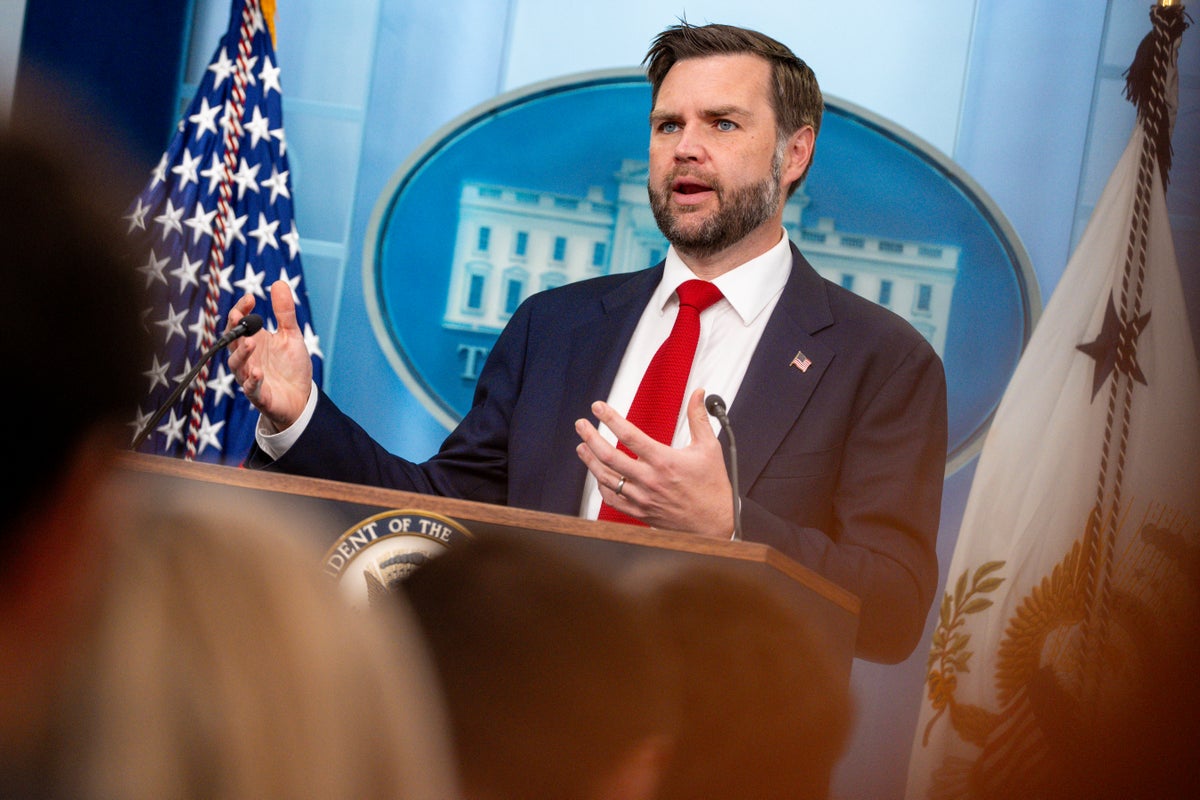
The Washington establishment did not see the digital signatures coming. When the White House quietly finalized a tentative peace memorandum with Tehran to halt a four-month-old war, it ignited an immediate, furious ideological firestorm inside the Republican Party. Vice President JD Vance has assumed the burden of selling this high-stakes gamble to a deeply skeptical Congress and a raging Israeli government. The administration insists that the deal forces a broke, battered Iranian regime into an economic chokehold that guarantees long-term security. Lawmakers see a desperate American retreat that mirrors the exact concessions Donald Trump spent a decade criticizing.
This is not a traditional diplomatic dispute. It is a fundamental crack in the modern conservative coalition, exposing a raw divide between old-school defense hawks and the nationalist wing currently steering American foreign policy.
The Sixty Day Fuse
The document at the center of the chaos is a brief memorandum of understanding. Signed without fanfare, it establishes a two-month window of technical negotiations intended to permanently freeze Iran's nuclear ambitions and reconstruct a devastated regional economy. The immediate terms are jarringly transactional. The United States Navy has already begun dismantling its maritime blockade on Iranian ports, allowing a massive flow of crude oil back into the global market through the Strait of Hormuz.
Hardliners are apoplectic. They argue that Washington is surrendering its most potent leverage before obtaining a single verifiable concession.
The administration views the timeline differently. Vance argues that the opening of the shipping lanes is a temporary valve, not a permanent reward. The vice president spent hours this week briefing reporters and confronting hostile lawmakers, delivering a blunt ultimatum to critics on both sides of the aisle. His message is unsparing. Iran receives no lasting benefits, no permanent sanctions relief, and certainly no cash injections unless international inspectors verify the complete dilution of their highly enriched uranium stockpile.
The physical reality on the ground complicates the debate. Much of Iran's nuclear infrastructure currently lies beneath mountains of concrete rubble, pulverized by months of heavy American and Israeli airstrikes. The White House believes Tehran simply lacks the capital or the stability to rebuild those facilities under a strict enforcement regime. Capitol Hill remains entirely unconvinced.
The Capitol Hill Backlash
The legislative reaction was swift, bipartisan, and exceptionally bitter. For years, the Republican mainstream defined its foreign policy by its absolute opposition to the 2015 nuclear agreement brokered by the Obama administration. Now, senior senators find themselves watching a Republican president implement a framework that looks uncomfortably familiar.
The criticism from the right is cutting. Prominent conservative voices have openly labeled the memorandum an outright American surrender. Senator Ted Cruz of Texas publicly warned that the president is operating under deeply flawed counsel. The anger is driven by a deep-seated distrust of the Iranian clerical establishment, an entity that lawmakers argue cannot be reformed through economic incentives or handshake agreements.
Congress is preparing to fight back. Lawmakers are demanding immediate access to every classified annex and side letter associated with the negotiations led by special envoys Steve Witkoff and Jared Kushner. The administration has countered by asserting its executive authority. White House attorneys claim they possess the clear legal right to temporarily lift energy sanctions during the sixty-day negotiation window without seeking formal legislative approval.
This legal maneuvering has only deepened the institutional resentment. The dispute has transformed from a debate over Middle Eastern strategy into a foundational struggle over constitutional war powers and treaty oversight.
The Fractured Alliance With Israel
The domestic political problem is compounded by a historic breakdown in communication with Jerusalem. The war began as a joint military operation, but the peace is entirely an American production. Israeli officials were completely excluded from the final stages of the negotiation, a decision that has pushed the relationship between the two nations to its lowest point in decades.
The terms of the memorandum directly constrain Israeli military options. The agreement binds the region to a strict cessation of hostilities, effectively halting the Israeli air campaign against Hezbollah infrastructure in Southern Lebanon.
Jerusalem is furious. While Prime Minister Benjamin Netanyahu has maintained a calculated public silence, his closest cabinet allies have launched unprecedented personal attacks against Trump's negotiating team. They accuse Washington of trading long-term Israeli security for short-term global economic relief.
Vance has chosen to meet this anger with raw political gravity. In a tense White House briefing, the vice president reminded the Israeli government that two-thirds of its defensive arsenal is manufactured by American workers and funded by American taxpayers. His language was deliberately devoid of diplomatic pleasantries. He warned that Israel has alienated almost every major global power over the last four months, leaving the United States as its solitary protector. The underlying message was clear. Accept the reality of the deal, or prepare to stand completely alone.
The Future of the Nationalist Coalition
The political gamble for Vance is absolute. By positioning himself as the chief architect and public defender of the memorandum, the forty-one-year-old vice president has tethered his own political future to an incredibly volatile regime in Tehran.
The strategy behind his sudden prominence is clear to seasoned observers. If the sixty-day window yields a permanent, verifiable peace that permanently lowers global energy costs, Vance will have proved that the nationalist approach to global affairs can deliver tangible results. It would solidify his position as the natural heir to the populist movement.
The risks are equally immense. If Iran uses the temporary economic relief to covertly disperse its remaining nuclear materials or re-arm its regional proxies, the political fallout will land squarely on the vice president. Hawks are already sharpening their knives, using derogatory labels to tie Vance to the very diplomatic failures he once criticized.
The next two months will determine more than just the price of crude oil or the status of centrifuges in the desert. They will decide whether the current administration can successfully redefine how the United States projects power, or whether it has simply trapped itself in a familiar, intractable trap.
Vance defends Iran deal amid GOP backlash provides a look at the tense media appearances and sharp questioning the vice president faced while selling this controversial diplomatic shift.


