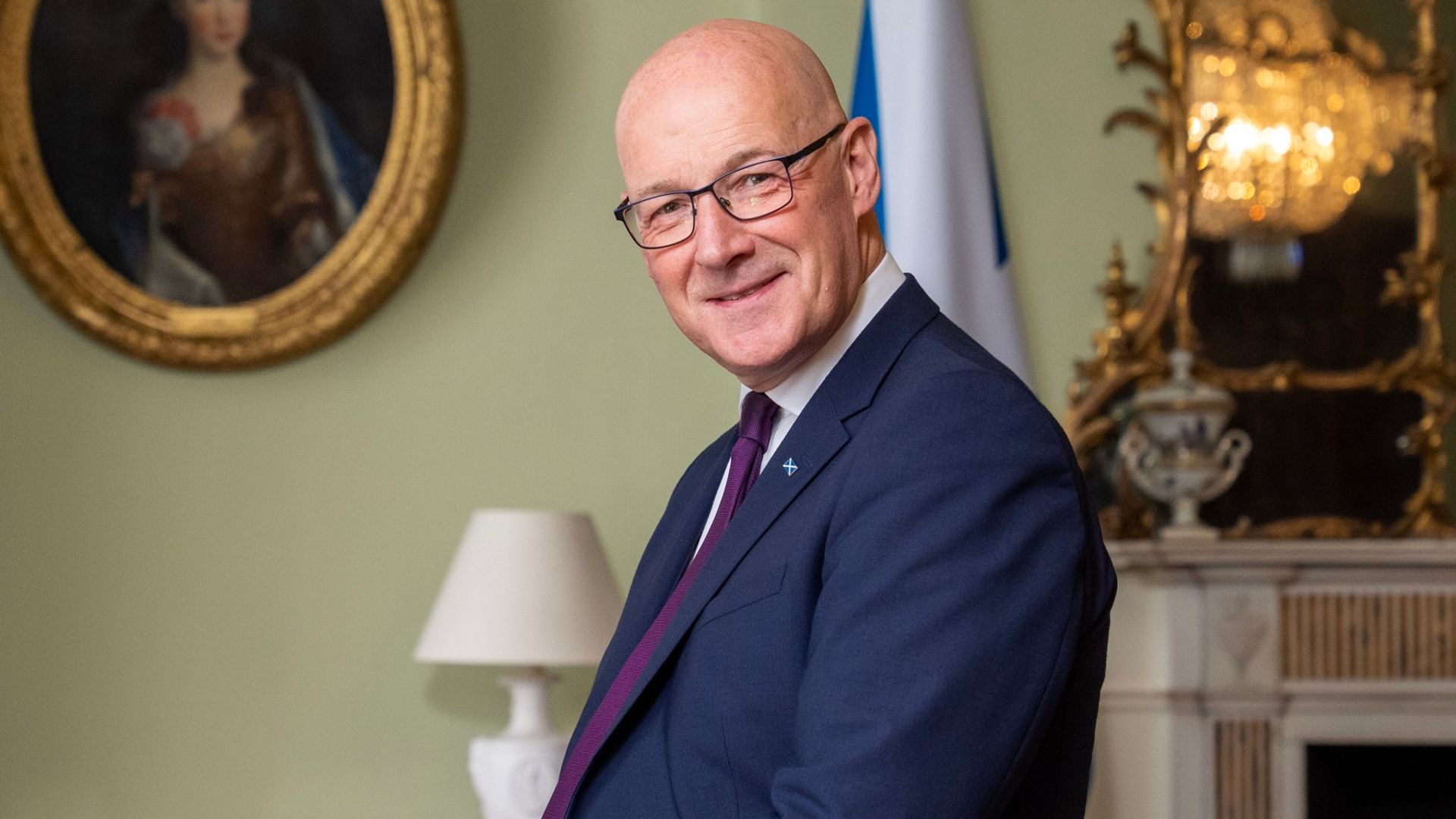
First Minister John Swinney has unveiled a sweeping Programme for Government at Holyrood, anchored by a plan to slash Scotland's fourteen health boards down to just two, introduce a standalone Misogyny Bill, and roll out a regional two-pound bus fare cap. Behind the carefully choreographed policy announcements lies a administration fighting for political survival against a backdrop of institutional backlog, administrative bloat, and escalating friction with business leaders.
The centerpiece of the legislative agenda is undeniably the radical contraction of National Health Service administration. For decades, the health service in Scotland has operated under a sprawling decentralized model featuring fourteen regional boards. Proponents of the historic structure argued it maintained local accountability. Critics, however, pointed to top-heavy management structures that consumed vital financial resources while frontline services struggled. Swinney’s pivot to a centralized two-board model represents the most dramatic structural gamble since the inception of the devolved parliament.
This structural upheaval arrives precisely as administrative data paints a grim picture of hospital throughput. Public Health Scotland figures confirm that delayed discharge levels reached their highest July figures since comparable records began a decade prior. Tens of thousands of bed days are lost each month as elderly and vulnerable patients remain stuck in acute hospital beds simply because local social care packages fail to materialize. Collapsing fourteen boards into two is pitched as an administrative silver bullet designed to strip away middle management and streamline acute care. Yet organizational theorists note that massive structural mergers frequently consume years in internal restructuring, absorbing executive bandwidth precisely when operational stability is most required.
Parallel to the medical overhaul, the Scottish Government is pushing forward with a dedicated Misogyny Bill. The legislation aims to codify protections and expand criminal justice pathways to tackle violence against women and girls. Public safety advocates have long demanded robust legal definitions to address low-level intimidation and systemic prejudice that routinely precede physical violence. Translating statutory definitions into effective policing outcomes remains a persistent hurdle. Police Scotland faces its own operational strain, with thousands of officers currently on restricted duties due to injury, illness, or administrative backlogs. Passing a law is straightforward; operationalizing it across a stretched constabulary is an entirely different matter.
Transport policy also forms a pillar of the new legislative slate, highlighted by a two-pound single bus fare cap covering Glasgow and the wider west of Scotland. Following a successful pilot scheme in the Highlands and Islands, the intervention aims to ease cost-of-living pressures for low-income commuters and boost public transport utilization. Subsidizing transit corridors offers immediate, tangible relief for urban and suburban working populations. Funding long-term fare subsidies against a tightening fiscal settlement requires continuous state backing, raising questions about sustainability once initial pilot allocations exhaust their budgets.
Controversy deepened further with the administration’s stubborn insistence on pursuing a statutory price ceiling on essential grocery items such as milk and bread. Despite a joint open letter signed by twenty-three food, drink, and farming organizations condemning the measure as an unworkable gimmick, ministers maintain that legal intervention is necessary to protect household budgets. Retail analysts point out that gross margins in grocery supply chains are razor-thin. Imposing price caps risks distorting supply lines, triggering unintended product shortages, or pushing cost increases onto non-capped items. Furthermore, constitutional experts continue to debate whether a regional price ceiling violates post-Brexit internal market rules designed to prevent regulatory fragmentation across the United Kingdom.
The cumulative effect of Swinney's announcement is a government attempting to legislate its way out of systemic malaise. By combining massive structural reorganizations of healthcare with populist transport caps and polarizing market interventions, the administration is casting a wide net to recapture public confidence. The strategy relies entirely on the premise that bold legislative text can successfully override entrenched institutional inertia. Whether these reforms reshape public services for the better or merely replace old bureaucracies with new administrative chaos will define the political landscape of Scotland for the foreseeable future.
/GettyImages-157526585-93425538070d4422ad42d22af28c0758.jpg)


