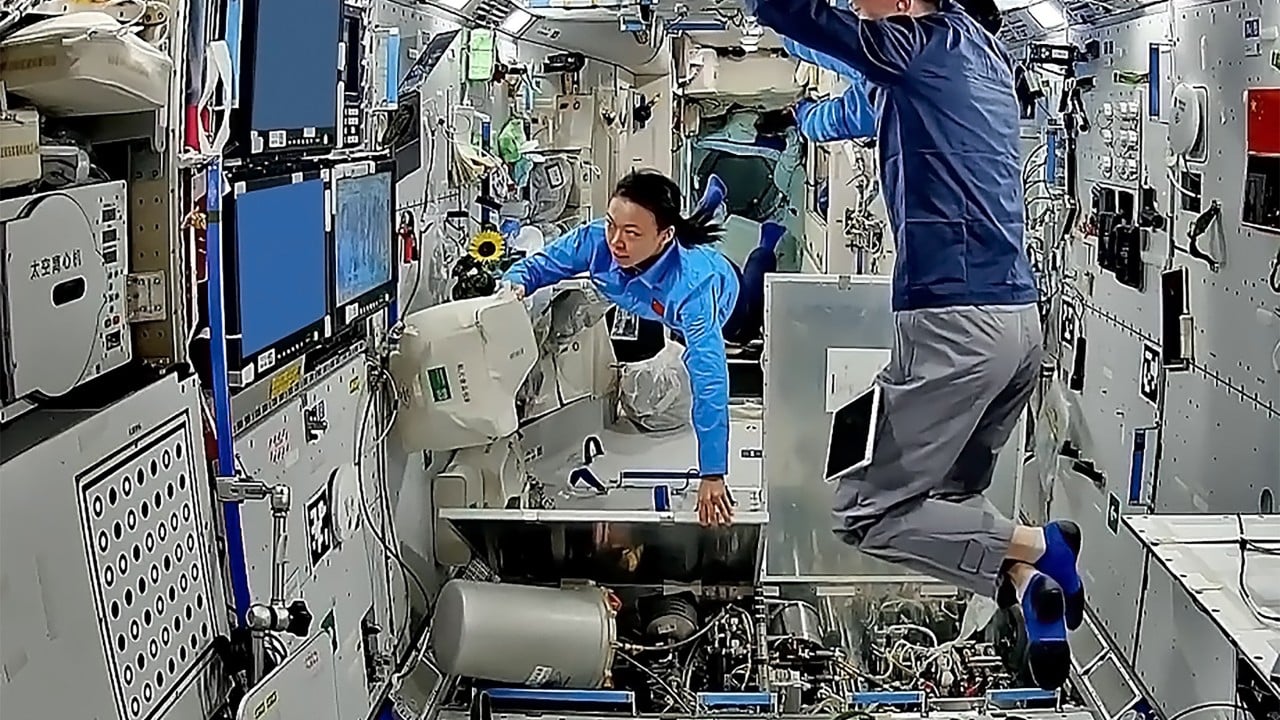
When the Shenzhou-23 rocket cleared the launch tower at the Jiuquan Satellite Launch Center, it carried more than three individuals into orbit. It transported a geopolitical milestone. Aboard that spacecraft was Dr. Lai Ka-ying, a former computer science researcher, police superintendent, and mother of three who became the first astronaut from Hong Kong to reach space. While public discourse frequently romanticizes such missions through the lens of media broadcasts and upcoming orbital lectures for school children, the mechanics behind her selection reveal an intense, highly technical recruitment pipeline that few outside the inner circles of aerospace administration fully comprehend.
The journey from the laboratories of the University of Hong Kong to the Tiangong space station required clearing an exceptionally narrow window of physical and psychological hurdles. Out of roughly 120 initial applicants from Hong Kong during the fourth group selection phase, candidates faced three grueling stages of screening. These evaluations tested vestibular tolerance, psychological resilience under isolation, and deep physiological durability. Don't forget to check out our earlier article on this related article.
For Lai, who has admitted to dealing with motion sickness in everyday terrestrial environments, mastering high-G centrifuges and multi-day desert survival drills meant confronting physical vulnerabilities head-on.
The Technical Reality of Payload Specialists
Unlike mission commanders who pilot spacecraft, payload specialists like Lai are selected primarily for their specialized academic and research backgrounds. Holding a doctorate focused on computer forensics and digital security, Lai brought a structured analytical mindset to the Chinese Manned Space Agency. Orbital stations operate as hyper-complex digital ecosystems where automated life support, telemetry tracking, and environmental monitoring systems demand continuous oversight. To read more about the history here, The New York Times provides an informative breakdown.
Aboard Tiangong, Lai’s primary responsibilities center on operating specialized equipment, including environmental monitoring gear designed to track carbon dioxide and methane emissions on Earth, alongside microgravity fluid physics and space life sciences experiments. Her technical background minimizes the learning curve required to interpret anomalous software behaviors or manage onboard computing hardware.
Training for these duties involved extreme simulation regimes. In interview disclosures following her assignment, Lai highlighted spacesuit pressurization training as a distinct operational bottleneck. Intravehicular spacesuits expand significantly under pressure, drastically limiting manual dexterity inside cramped cabins. Early training sessions left her exhausted from using brute strength rather than refined technique. Only through intensive coaching from veteran astronauts did she master the precise tactile maneuvers required to connect delicate spacecraft pipelines without wasting energy.
Shifting Public Engagement and Educational Impacts
The cultural ripple effect across Hong Kong following her launch has transformed abstract national space milestones into a tangible local reality. Institutions like the Hong Kong Space Museum recorded surges in visitor numbers as families sought to understand the mechanics of microgravity living. Plans by local administrative bureaus to facilitate a direct space-earth dialogue between orbital crew members and students mark a deliberate pivot toward active science, technology, engineering, and mathematics engagement.
Yet, beneath the wave of public enthusiasm lies a calculated structural integration. The inclusion of Hong Kong and Macao residents into the national astronaut selection pool signals a broader shift toward regional talent integration within high-tier scientific initiatives. It bridges administrative divides, positioning special administrative region institutions as direct contributors to advanced aerospace research rather than external observers.
As preparation continues for upcoming live educational sessions from orbit, the true measure of Lai’s mission will not be found solely in the broadcast metrics of her lectures. It rests on whether local research laboratories can successfully translate microgravity findings back into terrestrial industrial applications. For now, the hardware remains functional, the orbital experiments proceed on schedule, and a former local police superintendent continues her watch from four hundred kilometers above the Earth.
First Hong Kong astronaut launches into space onboard Chinese mission
This video provides an exclusive interview detailing the background and rigorous training path of Hong Kong's first astronaut prior to her historic flight.
http://googleusercontent.com/youtube_content/1