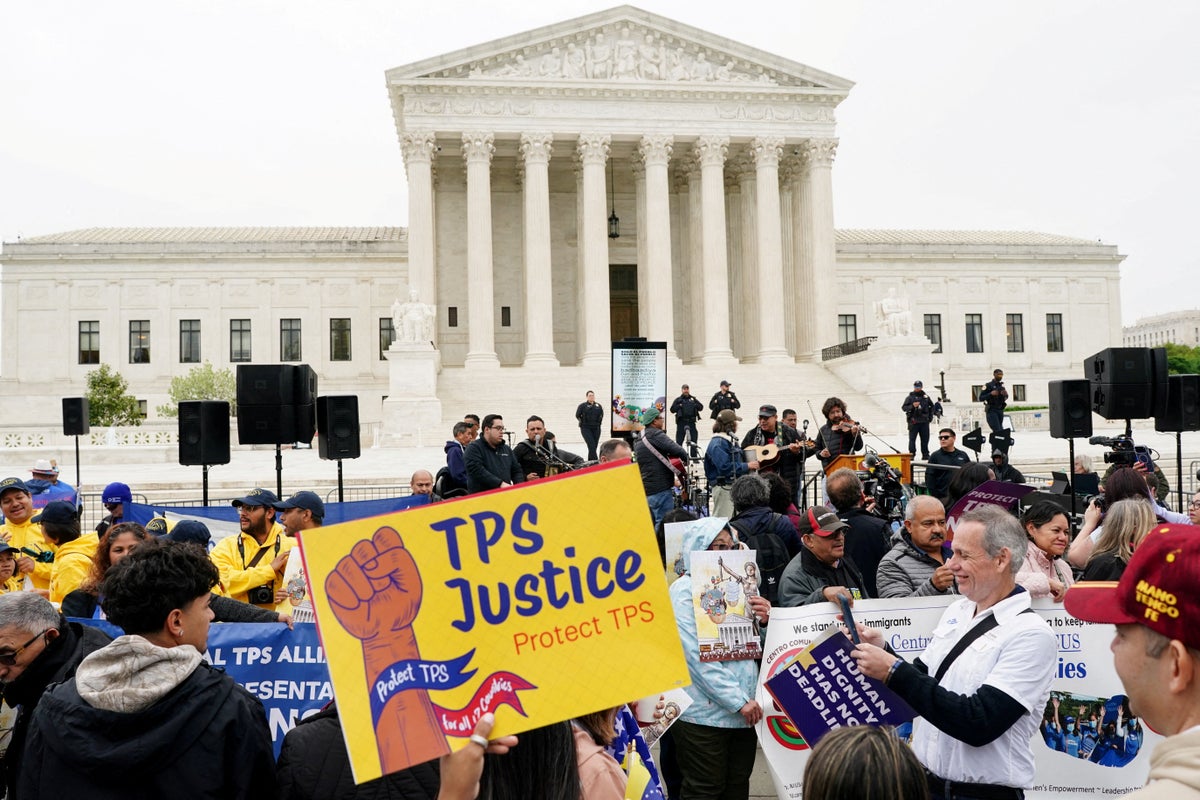
A federal judge in Boston halted the executive branch's attempt to strip work permits from tens of thousands of asylum seekers and humanitarian visa holders, exposing a critical vulnerability in how federal agencies rewrite immigration rules. U.S. District Judge Nathaniel Gorton issued an injunction against U.S. Citizenship and Immigration Services, stopping policies that would have immediately invalidated employment authorization documents for migrants from El Salvador, Sudan, and Ukraine, alongside asylum seekers targeted by new annual fee structures. The decision stops a sweeping enforcement mechanism set to take effect overnight, but the underlying battle over executive power and workplace access is far from resolved.
The ruling addresses an administrative effort to operationalize provisions from the One Big Beautiful Bill Act, passed by Congress in July 2025. Rather than going through standard public notice and comment periods, federal immigration authorities issued internal guidance that retroactively shortened employment validity windows and imposed immediate cancellation penalties for non-payment of newly created asylum processing fees.
The immediate fallout threatens to reverberate across regional economies, essential labor markets, and the administrative law system itself.
Administrative Shortcuts Face Judicial Reality
When administrative agencies attempt to implement broad statutory changes overnight, procedural safeguards often become the first point of failure.
In the five-page emergency order, Judge Gorton pointed directly to the severity of the harm facing affected workers. The court focused on the Administrative Procedure Act, a 1946 federal statute that governs how executive branch agencies introduce and execute regulations. Federal agencies cannot alter the operational rules governing public benefits or legal statuses without first offering notice to the public and allowing a defined period for public comment.
Immigration authorities bypassed this procedural buffer. The agency treated structural changes to employment eligibility as procedural updates rather than substantive rulemaking. That choice opened an immediate legal flank for labor organizations and immigrant advocacy coalitions, led by legal advocacy group Democracy Forward.
The government argued that the changes merely reflected congressional intent established in the 2025 legislative package. However, courts consistently distinguish between legislative mandates and the executive execution of those mandates. While Congress set new fee guidelines and statutory frameworks, USCIS created enforcement mechanisms—including the retroactive cancellation of active work cards—without publishing rules for public review.
Retroactivity represents one of the most protected boundaries in American administrative law. Courts routinely strike down agency rules that penalize individuals for conduct that was entirely lawful when undertaken, or that retroactively strip rights previously granted under existing regulations. For migrants who paid processing fees and received valid employment authorization under previous agency guidelines, the sudden revocation of those documents violated basic expectations of procedural fairness.
The Economic Shadow Over Local Workforces
The immediate consequences of invalidating work permits extend far beyond individual visa holders. They hit local payrolls, regional supply chains, and municipal services.
Consider a mid-sized commercial food processing facility in the Midwest. If twenty percent of its evening shift staff relies on Temporary Protected Status granted under previous executive designations, a sudden, overnight cancellation of work permits creates an immediate operational crisis. Employers face severe civil and criminal penalties under federal law if they knowingly retain workers whose authorization documents expire or face revocation.
The legal mechanism creates a forced choice for businesses.
- Fire verified workers instantly to remain compliant with federal law.
- Suspend operations or cut production shifts due to sudden labor shortfalls.
- Bear the cost of emergency recruiting and onboarding in tight labor markets.
Economic sectors like specialized manufacturing, elder care, agriculture, and construction operate on thin margins and tight staffing schedules. A sudden drop in legal workforce participation forces immediate cutbacks. When TPS holders from El Salvador, Sudan, and Ukraine lose their legal right to work, the loss cascades into local tax bases, sales revenues, and commercial rents.
Furthermore, the administrative friction created by new asylum fees alters how noncitizens interact with the formal economy. Under the halted policy, failure to pay an annual fee resulted in automatic rejection of pending asylum claims and immediate revocation of employment authorization. For individuals fleeing regional conflicts or political violence, acquiring liquid funds within narrow administrative deadlines poses a significant hurdle. When legal work authorization disappears, workers do not simply vanish; many are pushed into informal, off-the-books economies where wage theft and hazardous working conditions run unchecked.
The Strategy Behind Fee Structures and Expiration Dates
The policy targeted work permits through two distinct mechanisms: financial hurdles and shortened duration terms.
The administration introduced annual fees for asylum applicants, reversing decades of policy that permitted asylum seekers to apply for work authorization without paying recurring maintenance dues. Coupled with this was the elimination of the long-standing 30-day processing deadline for initial asylum work permit applications. By removing processing deadlines while simultaneously introducing mandatory recurring fees, the agency constructed a dual barrier to legal employment.
[Policy Shift Breakdown]

Standard Framework:
Application Submission -> 30-Day Processing Window -> Work Permit Issued -> Periodic Renewal

Challenged Agency Framework:
Application Submission -> Annual Fee Requirement -> Indefinite Processing Window -> Retroactive Expiration
For TPS holders, the administrative maneuver was even more direct. Despite extending protected status for citizens of El Salvador, Sudan, and Ukraine earlier in the year, the agency attempted to retroactively apply shorter work permit validity periods. This created a situation where an individual's protected status remained technically active under international and domestic humanitarian definitions, yet their practical ability to support themselves legally was severed.
Legal strategists within the executive branch have increasingly used procedural modifications—such as adjusting fee schedules, modifying adjudication timelines, and redefining documentation requirements—to accomplish broader policy goals without navigating the traditional legislative process. By altering the administrative conditions required to maintain a work permit, agencies can effectively reduce the number of authorized foreign workers without explicitly canceling underlying humanitarian statuses in court.
This approach creates significant operational strain within USCIS itself. The agency relies heavily on fee collections to fund its daily operations. Imposing complex, multi-tiered fee requirements on asylum seekers increases processing burdens on civil servants who must track recurring payments, issue delinquency notices, and manage complex cancellation appeals.
Judicial Battles and Strategic Forum Selection
The filing of this challenge in Boston highlights a strategic reality of modern federal litigation.
Litigants challenging federal agency actions routinely evaluate judicial districts based on procedural precedent and court dockets. While Boston has seen numerous legal challenges to federal policy, Judge Gorton's presence on the bench introduces a critical element to the narrative. Appointed by President George H.W. Bush, Judge Gorton is not viewed as an ideological opponent of executive authority. His willingness to block the policy highlights the purely procedural and statutory weaknesses of the agency's implementation.
The court's initial order acts as an emergency stay, keeping current work permits valid while the court evaluates whether to issue a preliminary injunction. A comprehensive decision is expected by early August.
The legal friction point centers on three specific questions:
- Did USCIS exceed its statutory authority by applying new rules retroactively to individuals already granted employment authorization?
- Does the agency have the legal right to bypass public notice and comment periods under the "good cause" exception of the Administrative Procedure Act?
- Do labor unions and advocacy organizations have direct standing to sue based on the financial and operational harm caused to their members and employers?
The administration maintains that federal law explicitly grants the executive broad discretion over the terms and conditions of alien employment. Government attorneys argue that Congress intended for the 2025 spending law to overhaul immigration enforcement, giving the agency full authority to implement fee collections and manage authorization windows immediately.
However, judicial precedent heavily scrutinizes administrative agencies when they attempt to bypass public participation requirements. Previous attempts by multiple administrations to alter immigration rules via agency memos rather than formal notice-and-comment rulemaking have stumbled in federal district courts for this exact reason.
The Widening Gap Between Enforcement and Economic Demand
The friction between executive immigration control and national labor demands highlights a persistent structural tension.
While political rhetoric emphasizes border security and strict status enforcement, regional economies rely heavily on authorized foreign labor to fill structural workforce gaps. Stripping work permits does not change the physical presence of individuals awaiting asylum hearings or residing under temporary humanitarian protections. Instead, it alters their legal relationship to the economy.
When legal status is severed from employment authorization, workers lose access to standard labor protections, unemployment insurance, and formal banking systems. Employers lose verified staff. Municipalities lose direct tax withholdings.
The temporary block issued by the Boston federal court provides a brief respite for thousands of families and businesses. Yet, as the court prepares its full ruling, the broader conflict remains open. If the court ultimately upholds the agency's procedural shortcuts, thousands of workers will be removed from formal payrolls overnight. If the court strikes down the policy permanently, the executive branch will be forced to return to the lengthy, public process of standard rulemaking—a path that requires transparency, public feedback, and clear justification for every procedural change.
The decision due in early August will determine whether administrative efficiency can override statutory procedure, or whether the legal rights of working immigrants remain bound to the strict procedural rules of federal law.