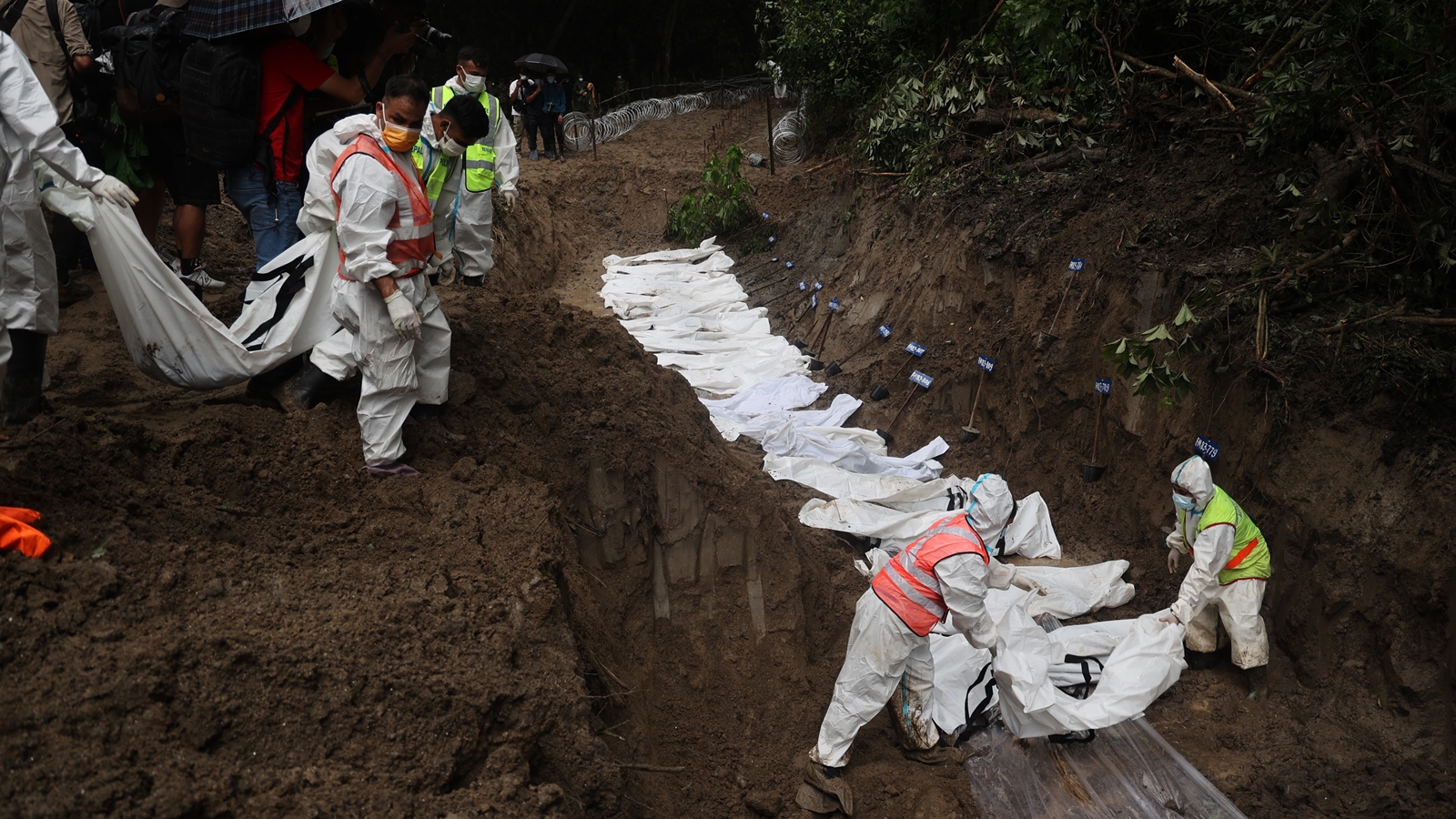
The physical devastation left in the wake of the August 26 flash floods in Rasuwa, Nepal, is matched only by the bureaucratic and forensic nightmare of identifying the dead. With a death toll soaring past nine hundred, morgues from mountain districts to the plains are overflowing, forcing local authorities to adopt a grim protocol: systematic DNA sampling followed by temporary mass burials.
Families wandering through makeshift processing centers outside district hospitals are facing an agonizing reality. Visual identification is frequently impossible. Days of transport down surging river corridors have rendered bodies decomposed or mutilated beyond recognition. In response, the state has rolled out a procedure requiring photographs, fingerprints, and genetic profiles to be cataloged before any unidentified remains are placed into temporary graves.
The Logistical Bottleneck of Mass Identification
Handling hundreds of recovered bodies requires infrastructure that Himalayan districts simply do not possess. Local facilities lack the cold storage units necessary to preserve a massive influx of remains. In Dhunche and Chitwan, overwhelmed medical teams and police personnel operate in makeshift conditions, collecting biological markers in spaces never designed for mass forensics.
Disaster management protocols dictate that every body must be numbered, photographed, and logged into a central database before disposition. Yet, the sheer volume of missing persons—numbering in the thousands, including foreign nationals from neighboring countries—strains analytical laboratories.
First-degree relatives must navigate a complex web of requirements to match genetic data. Parents, children, or siblings residing within the country are directed to provide fresh blood samples at designated police hospitals or district offices. Those living abroad face an even steeper bureaucratic climb, needing to visit authorized foreign forensic laboratories, pay for profiling, and coordinate international electronic transfers of data to official police channels.
Secondary Trauma and Conflicting Claims
The reliance on genetic matching introduces unexpected complications into the grieving process. Multiple families have stepped forward to claim the same heavily altered remains based on general physical descriptions or clothing fragments.
Without scientific verification, these overlapping claims threaten to delay final funeral rites indefinitely. Forensic experts at regional medical centers must prioritize DNA extraction from teeth or bone fragments to resolve contested identities, turning hospitals into waiting rooms of legal and emotional limbo.
This reliance on biological markers shifts the burden of proof onto traumatized survivors. While the state's directive allows for the exhumation of temporarily buried bodies if a positive match is confirmed later, the psychological toll of burying an anonymous loved one in a marked body bag leaves an open wound for families seeking closure.
The Transnational Scale of the Tragedy
Rivers that functioned as lifelines have transformed into long-distance channels of loss. Bodies have drifted dozens of miles downstream, crossing international borders into northern India. This geographic dispersion turns recovery into an international diplomatic effort, requiring consular coordination between Kathmandu and foreign missions to verify passports, process post-mortem documents, and arrange repatriation.
As drainage projects lower the risk of secondary flooding from blocked mountain lakes upstream, the focus of the emergency response shifts entirely from rescue to recovery. The infrastructure of identification will dictate how many families ever learn the final resting place of their missing relatives. The genetic database compiled in the coming weeks will remain the only bridge across a chasm of loss.