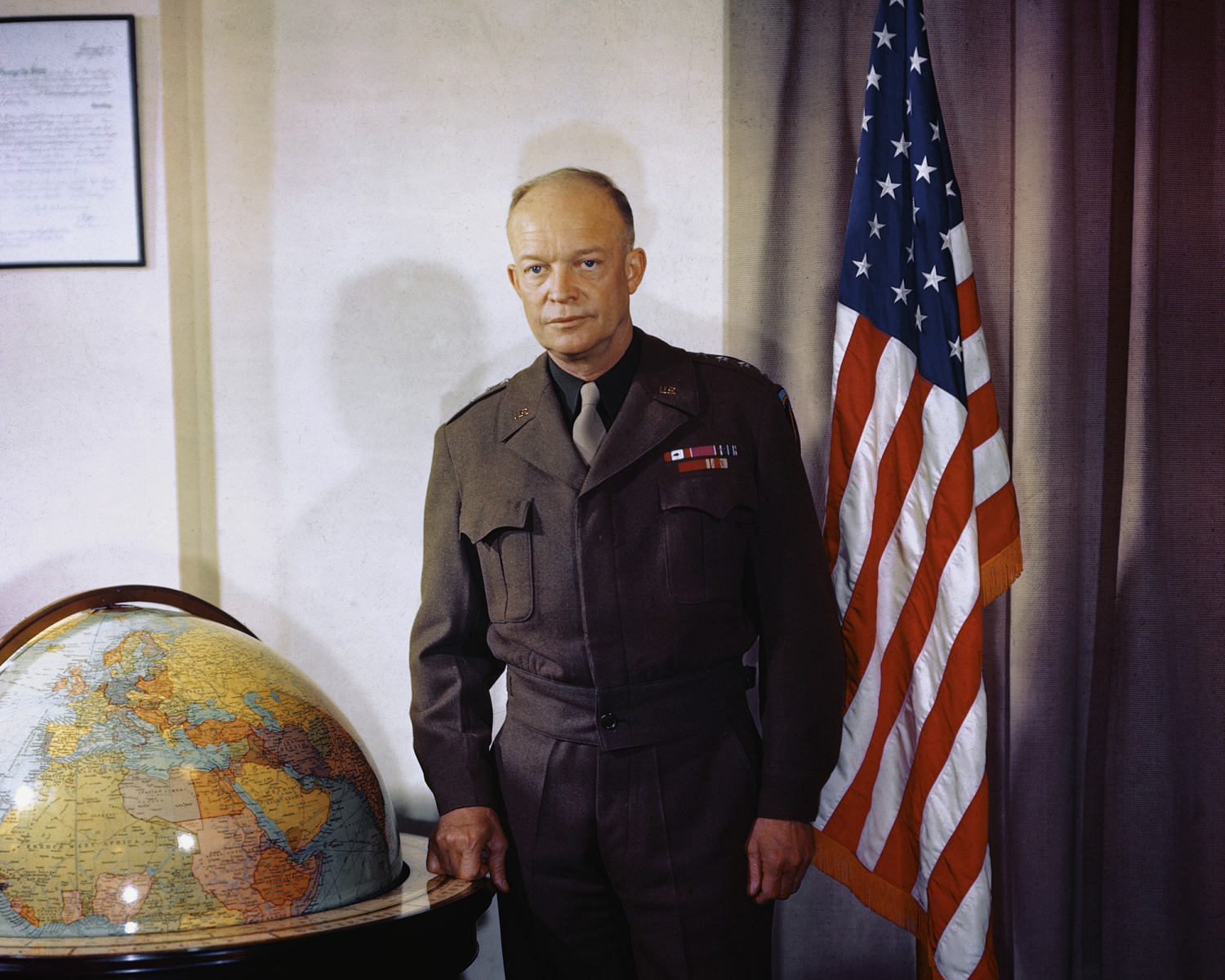
Staffers working for Defense Secretary Pete Hegseth reportedly damaged a WWII-era Eisenhower globe while attempting to relocate the historic artifact into his office, exposing recurring tensions between rapid political redecoration and institutional preservation inside the Pentagon.
When a new cabinet secretary takes over a sprawling federal department, the urge to stamp a personal mark on the space arrives almost immediately. Sometimes it is a fresh coat of paint. Sometimes it is swapping out portraits on the wall. Occasionally, it involves hauling fragile historical objects out of storage or across corridors without specialists who understand how old materials behave under stress.
A competitor headline framed the episode around the basic act of moving the globe to Hegseth's office, treating it like a quirky workplace blooper. That framing misses the deeper story. In Washington, physical artifacts inside power centers carry heavy symbolic weight, yet the bureaucratic rules governing how they are handled often sit in a gray zone between ceremonial prestige and practical museum conservation.
How Fragile History Collides With Executive Haste
Artifacts from World War II are not indestructible museum props. They are aging assemblies of metal, paper, varnish, adhesives, and wood that have spent decades expanding and contracting with building temperatures and humidity.
Consider a hypothetical example involving a mid-twentieth-century terrestrial globe stored in an administrative wing. Even if the sphere looks solid from across a room, internal mounting hardware can corrode over eighty years, and surface coatings can turn brittle. Lifting it improperly—by grabbing a decorative ring rather than supporting the structural base, or wedging it through a tight doorway—can dent thin metal, crack aged cartography, or shear a delicate axis.
In large government buildings like the Pentagon, relocation logistics rarely operate on a slow academic schedule. Political appointees and their aides often push for immediate changes to signal authority, momentum, or continuity with favored historical figures like Dwight D. Eisenhower.
Historical objects inside working offices live two lives at once: they serve as visual shorthand for leadership, and they remain physical items bound by the laws of material decay.
Speed and conservation do not mix easily. Professional art handlers and museum registrars plan routes, measure clearances, check environmental conditions, and use padded supports before a single piece moves. Junior staffers or aides operating on an informal mandate may treat an artifact like standard office furniture, right up until something scrapes, bends, or snaps.
Symbolism Versus Stewardship
Invoking Eisenhower in the Defense Department is a deliberate move. As a five-star general, Supreme Allied Commander in Europe, and president, Eisenhower stands as a touchstone for strategic command and civil-military discipline. Bringing an item tied to his era into the secretary's orbit sends a clear message about what kind of legacy an administration wants to project.
Yet stewardship requires more than admiration. Admiring a symbol while mishandling the physical object creates a glaring contradiction. If a piece of history gets banged up on the way to making a point about heritage, the gesture loses some of its polish.
At the same time, fairness demands looking at the practical realities of federal administration. High-level offices turn over frequently, incoming teams arrive under intense media and political pressure, and unclear chain-of-custody habits can leave aides guessing whether a given item requires formal curatorial clearance or just a pair of hands.
Bureaucratic Blind Spots Inside Massive Institutions
Anyone who has covered federal agencies for decades recognizes a familiar pattern. Huge institutions possess thick manuals, legal authorities, and specialized offices for almost everything, yet everyday execution still depends on human habits and communication loops.
When a new leadership team steps in, institutional memory can get skipped. Career staffers who know the quirks of a building—which doors are narrow, which elevators are reserved, which items are on loan or tracked as cultural property—may not be consulted if an aide wants something done quietly or quickly.
That dynamic shows up across Washington in different forms. Sometimes it is a misplaced document. Sometimes it is a protocol misstep. When it involves a WWII-era Eisenhower globe, the incident becomes immediately legible to the public because a globe is tangible, recognizable, and tied to a famous name.
Why These Stories Stick in Public Memory
Public attention rarely stays locked on minor administrative friction unless it touches a nerve. A damaged relic touches two nerves at once: accountability in high office and respect for shared history.
Critics see carelessness and a lack of institutional discipline. Defenders may view it as an exaggerated side note compared to major policy battles, defense budgets, or global security crises. Both reactions are predictable. In Washington, almost every minor mishap gets pulled into a broader argument about competence and temperament.
Still, dismissing physical care as trivial overlooks how institutions function over time. Small lapses in procedure often point to broader habits inside an office—how decisions are vetted, whether experts are brought in early, and how much attention is paid to rules when nobody is watching.
The Counter-Argument Over Office Culture and Scale
Not every relocation hiccup is evidence of malice or reckless disregard. A fair assessment has to weigh the sheer scale and friction of running a massive defense headquarters.
Thousands of people move through complex corridors every day. Equipment, files, displays, and furnishings shift constantly. In an environment defined by urgency and constant motion, mistakes happen even among well-intentioned staff.
There is also a counter-argument worth taking seriously: sometimes institutional rules around property and display become overly tangled, prompting aides to improvise rather than navigate slow administrative channels. When routine requests take weeks, impatient staffers sometimes cut corners just to get basic setup tasks finished.
Even granting that context, improvisation carries real risk when the object in question is irreplaceable or historically significant. You can replace a desk chair in an afternoon. You cannot easily undo damage to an artifact from the 1940s.
| Factor | Informal Staff Move | Specialist-Guided Move |
|---|---|---|
| Speed | Often fast initially | Slower due to planning |
| Risk to Artifact | Higher chance of impact or strain | Lower due to proper handling |
| Protocol Alignment | Can bypass curatorial oversight | Follows documented custody steps |
| Optical Fallout | Severe if damage occurs | Minimal and routine |
What Institutional Care Actually Requires
Protecting historic items inside active government spaces does not require turning offices into sterile museums where nobody can work. Plenty of working spaces safely house historic pieces for years without incident.
It takes basic discipline. Verify ownership and historical status before moving anything. Bring in qualified handlers or property specialists for fragile or high-value items. Measure the path first, and build in enough time so nobody feels forced to rush a delicate carry.
Whenever a WWII-era Eisenhower globe ends up banged up during a move to the defense secretary's office, the lesson is straightforward: power is temporary, institutional rules exist for a reason, and history deserves careful hands before it ever takes center stage.