The United States military is evaluating contingency scenarios involving a massive ground operation to seize or destroy enriched uranium stockpiles inside heavily fortified Iranian installations. Recent reports originating from national security publications have brought these proposals to light, transforming academic defense discussions into public geopolitical flashpoints.
For the average observer, the idea of elite commandos conducting a transcontinental raid to steal a nuclear stockpile sounds like standard Hollywood screenwriting. In reality, Pentagon contingency planning routinely models extreme military options. When diplomatic channels freeze and aerial bombardments face deep subterranean barriers, military planners must look at the unthinkable. Yet, executing a ground extraction of nuclear material inside a hostile state is an operational nightmare that risks sparking an unprecedented regional conflagration.
The Operational Reality of Subterranean Extraction
To understand why a nuclear grab operation is logistically extraordinary, one must examine the physical geography of Iran's primary nuclear infrastructure. Facilities such as Fordow and Isfahan are not simple buildings sitting out in the open desert. They are deeply buried complexes carved into solid rock mountainsides, reinforced with tens of meters of high-strength concrete, and protected by multi-layered air defense networks.
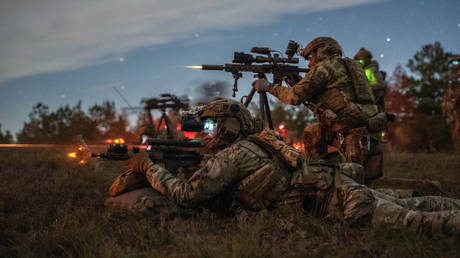
A hypothetical ground operation to recover enriched uranium would require far more than a small squad of tier-one operators dropping in under the cover of darkness. Military analysts point out that thousands of conventional support troops would be required to clear surrounding minefields, neutralize local garrisons, suppress mobile surface-to-air missile batteries, and secure emergency extraction corridors.
Once the outer perimeter is locked down, specialized units—such as elements of the Army Rangers or elite chemical-hazard response teams—would have to breach heavily damaged underground blast doors. Handling thousands of pounds of radioactive material requires precise environmental controls, heavy shielding containers, and intricate logistics trains. Transporting heavy radioactive cargo out of a hostile country while under constant threat of ambush pushes military logistics to the absolute edge of human capability.
Why Aerial Strikes Have Limitations
The conversation surrounding ground intervention stems directly from the technical limitations of air power. While precision bunker-busting munitions can collapse tunnel entrances and bury infrastructure under millions of tons of rubble, they do not necessarily vaporize or neutralize all fissile material contained within.
If the objective is absolute denial of material, burying it deeper via airstrikes can sometimes complicate future monitoring or recovery. This reality forces military thinkers to weigh the immense costs of a ground invasion against the permanent hazard of leaving enriched isotopes buried within a shattered mountain complex. However, option-generation inside the Department of Defense does not equate to an imminent execution order. Strategic planners draft thousands of plans annually that are designed purely to give civilian leadership a spectrum of choices, ranging from the highly improbable to the catastrophically risky.
The Geopolitical Fallout
Beyond the tactical hurdles, the diplomatic and strategic blowback of such an operation would be staggering. Launching a ground invasion into sovereign Iranian territory crosses every red line in modern international law. Tehran would view an overt military snatch-and-grab operation as an act of total war, triggering immediate asymmetric responses across the Middle East.
Regional proxies, cyber warfare units, and vital maritime transit choke points like the Strait of Hormuz would instantly become targets for retaliation. The economic shockwaves hitting global energy markets would be immediate and severe. Furthermore, the risk of a miscalculation involving nuclear safety—such as a containment breach during transport—introduces environmental hazards that planners cannot fully mitigate.
When military options require risking the lives of thousands of service members to recover radioactive assets while managing global escalation risks, the calculus usually points back toward deterrence and containment. The Pentagon's evaluation of a nuclear site raid highlights the profound frustration of modern statecraft when traditional diplomacy stalls. Yet, moving from a whiteboard contingency plan to actual boots on the ground remains a bridge few civilian leaders are willing to cross.
This video provides live coverage and expert analysis regarding recent Pentagon warnings and strategic shifts involving Iran.
http://googleusercontent.com/youtube_content/1