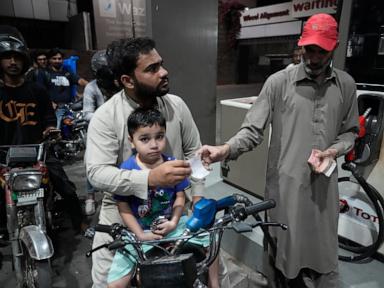
Pakistan’s recent distribution of emergency fuel relief to more than nine million low-income citizens exposes a fragile economy caught in the crossfire of geopolitical conflict. When conflict flared across the Middle East, international crude benchmarks spiked, sending immediate shockwaves through oil-importing developing nations. For Islamabad, the timing could not have been worse. Prime Minister Shehbaz Sharif’s administration authorized targeted petroleum discounts—primarily for motorcycle riders, rickshaw operators, and owners of small vehicles—to shield working-class families from debilitating transport costs.
Yet, this intervention has ignited a fierce structural standoff with international lenders, exposing the severe policy constraints facing governments that attempt to manage imported inflation through price interventions.
The Mechanics of a High-Stakes Cushion
The subsidy architecture was built out under acute political pressure. Major political factions, including Jamaat-e-Islami, threatened massive demonstrations in Islamabad as petrol and diesel prices crept toward unsustainable highs. Transport workers, delivery drivers, and daily wage earners faced an impossible math equation: stagnant daily earnings colliding with surging pump prices that instantly inflated the cost of food, basic goods, and movement.
To stave off widespread social unrest, the government deployed a targeted token system. Under this framework, eligible operators of motorcycles and three-wheelers receive direct financial offsets, such as weekly discounts of up to 500 rupees, while smaller passenger cars with engine capacities under 800cc qualify for reduced per-litre relief.
The administration framed these measures as a vital safety net. However, economic analysts recognized the move immediately as a dangerous fiscal tightrope walk.
The International Monetary Fund Collision Course
The core friction point lies in Pakistan's ongoing stabilization agreements with the International Monetary Fund. Islamabad relies heavily on multi-billion-dollar bailout tranches to avert sovereign default. International lenders view broad-based price subsidies with deep suspicion, arguing that they distort market signals, drain public coffers, and ultimately benefit unintended recipients at the expense of structural reform.
Even as fuel relief reached roughly ten million vulnerable individuals, the lender's representatives publicly urged the administration to phase out the program. The official stance insists that any future welfare support must be strictly time-bound, narrowly targeted, and strictly accommodated within pre-approved budgetary boundaries rather than managed through ad-hoc price interventions.
This creates a governance trap. If Islamabad maintains the fuel discounts to pacify domestic street anger and keep transport running, it risks stalling crucial loan disbursements. If it withdraws the support abruptly to satisfy external creditors, domestic inflation threatens to spark severe labor strikes and urban protests.
Structural Vulnerability and the Gulf Dependence
Pakistan's predicament highlights a structural flaw that extends far beyond a single geopolitical flare-up. The nation depends on Gulf suppliers for the vast majority of its petroleum imports. When Middle Eastern shipping lanes, refineries, or extraction hubs face military threats, the price volatility transmits instantly to domestic markets.
Local manufacturing and small-to-medium enterprises absorb these shocks immediately. Higher freight and fuel bills force businesses to compress profit margins, cut working hours, or lay off workers. Consequently, a fuel subsidy is rarely just about cheaper gasoline for a motorcycle rider; it acts as a clumsy, expensive thumb on a scale trying to balance corporate survival, household caloric intake, and macroeconomic stability all at once.
Governments with narrow fiscal space rarely have good options during global supply shocks. They choose between immediate political survival through debt-fueled subsidies and long-term institutional credibility purchased at the cost of immediate domestic hardship. For now, Islamabad has chosen to keep the pumps running for millions of workers, leaving the broader fiscal reckoning to play out against the backdrop of upcoming executive board reviews and volatile energy markets.