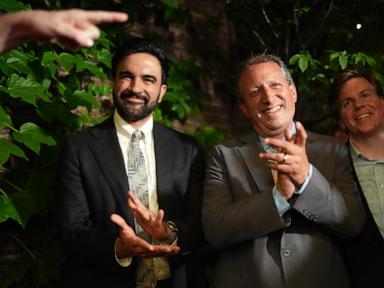
The traditional power structures of the Democratic Party just suffered a fracture in New York. Insurgent candidates backed by New York City Mayor Zohran Mamdani swept through the state's congressional primaries, unseating two deeply entrenched incumbents and rejecting a handpicked establishment successor. This was not a minor tremor. It was an organizational dismantling. While national party leaders downplayed the threat, the victories of Darializa Avila Chevalier over Adriano Espaillat, Brad Lander over Dan Goldman, and Claire Valdez over Antonio Reynoso signal a structural realignment driven by organized leftist infrastructure and boiling voter frustration over foreign policy and housing costs.
The national narrative wants you to believe these primaries are isolated local squabbles. They are not.
The End of Invincibility for the Party Machine
For decades, the Democratic establishment maintained control through a predictable network of real estate money, institutional endorsements, and identity politics. Tuesday night proved that machine is breaking down under pressure from a younger, highly organized electorate.
Representative Adriano Espaillat, a fifth-term lawmaker and leader of the Congressional Hispanic Caucus, assumed his base in upper Manhattan and the Bronx was secure. He was wrong. Darializa Avila Chevalier, a 32-year-old democratic socialist who helped orchestrate campus protests at Columbia University, defeated him by running an aggressive, corporate-free ground campaign. Avila Chevalier focused heavily on Espaillat's financial backing from the American Israel Public Affairs Committee (AIPAC), a move that turned the race into a proxy war over Washington's foreign policy.
The strategy worked because it tapped into deep local anxiety. Voters in East Harlem and the Bronx are watching their neighborhoods gentrify while federal funds flow toward foreign military aid. By connecting the dots between international policy and local economic stagnation, the insurgents bypassed traditional media filters entirely.
Money Fails to Buy Safety in Manhattan
The defeat of Representative Dan Goldman by former city Comptroller Brad Lander exposes a different vulnerability for the party elite. Goldman, a multi-millionaire and former federal prosecutor, possessed vast personal wealth and a prominent national profile. He lost anyway.
Lander leveraged his deep knowledge of city government finances to accuse Goldman of ignoring the daily economic pain of working-class New Yorkers. The war in Gaza served as the ultimate wedge issue. In a district with a substantial Jewish population, Lander successfully argued that Goldman’s stance on the conflict was out of touch with a growing segment of voters demanding an immediate ceasefire. Goldman tried to recalibrate his rhetoric late in the campaign, but voters saw the shift as tactical rather than sincere.
Meanwhile, the open race for Jerry Nadler’s vacated seat drew national attention due to the presence of Jack Schlossberg, the 33-year-old grandson of President John F. Kennedy. The media tried to manufacture a Camelot restoration story. It fell flat.
Schlossberg ran in one of the wealthiest congressional districts in America but faced constant scrutiny over his thin resume. In an environment defined by intense policy debates over housing supply and artificial intelligence regulation, nostalgia was a weak currency. Schlossberg failed to capture the seat, proving that the modern electorate demands ideological clarity and concrete policy plans over dynastic names.
The Kingmaker in City Hall
The real winner of the night was not on any ballot. Mayor Zohran Mamdani gambled his political capital by backing primary challengers against sitting members of his own party, a move that defied conventional political wisdom.
Mamdani used his status as America's most prominent democratic socialist mayor to coordinate volunteers, raise small-dollar donations, and nationalize local races. House Democratic Leader Hakeem Jeffries flew into the city to campaign for the incumbents, hoping to stop the progressive wave at the shore. Jeffries lost that battle. The defeat of his preferred candidates on his home turf represents a significant blow to his authority and a warning shot for the party's moderate wing ahead of the midterm elections.
The establishment's defense mechanism is already at work. Before the final votes were even tallied, party leaders in Washington argued that a few isolated primary losses in a deeply blue state would not alter the national caucus identity. This is wishful thinking.
The infrastructure built by these insurgent campaigns does not vanish when the polls close. The progressive coalition has created a replicable blueprint for unseating entrenched incumbents by weaponizing specific policy grievances like housing affordability and military spending. Moderate Democrats who refuse to adapt to this shifting terrain will likely find themselves facing the same organized resistance in the next election cycle.