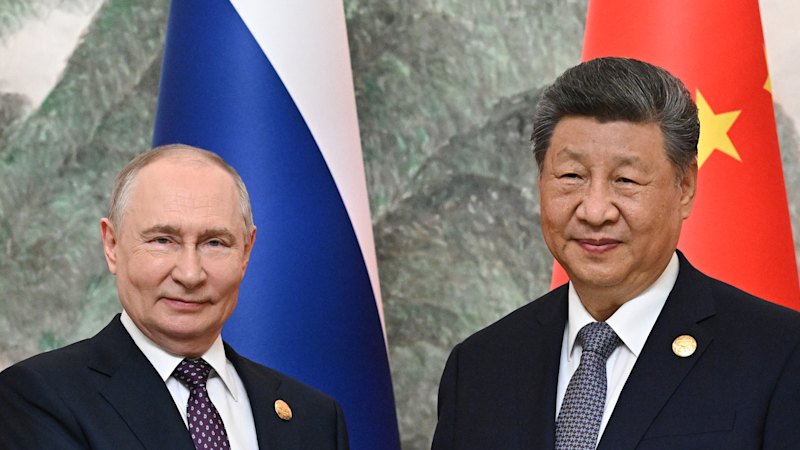
When Beijing urges Moscow and China to lead a multipolar world at an Asia-Pacific Economic Cooperation summit, the headline sounds like another round of diplomatic theater. Look closer at the mechanics behind that pitch. A multipolar world is not a charity drive for smaller economies; it is a redesign of trade routes, payment rails, and security guarantees designed to dilute Western veto power while giving Beijing and Moscow wider room to maneuver.
At its core, the multipolar world argument rests on a simple complaint. One dominant superpower and its network of allies set too many rules, control too many financial chokepoints, and attach too many political strings to capital and technology. Telling an Asia-Pacific audience that China and Russia should steer the shift toward a multipolar world is an attempt to turn frustration with unilateral pressure into alignment with Beijing's preferred order.
That pitch runs straight into a reality check across the Indo-Pacific. Most governments in the region do not want a multipolar world where China calls the shots on maritime disputes or Russia sets the tone on regional security. They want room to trade with everyone without being forced to pick a side or surrender sovereignty to a new set of regional bosses.
Why Beijing Pushes a Multipolar World at Trade Forums
APEC was built around open trade, investment facilitation, and practical economic cooperation rather than hard geopolitical blocs. Bringing a sweeping call for a multipolar world into that room is deliberate. It reframes trade friction, export controls, and supply chain rerouting as symptoms of an outdated single-pole order rather than responses to specific state practices.
Think about the audience sitting around the table. Many Asia-Pacific economies rely heavily on export markets in North America and Europe while depending just as heavily on Chinese manufacturing inputs and supply chains. When Beijing frames a multipolar world as a way to expand autonomy, it is speaking directly to leaders who worry about tariffs, sanctions spillover, and sudden policy shifts from Washington or Brussels.
Yet there is a catch in that sales pitch. Economic weight does not automatically buy moral or strategic trust. A country can be the biggest trading partner in a neighborhood and still spark anxiety when coast guard vessels push into contested waters or when commercial terms feel tilted toward state-backed champions.
Trade Rhetoric Meets Supply Chain Reality
Speakers at summits often talk about openness and fairness in broad strokes. Supply chains tell a much drier, sharper story. Over the past several years, manufacturers and buyers have spent real money diversifying assembly, dual-sourcing components, and building regional resilience precisely because relying on a single dominant hub creates exposure.
Calling for a multipolar world does not erase those risk calculations. If a factory manager in Vietnam or Malaysia faces shipping delays, customs scrutiny, or sudden power curbs, a diplomatic speech about global balance does not lower unit costs. Practical predictability beats grand slogans every single time.
The Gap Between Shared Slogans and Shared Interests
Beijing and Moscow overlap on plenty of grievances. Both push back against Western sanctions regimes, critique alliance structures they view as containment tools, and argue for greater representation of non-Western powers in global institutions.
Overlap is not identity. China is a commercial and industrial juggernaut deeply woven into global trade networks, even as it tries to insulate key technologies and financial channels. Russia is a resource-heavy power whose war in Ukraine and heavy tilt toward Beijing have narrowed its diplomatic room and deepened asymmetries in its own backyard.
A shared dislike of one dominant power can hold a talking point together for years without creating identical long-term goals.
When leaders treat those two very different positions as a single vanguard for a multipolar world, observers in neighboring capitals notice the strain. Central Asian states watch Russian influence with caution while managing growing Chinese economic footprints. Southeast Asian capitals hedge carefully, unwilling to trade one set of constraints for a heavier hand closer to home.
The Financial Plumbing Behind the Rhetoric
If you want to know whether a multipolar world is gaining real traction, stop reading speeches and follow settlement currency. Power lives in clearing houses, credit lines, insurance markets, and sovereign debt agreements.
For decades, cross-border commerce has leaned heavily on the US dollar and dollar-linked financial infrastructure. Sanctions and asset freezes showed how much leverage sits inside that plumbing. Naturally, Moscow and Beijing have worked to expand local-currency trade settlements and alternative payment channels so sanctions cannot choke off basic commerce as easily.
Progress has been real in bilateral trade between the two countries. Energy shipments, industrial goods, and agricultural deals have increasingly bypassed traditional Western channels. Still, building an alternative does not automatically make it a universal choice.
Why Alternative Currencies Face Steep Hurdles
A true reserve or settlement currency requires more than political will. It requires deep, liquid, open capital markets, predictable rule of law, and a willingness by the issuing country to run trade deficits or absorb foreign capital without sudden interference.
Capital controls protect domestic stability in Beijing, yet they also limit how freely global traders and central banks can move and hold yuan. Meanwhile, the ruble carries heavy sanction and volatility baggage that makes third-country exporters wary of getting stuck holding it.
| Mechanism | Primary Goal | Practical Constraint | What It Means for Smaller States |
|---|---|---|---|
| Local-currency bilateral trade | Reduce dollar exposure and sanctions risk | Exchange-rate friction and balance imbalances | Useful for specific deals, rarely a full replacement |
| Alternative payment messaging | Keep cross-border transfers moving | Narrower network reach and compliance caution | Adds backup optionality without instant scale |
| Regional trade pacts | Lower tariffs and anchor supply chains | Competing rules of origin and geopolitical tension | Creates real market access alongside political hedging |
| Infrastructure lending | Build transport, port, and energy links | Debt sustainability and project governance risks | Brings needed hardware with long-term strings |
Smaller economies rarely want to swap one financial dependency for another that comes with less transparency. Many prefer a multi-currency world in practice—using dollars where deep liquidity matters, euros where European trade dominates, and local or regional currencies where bilateral trade justifies it—rather than handing control of the pipes to a new pair of gatekeepers.
What Smaller Economies Actually Want From Balance
Listen closely to diplomats from middle and smaller powers across Asia. When they talk about multipolarity, many mean something very different from a two-country leadership team of China and Russia.
They mean a world with enough competing centers of gravity that no single capital can bully them without pushback. In plain terms, they want options. Options to sell farm goods to one market, buy electronics components from another, source defense or security gear from multiple suppliers, and keep their domestic politics free from external vetoes.
Imagine a hypothetical mid-sized coastal economy in Southeast Asia—let us call it Sunda solely as a hypothetical example. Sunda exports processed seafood and electronics assemblies while importing fuel and industrial machinery. If Sunda leans exclusively toward one superpower, it risks losing market access or security backing from the other. If it aligns too tightly with a Beijing-Moscow axis, it risks friction with major trading partners and nervous neighbors. So Sunda signs trade agreements broadly, keeps port security balanced, and avoids binding military commitments to any bloc.
That hypothetical example captures the instinct driving much of the Indo-Pacific. Multipolarity as pluralism appeals to smaller states. Multipolarity as spheres of influence makes them nervous.
Sovereignty Is Not Negotiable on Paper or Water
Talk of a multipolar world runs into sharp friction whenever territorial or maritime claims enter the picture. Countries in the South China Sea and East China Sea measure sovereignty in concrete terms: fishing grounds, exclusive economic zones, seabed resources, and freedom of navigation.
A pitch asking states to follow Beijing's lead on global order rings hollow if a fishing boat or coast guard vessel feels pressured near disputed features. Economic cooperation and maritime friction sit right next to each other in regional policy, and no speech at a summit makes the tension disappear.
The Myth of Easy Neutrality
Hedging is smart statecraft, not a free lunch. When major powers compete fiercely over semiconductors, critical minerals, ports, and export controls, staying in the middle requires constant work.
Governments have to inspect investments more carefully, navigate conflicting compliance rules, and explain their choices to multiple capitals at once. A multipolar world does not automatically lower diplomatic workload; often it multiplies the number of capitals you have to manage carefully.
How to Read Summit Signals Without Getting Fooled
Summit season produces endless grand phrases. Veterans of regional reporting learn to separate durable shifts from temporary posturing by looking at what happens after the microphones cool down.
First, watch concrete deliverables. A joint statement praising multipolarity costs nothing. A signed tariff reduction, a customs shortcut, a port modernization contract, or a joint disaster-relief drill carries real weight and shows where actual incentives align.
Second, watch third-country behavior. When China and Russia call for a multipolar world, do neighboring economies rally behind that framing, or do they quietly widen ties with Japan, South Korea, India, Australia, European partners, and the United States at the same time? Most of the time, the quiet widening tells the truer story.
Third, watch institutional staying power. APEC operates by consensus and non-binding commitments. That makes it slow and sometimes frustrating, yet it also keeps diverse economies in the same room talking when tensions flare elsewhere. Trying to bend a consensus economic forum toward a sharp geopolitical pitch is a classic test of how much appetite other members actually have for confrontation.
The Russia Factor in an Asian Economic Frame
Including Russia alongside China in a pitch for a multipolar world carries its own distinct weight in Asia. Moscow has long styled itself a Eurasian power, and sanctions have pushed it to lean harder on Asian markets for energy sales, technology inputs, and diplomatic backing.
For some regional actors, engagement with Russia remains useful on energy, defense legacy systems, or diplomatic balance. For others, Moscow's foreign policy choices create reputational and compliance headaches they would rather keep at arm's length while focusing on trade and growth.
Putting both countries forward as co-pilots of a multipolar shift highlights their partnership, yet it also invites sharper questions about what kind of rules that partnership favors. Rule-based trade predictability and hard-power coercion pull in opposite directions, and smaller states know how to spot the difference.
What Competition Actually Produces
Great-power rivalry is rarely clean or purely destructive. Competition over clean energy hardware, digital infrastructure, logistics corridors, and manufacturing bases often pushes rivals to offer better terms, faster financing, or sharper technology to win partners.
At the same time, rivalry raises the risk of miscalculation, sudden trade curbs, and fragmented standards that force businesses to maintain parallel systems. Anyone watching the push for a multipolar world should keep both sides of that ledger open rather than buying either triumphalist hype or fatalistic doom.
When Beijing tells an APEC audience that China and Russia should lead the push toward a multipolar world, the real story is not a finished blueprint. It is an ongoing contest over who writes the rules of trade, finance, and regional influence—and how hard every other capital in the region will fight to keep its own room to choose.