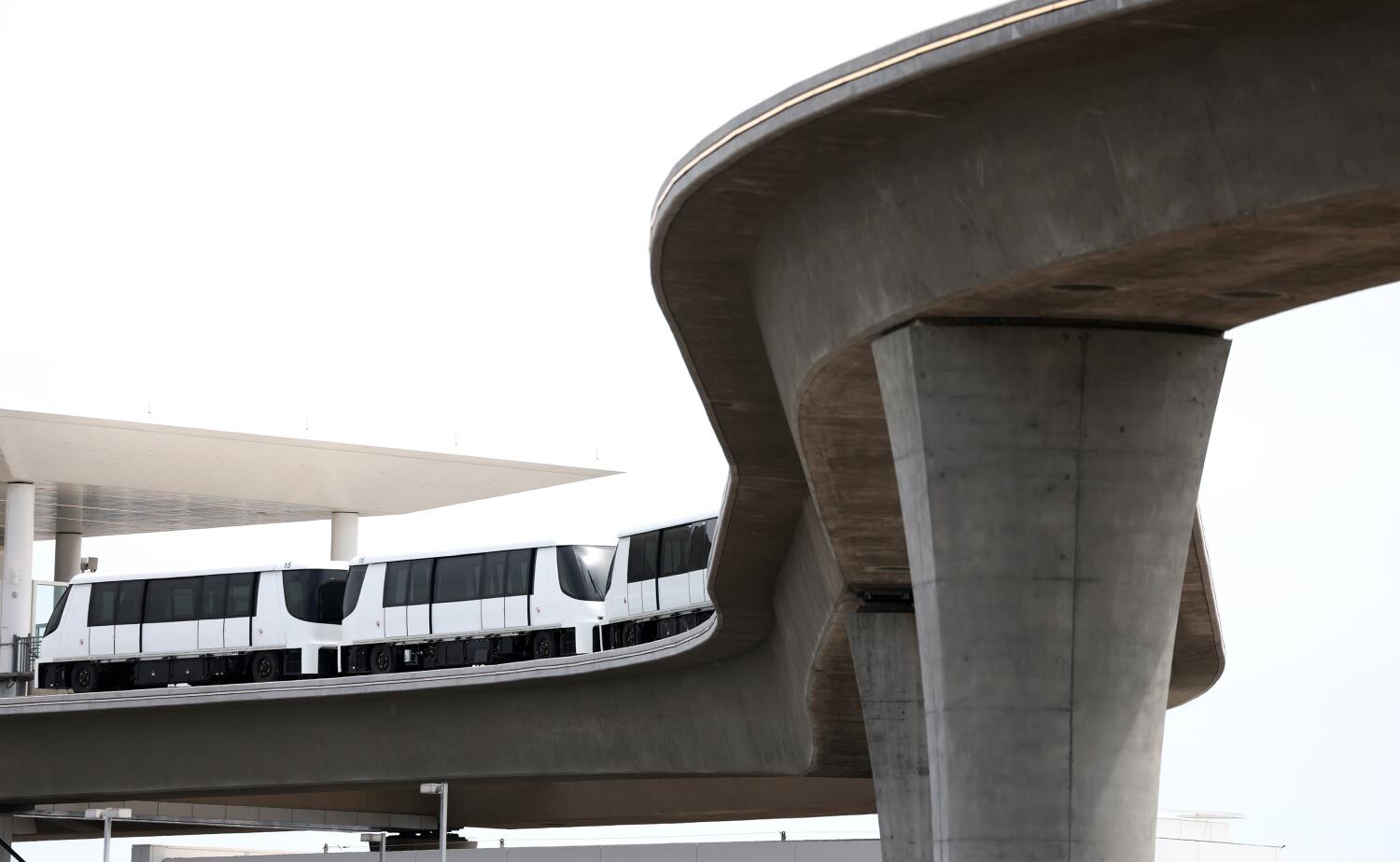
The train sits there. Gleaming aluminum cars resting on elevated concrete guideways, practically taunting the millions of travelers crawling through the miserable horseshoe configuration of Los Angeles International Airport. It looks finished. Walk the perimeter, and every architectural indicator points to a job wrapping up. Yet the passenger service availability date for the LAX Automated People Mover, officially dubbed SkyLink, has morphed into a punchline. October 2026 is the current target. Nobody in their right mind is betting the house on it.
Public relations machines want passengers to believe this is merely the final polish of a massive infrastructure undertaking. It is not. Beneath the pristine exterior lies a toxic cycle of legal warfare, contractual finger-pointing, and administrative breakdown that exposes how major American public works projects stall out just inches from the finish line.
The Anatomy of a Perpetual Delay
To understand why a transit system sitting at a claimed ninety-nine percent completion rate still refuses to carry human beings, one must abandon official press releases and look at the paperwork. Los Angeles World Airports and LINXS, the private consortium of construction giants designing and building the line, are locked in a relentless war of attrition.
Contract arbitrators and county grand jury reports have painted a picture of deep dysfunction. Power distribution disputes, unexpected equipment retrofits in electrical metering cabinets, and endless fights over who pays for schedule extensions have ground momentum to a halt. When a project requires thirty consecutive days of flawless, uninterrupted automated testing to clear safety hurdles, every single administrative disagreement resets the clock.
The physical structure was never the true bottleneck. The governance was.
When Public-Private Partnerships Go Sideways
The project relies on a design-build-finance-operate-maintain model. It sounds efficient on paper. Risk is supposed to transfer to the private sector, saving taxpayers money and streamlining execution.
In practice, public-private partnerships often create perverse incentives when specifications blur. When components fail or require unexpected modifications—such as the months-long partial power shutdowns required to overhaul metering hardware—disputes over contract language inevitably follow. LINXS argues that mandated fixes fell outside original performance parameters, demanding compensation and time extensions. Los Angeles World Airports pushes back, refusing to absorb the political fallout of yet another blown target.
The system becomes a hostage to legal leverage. Every missed deadline triggers fresh arbitration. Every arbitration pauses another block of critical testing.
The Cost of Missed Milestones
The human cost is measured in asphalt gridlock and frayed nerves. The central terminal area remains a chaotic bottleneck of private vehicles, hotel shuttles, and erratic rental car vans. The entire premise of the Landside Access Modernization Program was to pull cars out of the terminal loop entirely by linking the airport directly to the Metro rail network.
Missing major global windows stings. The system missed the global soccer spotlight entirely, and current timelines squeeze dangerously close to the 2028 Olympic and Paralympic Games. City officials talk grandly about global stages while everyday flyers pay the price in lost hours trapped in airport traffic lanes.
Breaking the Cycle of Impunity
Accountability remains entirely missing from the equation. Public agencies sign contracts without teeth, allowing private consortia to treat schedule slippage as a standard cost of doing business. Taxpayers absorb the financial shock, while travelers absorb the delay.
Until municipal authorities restructure how they manage large-scale civil engineering contracts—tying financial penalties directly to schedule adherence rather than endless mediation—infrastructure projects will continue to drift. The LAX people mover stands as a monument to modern bureaucratic paralysis. The rails are laid, the cars are charged, and the doors remain firmly locked against reality.


