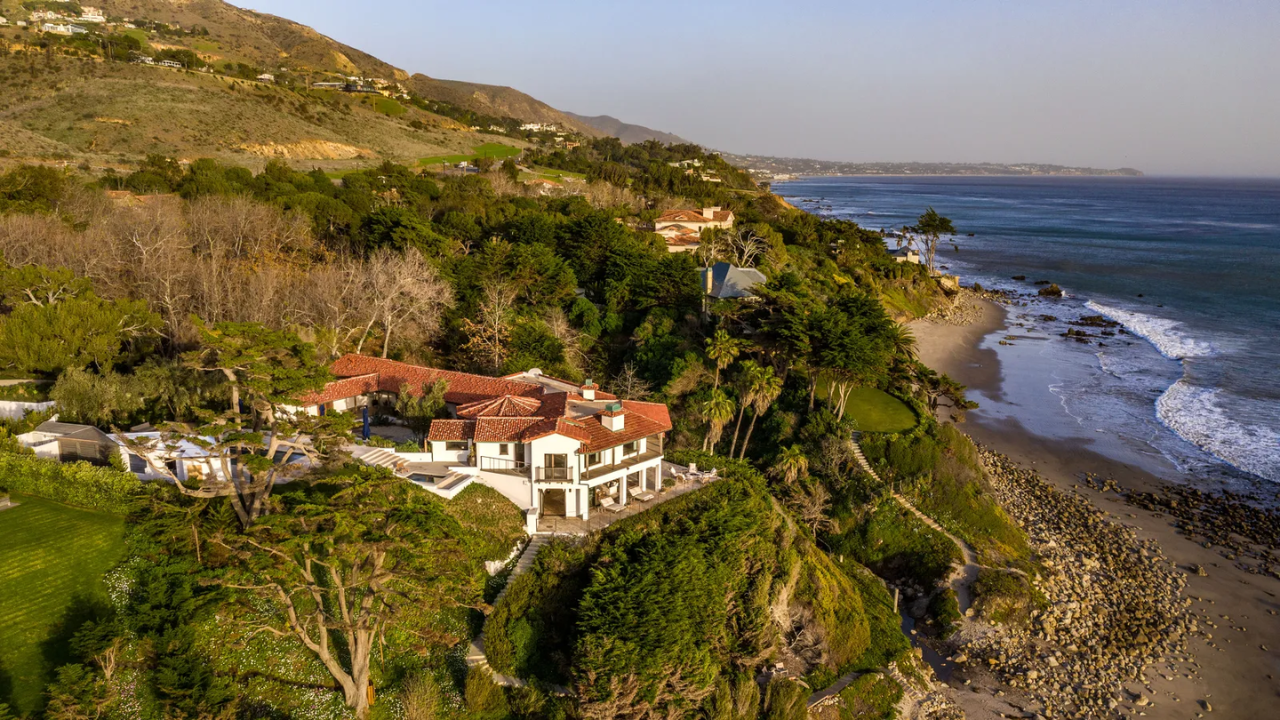
In September 2022, Kim Kardashian closed on a sprawling oceanfront compound in Malibu's Encinal Bluffs for $70.4 million. The sellers—supermodel Cindy Crawford and her husband, businessman Rande Gerber—had originally listed the property for $99.5 million. That nearly $30 million price chop was not a fluke, nor was it merely a shrewd celebrity negotiation. It was a flashing warning sign for the upper echelons of the Southern California housing market, illustrating how rising interest rates, looming mansion taxes, and shifting buyer psychology collided to force massive discounts even on trophy coastal estates.
When a billionaire media mogul buys an iconic property from a modeling legend at a 29 percent markdown, the headlines naturally focus on the star power. Yet the real story sits buried in county property records, municipal tax codes, and the brutal economics of carrying ultra-high-end coastal real estate. If you enjoyed this article, you might want to look at: this related article.
The Anatomy of a $29 Million Markdown
Crawford and Gerber originally purchased the 3.18-acre Encinal Bluffs estate in 2015 for $50.5 million. At the time, the property spanned roughly six acres, but the couple later split the land and sold off a separate parcel for $45 million in 2018. Even after shedding half the acreage, they returned to the market in early 2022 with an ambitious $99.5 million asking price for the remaining 7,450-square-foot main residence and its private path down to El Sol Beach.
The timing could not have been more volatile. For another look on this event, refer to the recent update from The Motley Fool.
In early 2022, pandemic-era liquidity was still sloshing through coastal enclaves. Billionaires were paying record premiums for privacy, security, and immediate ocean access. By the spring of that year, however, the Federal Reserve began aggressively hiking interest rates to combat inflation. Even though ultra-wealthy buyers like Kardashian often utilize cash or complex private banking credit lines rather than traditional 30-year mortgages, the broader macroeconomic chill immediately froze sentiment at the top of the market.
Crawford and Gerber initially slashed the price to $89.5 million. Still, the estate sat. By the time Kardashian stepped in and finalized the deal at $70.4 million in late summer 2022, the sellers had surrendered $29.1 million from their initial ask. Despite the steep discount from the listing price, Crawford and Gerber still walked away with a substantial cumulative profit when factoring in their 2018 land split—a detail routinely glossed over in surface-level real estate coverage.
Why Trophy Estates Are Vulnerable to Sudden Corrections
To understand how a property loses nearly $30 million in perceived value in less than eight months, you have to understand how trophy real estate is priced. Unlike suburban tract homes, where appraisers rely on dozens of recent comparable sales per square foot, ultra-luxury estates are priced on emotion, scarcity, and ego.
There is no algorithm for valuing a private bluff overlooking the Pacific Ocean. Sellers and their brokers pick an aspirational number—often rounded up to an eye-catching threshold just shy of nine figures—and wait to see if a global buyer takes the bait.
When liquidity tightens, that pricing model collapses quickly. A $100 million home has an extraordinarily thin buyer pool on a good day. When equity markets dip and borrowing costs spike, that pool shrinks from a few dozen qualified individuals worldwide to perhaps two or three. If a seller wants out, they cannot wait for the market to recover; they have to meet the sole active buyer where they are.
Kardashian possessed maximum buyer leverage. Having recently finalized a massive restructuring of her Hidden Hills compound and flushed with capital from her Skims valuation, she did not need to buy in Malibu. She had the liquidity to close quickly and cleanly, a currency far more valuable to high-net-worth sellers than a higher offer bogged down by financing contingencies or extended due diligence.
The Hidden Financial Drain of Coastal Ownership
Purchasing a $70 million home is only the entry fee. The ongoing carrying costs of an oceanfront estate in Los Angeles County represent a massive, recurring capital outflow that quietly pressures sellers to accept lower bids rather than hold out for another year.
Consider the baseline math of owning a property at this valuation in California:
- Property Taxes: Under California's Proposition 13, property taxes are assessed at roughly 1 percent of the purchase price, plus local bond measures, bringing the effective rate to around 1.15 percent to 1.25 percent in Malibu. At $70.4 million, Kardashian faces an annual property tax bill exceeding $800,000—or roughly $67,000 every single month just to keep the county satisfied.
- Insurance Volatility: Insuring a cliffside, oceanfront structure in Southern California has become notoriously difficult and expensive. Between coastal erosion, winter storm surges, and adjacent canyon wildfire risks, specialty high-net-worth insurers have dramatically raised premiums or pulled out of the California market altogether. Annual coverage for a compound of this scale easily runs into the hundreds of thousands of dollars.
- Maintenance and Staffing: Salt air destroys everything. Exterior wood, steel railings, glass seals, and HVAC systems require constant, specialized upkeep. Add in full-time security, landscape maintenance across more than three acres, and pool care, and the annual operational burn rate quickly surpasses $1.5 million before anyone even turns on a light switch.
For Crawford and Gerber, holding onto an unoccupied or underutilized asset while waiting for an $89.5 million buyer meant burning millions in dead capital. Taking $70.4 million in hand stopped the financial bleed immediately.
The Shadow of Mansion Taxes and Regulatory Shifts
While the Encinal Bluffs estate sits in the city of Malibu—technically insulating it from the City of Los Angeles's controversial Measure ULA "mansion tax" that took effect in April 2023—the broader regulatory climate in Southern California played a major psychological role in late 2022 dealmaking.
Measure ULA imposed a 4 percent transfer tax on properties sold above $5 million and a 5.5 percent tax on sales above $10 million within the City of Los Angeles. Throughout the second half of 2022, panic over the impending ballot measure sent shockwaves across the entire Los Angeles luxury corridor, from Beverly Hills and Bel-Air out to Pacific Palisades and Malibu.
Even though Malibu has its own municipal boundaries, the high-end brokerage community operates as a single ecosystem. Sellers across the region rushed to offload inventory before year-end 2022, fearing a permanent structural reset in California real estate values. Buyers knew sellers were anxious. That anxiety translated directly into aggressive discounting across the entire coastline.
Furthermore, coastal development regulations in Malibu—enforced rigorously by the California Coastal Commission—make building or heavily renovating an oceanfront home a multi-year bureaucratic nightmare. Securing permits to alter a footprint, build a seawall, or modify blufftop structures can take five to ten years and millions in legal and engineering fees.
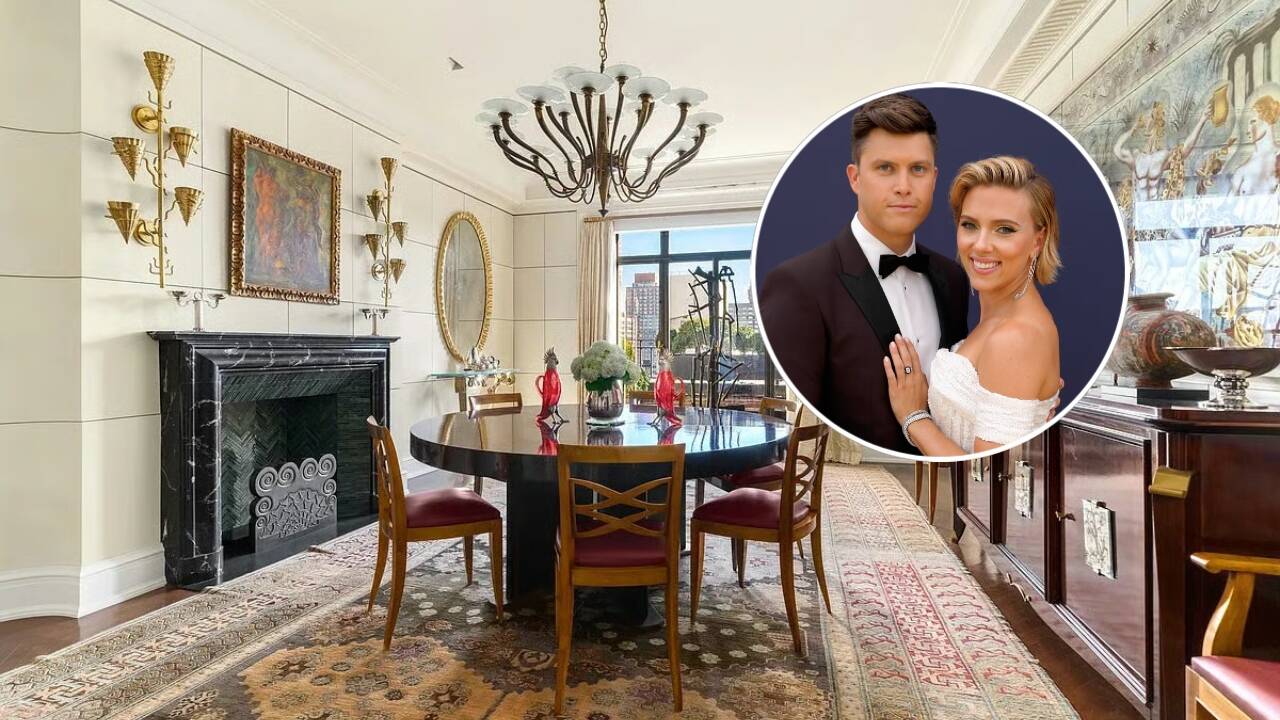
This regulatory bottleneck creates a massive premium for "turnkey" properties. Crawford and Gerber had already renovated the 1944 Mediterranean-style residence into a sleek, contemporary retreat featuring vaulted ceilings, floor-to-ceiling glass sliders, a wraparound deck, a swimming pool, a spa, and a private tennis court. Kardashian was not just buying land; she was buying permitted, completed square footage that bypassed a decade of Coastal Commission red tape.
How Kardashian Plays the Real Estate Game
Critics often dismiss celebrity property acquisitions as vanity purchases, yet Kardashian's real estate portfolio operates more like a disciplined private equity fund than a personal hobby. Over the past decade, she has demonstrated a consistent, repeatable strategy for acquiring and appreciating high-value Southern California real estate.
Her playbook relies on three distinct pillars:
Acquiring Architectural Provenance
Rather than buying newly constructed, speculative mega-mansions built by developers, Kardashian targets properties with distinct architectural pedigree or irreplaceable land value. Her primary residence in Hidden Hills, redesigned in collaboration with minimalist Belgian designer Axel Vervoordt, became an internationally recognized architectural landmark—and reportedly appreciated from roughly $20 million to over $60 million following its transformation. The Malibu compound, with its mid-century bones and direct access to one of Malibu's most secluded coves, fits the exact same profile.
Capturing Off-Peak Liquidity Discounts
Kardashian has repeatedly timed major acquisitions during moments of market hesitation. By stepping in when competing buyers are paralyzed by interest rate hikes or economic uncertainty, she captures immediate equity on the purchase date. Buying a $99.5 million-listed asset for $70.4 million provides an instant $29 million buffer against further market softness.
Portfolio Diversification Beyond Consumer Brands
While Skims and KKW Beauty generated her headline billionaire status, tangible real estate serves as her wealth preservation anchor. By holding multiple eight-figure properties across Hidden Hills, Calabasas, Palm Springs, and Malibu, she insulates a significant portion of her net worth from the volatility of fashion trends and social media algorithms.
What the Deal Tells Us About the Current Market
Looking back at the transaction from the vantage point of today's market, the $70.4 million sale price looks less like a fire sale and more like accurate price discovery.
In the years immediately following the 2022 rate hikes, the Southern California ultra-luxury sector split into two distinct markets. Properties priced between $10 million and $30 million struggled heavily as buyers sensitive to mortgage rates stepped back. Meanwhile, the $50 million-plus trophy tier survived, but only for sellers willing to abandon pandemic-era fantasies and accept 20 to 30 percent haircuts from their initial asking prices.
Brokerages across Malibu and Beverly Hills spent months trying to convince nervous sellers that the 2021 boom was the new baseline. Kardashian's purchase shattered that illusion publicly. Once the highest-profile transaction of the season cleared at nearly $30 million below ask, every other seller in Encinal Bluffs and Carbon Beach had to recalibrate their expectations.
The Overlooked Reality of celebrity Real Estate Narratives
Media coverage of celebrity home sales almost always suffers from a fundamental distortion. Press releases from listing agents trumpet the initial asking price to generate free publicity, while final closing figures are quietly buried in LLC filings months later.
In this case, Kardashian purchased the property through a corporate entity, a standard practice among high-net-worth individuals to shield their primary residential addresses from public scrutiny and limit personal liability. When the $70.4 million deed finally surfaced, it exposed the vast gulf between aspirational marketing and actual market clearing prices.
The transaction also highlights the quiet efficiency of the off-market and whispered-listing networks that dominate Malibu. Properties in Encinal Bluffs—an enclave favored by ultra-private figures who prefer gated privacy over the tourist-heavy stretches near the Malibu Pier—rarely trade purely through traditional MLS channels. Deals are negotiated behind closed doors between a handful of power brokers who control access to both the inventory and the qualified buyers.
Ultimately, Crawford and Gerber walked away with tens of millions in net profit over their seven-year hold, even after accounting for renovations and carrying costs. Kardashian secured one of the most private, turnkey oceanfront compounds on the Pacific coast at a nearly 30 percent discount from its peak valuation. Both sides won, precisely because the sellers ignored ego and recognized that in a tightening market, an actual check for $70.4 million beats a theoretical listing price of $99.5 million every single time.