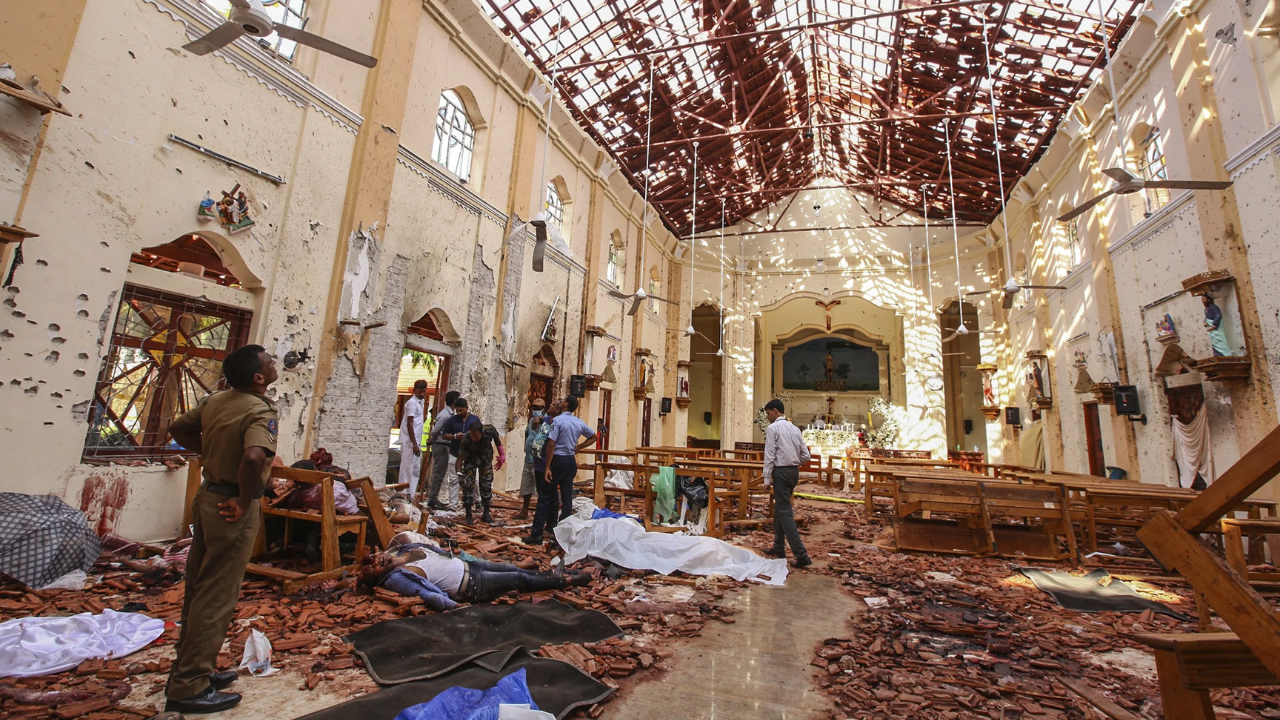
On a Tuesday in late September 2026, a three-judge High Court panel in Colombo handed down sentences that spanned centuries, formally convicting 15 men for orchestrating and executing the devastating 2019 Easter Sunday bombings. The coordinated suicide attacks on April 21, 2019, which ripped through three Christian churches and three luxury hotels, left more than 260 people dead and over 500 wounded, permanently scarring a nation already recovering from decades of civil war. The court's decision brings a definitive legal milestone to one of the darkest chapters in modern South Asian history, yet the trial lays bare a much deeper, more unsettling web of institutional rot, ignored warnings, and ideological grooming that extended far beyond the men sitting in the dock.
Justice in protracted terrorism trials rarely arrives with simple closure. For the families of victims and survivors who gathered outside the fortified courthouse, the verdicts offered a heavy, exhausted measure of relief. Fifteen defendants received sentences ranging from 200 to 260 years of hard labor, managed under the country's stringent anti-terrorism legislation. Nine other defendants walked free after prosecutors failed to prove their direct involvement beyond a reasonable doubt. The contrast inside the courtroom was stark. Some convicts remained defiant, quoting religious dogma or asserting that only divine judgment mattered, while others stood quiet. Yet beneath the theater of sentencing lies the enduring reality that these foot soldiers and ideological facilitators operated within a system that fundamentally failed to stop them before the first detonator clicked.
To understand how a domestic network inspired by the Islamic State could assemble massive quantities of explosives and coordinate simultaneous suicide strikes, one must look closely at the radicalization pipeline. Prosecutors meticulously mapped how fringe local groups, specifically branches of National Thowheeth Jama'ath and Jamathei Millathu Ibrahim, transitioned from obscure fringe entities into lethal operational cells. Figures like Mohamed Naufer, identified as a key ideological driver who received a 220-year prison sentence, weaponized religious text and isolation tactics to mold impressionable young men into martyrs. Investigators uncovered that these radical factions did not emerge overnight. They exploited years of post-war social fracture, communal distrust, and lax monitoring of foreign extremist literature. The state's previous blind spot toward domestic religious extremism allowed these cells to radicalize in plain sight, using local religious schools and secluded compounds to rehearse their attacks without attracting systemic suspicion from counter-terrorism units.
The operational blueprint of April 21, 2019, relied on meticulous planning and industrial-grade components. The attackers packed backpacks with urea nitrate and water gel explosives supplemented by metal shrapnel to maximize human carnage inside crowded sanctuaries such as St. Anthony's Shrine in Kochchikade, St. Sebastian's Church in Negombo, and the Zion Church in Batticaloa, alongside high-end hotels in the capital. The sheer precision of the simultaneous strikes stunned international security analysts. These were not random acts of street violence; they required supply chains, safe houses, financial transfers, and ideological indoctrination that spanned months. The court's meticulous examination of financial trails and video footage recorded the day before the attacks—where the perpetrators pledged allegiance to then-Islamic State leader Abu Bakhr al-Baghdadi—established an undeniable evidentiary foundation for the convictions, even as defense attorneys argued over the extent of individual culpability within the broader network.
The judicial reckoning extends far beyond the 15 men condemned to multi-century prison terms. Months prior to this high court verdict, separate legal actions targeted the upper echelons of state security. A former police chief and a former senior defense ministry official faced criminal convictions for gross criminal negligence, specifically for ignoring actionable intelligence warnings passed down from foreign intelligence services weeks before the carnage occurred. Foreign embassies had explicitly cautioned Colombo about imminent threats targeting churches, providing names and operational indicators. Those warnings traveled up the bureaucratic chain of command and died in a morass of political inertia, inter-agency rivalry, and administrative incompetence. The systemic failure to act on precise intelligence transformed preventable murders into an unmitigated national tragedy. Further cementing accountability at the political summit, the Supreme Court of Sri Lanka previously ordered former President Maithripala Sirisena and several top security figures to personally pay financial compensation to victims for their catastrophic failure to prevent the attacks despite possessing foreknowledge.
The wider political shadow cast over the 2019 attacks continues to trouble investigators and religious leaders alike. Sri Lanka's Catholic Church, led by outspoken clergy who have spent years demanding absolute transparency, has consistently argued that the men convicted in court represent only the operational arm rather than the ultimate architects. The lingering suspicion among victims and church officials is that the suicide bombers were exploited by higher political actors seeking to manipulate ethnic and religious tensions for electoral advantage. While subsequent judicial probes and leadership inquiries have repeatedly denied state complicity, the persistent public skepticism highlights a profound trust deficit between the citizenry and the political establishment. When a government proves incapable of protecting its most vulnerable minorities from predictable mass murder, subsequent judicial sentences, no matter how severe, struggle to heal the foundational breach of social contract.
The courtroom dynamics during the trial offered a disturbing window into the mindset of violent extremism. Defendants displayed varying degrees of remorse or ideological stubbornness. Mohamed Ibrahim Saadiq Abdulla, given a 240-year sentence, offered cryptic statements about divine judgment rather than expressing any acknowledgment of the devastation wreaked upon families. The sheer scale of the sentences—with individual prison terms stretching to 260 years—is symbolic in practice, ensuring that these individuals will die behind bars under maximum security conditions. It is a punitive response designed to signal absolute state intolerance for mass-casualty terrorism, but it also reflects the unique legal mechanics of a country where the death penalty remains codified but effectively suspended through a long-standing moratorium dating back to 1976. Critics of the country's Prevention of Terrorism Act have long pointed out that while severe sentencing satisfies public demand for retribution, structural flaws in the legal framework often invite protracted appeals and political interference.
The ripple effects of the 2019 bombings reshaped Sri Lanka's cultural and legislative environment in profound ways. In the immediate aftermath, emergency regulations granted sweeping powers to security forces, temporary bans were slapped on face coverings, and the nation's minority Muslim community faced intense scrutiny and collective suspicion. Civil society organizations spent years trying to bridge the chasms widened by the attacks, emphasizing that religious fundamentalism is an ideological deviation rather than the defining trait of an entire community. The trial's outcome, which saw nine suspects acquitted due to insufficient evidence, demonstrates that the judicial system attempted to navigate a massive volume of charges with legal rigor rather than succumbing to raw mob vengeance. Yet, navigating the aftermath requires more than locking away conspirators; it demands structural reforms within intelligence sharing and a permanent end to the culture of impunity that allowed warning signs to be ignored.
As the legal appeals process begins for those convicted, the broader geopolitical and domestic security implications remain acute. Regional counter-terrorism frameworks in South Asia have tightened intelligence sharing, particularly concerning cross-border travel to conflict zones like Syria, where key figures in the Sri Lankan network had previously trained. The physical evidence presented at trial—including videos of the attackers pledging allegiance to foreign militant leadership—confirmed international linkages that local authorities initially struggled to comprehend. Intelligence agencies are now forced to confront decentralized cell structures that rely on encrypted communications and self-funding mechanisms, making traditional surveillance methods increasingly obsolete. Local law enforcement units now operate under heightened scrutiny, attempting to balance civil liberties against the constant threat of underground recruitment networks operating through digital channels.
The victims of that Easter Sunday morning carry wounds that no court verdict can heal. Entire families were wiped out, foreign tourists visiting the island's coastal hotels were killed indiscriminately, and congregations gathered for holy celebration were turned into charnel grounds. For survivors like Teresa Fernando, who endured severe head trauma during the blasts, the conclusion of the trial brings a measure of legal closure, yet the emotional scars remain permanent. The church bells that rang out across Negombo, Batticaloa, and Colombo on that fateful day will forever be shadowed by the memory of the lives lost.
Courts can issue multi-century sentences and confiscate properties under strict anti-terror statutes, but they cannot resurrect the dead or restore institutional trust overnight. The finality of the September 2026 verdict closes a massive judicial chapter, yet the fundamental question of how a state allowed such an avoidable catastrophe to occur remains etched into the nation's collective conscience.