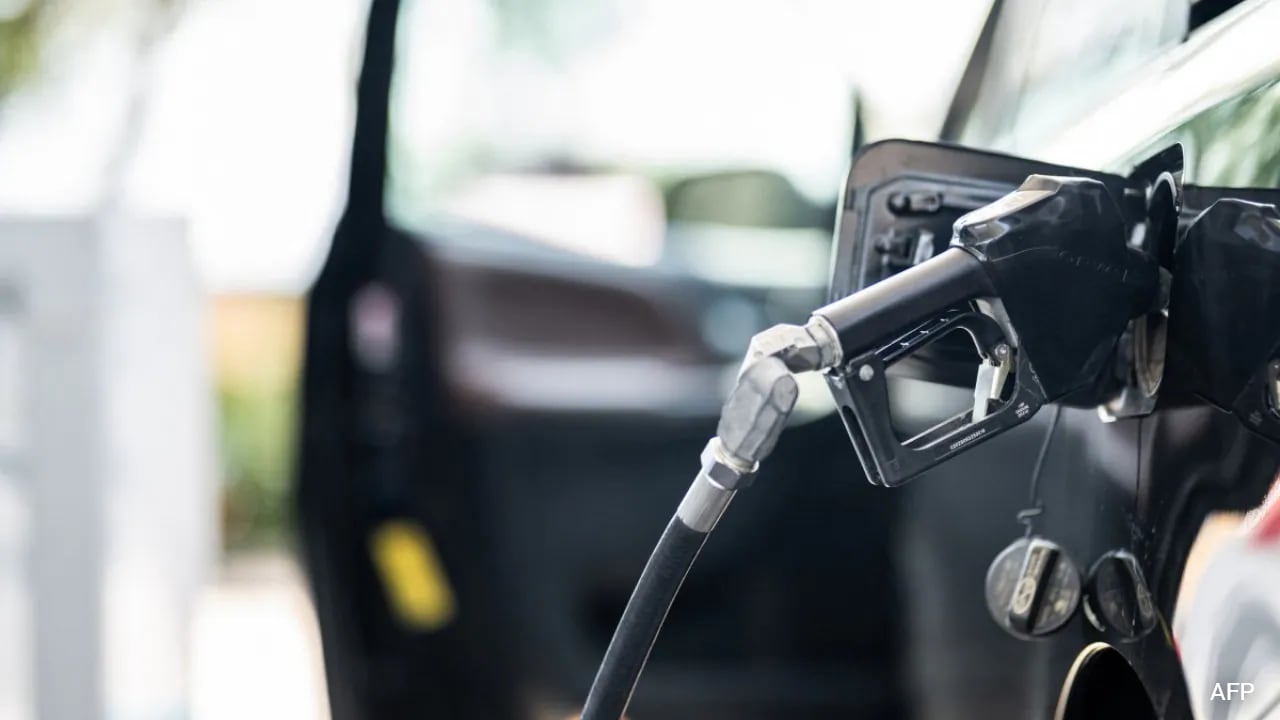
Iran has officially doubled gasoline prices for motorists exceeding their monthly 110-liter quota, forcing heavy users to pay 100,000 rials per liter. This move marks the second major fuel price adjustment since December, arriving against a backdrop of severe economic strain, heavy inflation, and ongoing wartime pressures. For a population grappling with a collapsing currency and an annual inflation rate hovering near 67 percent, the structural shift is not merely an economic policy update. It is a high-stakes gamble with domestic stability.
State oil distribution executives report that daily consumption reached a staggering 145 million liters in August. Meanwhile, domestic production capacity sits flat at 122 million liters per day. That math creates an unsustainable deficit, forcing the state into costly imports even as foreign exchange reserves face intense pressure.
Yet viewing this policy purely through the lens of recent fiscal strain misses the deep historical roots binding cheap fuel to the Iranian social contract.
The Weight of an Unspoken Entitlement
For generations, heavily subsidized energy has functioned as an unwritten birthright across the Iranian plateau. Walk down any street in Tehran, and fuel is treated not as a volatile global commodity, but as a public utility akin to air or water. This mindset transforms every upward tick at the pump into a political landmine.
The fear gripping state planners is rooted in recent memory. When authorities attempted a steep fuel price hike in November 2019, the backlash was swift and unforgiving. Nationwide demonstrations erupted across dozens of cities, resulting in a heavy security crackdown.
The government has tried to sidestep a total repeat by targeting only the heaviest consumers. Under the revised framework, the initial monthly allotment remains tiered—60 liters at 15,000 rials and an additional 50 liters at 30,000 rials. Only consumption surpassing that 110-liter threshold triggers the punitive 100,000-rial rate.
Officials claim this bracketed approach protects the working-class majority while penalizing excess. State media channels emphasize that roughly 85 percent of motorists remain untouched by the top-tier penalty.
The Mechanics of Excess Consumption
Why is Iran burning through 145 million liters a day? The answer lies in the mechanical skeleton of the country's transportation sector.
Decades of international sanctions have isolated the domestic automotive industry. Modern, fuel-efficient foreign imports are largely absent. Instead, the roads are crowded with aging domestic models and older vehicles that lack modern combustion efficiency. Spare parts shortages compound the issue, leaving poorly tuned engines to burn excess fuel simply to travel short distances.
Public transit networks, particularly outside central Tehran, offer little viable alternative. Commuters reliant on older personal vehicles have few choices. When the cost of replacement vehicles remains entirely out of reach due to currency devaluation, drivers must keep their inefficient cars on the road, absorbing whatever fuel costs come their way.
This creates a vicious feedback loop. Subsidies encourage the continued use of gas-guzzling legacy vehicles. The resulting high consumption strains state coffers. To plug the gap, the government raises prices on heavy users, which immediately ripples across the broader economy.
The Domino Effect on Daily Survival
Prices rarely rise in a vacuum. Ask any resident navigating the crowded markets of southern Tehran, and they will tell you that a hike in transport fuel is a direct tax on survival.
When moving goods costs more, the price of staples—from bread and lentils to meat and dairy—climbs accordingly. Economists point out that secondary inflation triggered by fuel adjustments often outpaces the direct cost of the gasoline itself. In an economy where the US dollar trades at millions of rials and ordinary households spend a vast share of their income on basic sustenance, even a targeted penalty on heavy users breeds widespread anxiety.
The government has promised to redistribute the additional revenue back to households. Direct cash transfers, however, have historically proven an imperfect shield against rapid inflation. Cash values erode almost the moment they hit bank accounts, leaving vulnerable families perpetually chasing a receding baseline of purchasing power.
Navigating a Narrow Corridor
Authorities are walking a tightrope. On one side lies the fiscal abyss of subsidizing millions of barrels of imported fuel to feed inefficient engines. On the other side lies the volatile threat of civil unrest born of economic exhaustion.
Gas station queues reflect this tense reality. While pumps remain active, the presence of security personnel highlights the government's jittery posture. Motorists waiting in line express a weary resignation. The consensus among everyday citizens is not that reform will solve structural poverty, but that this price adjustment is merely the opening salvo in a longer sequence of inevitable economic contractions.
As geopolitical pressures persist and domestic production fails to match surging demand, the state's capacity to insulate its population from global market realities is evaporating. The dual realities of physical scarcity and financial collapse leave little room for maneuver. The policy shift toward penalizing heavy usage is less a strategic choice than a desperate necessity, enacted because the alternative—doing nothing—is an expense the nation can no longer afford to pump into its tanks.