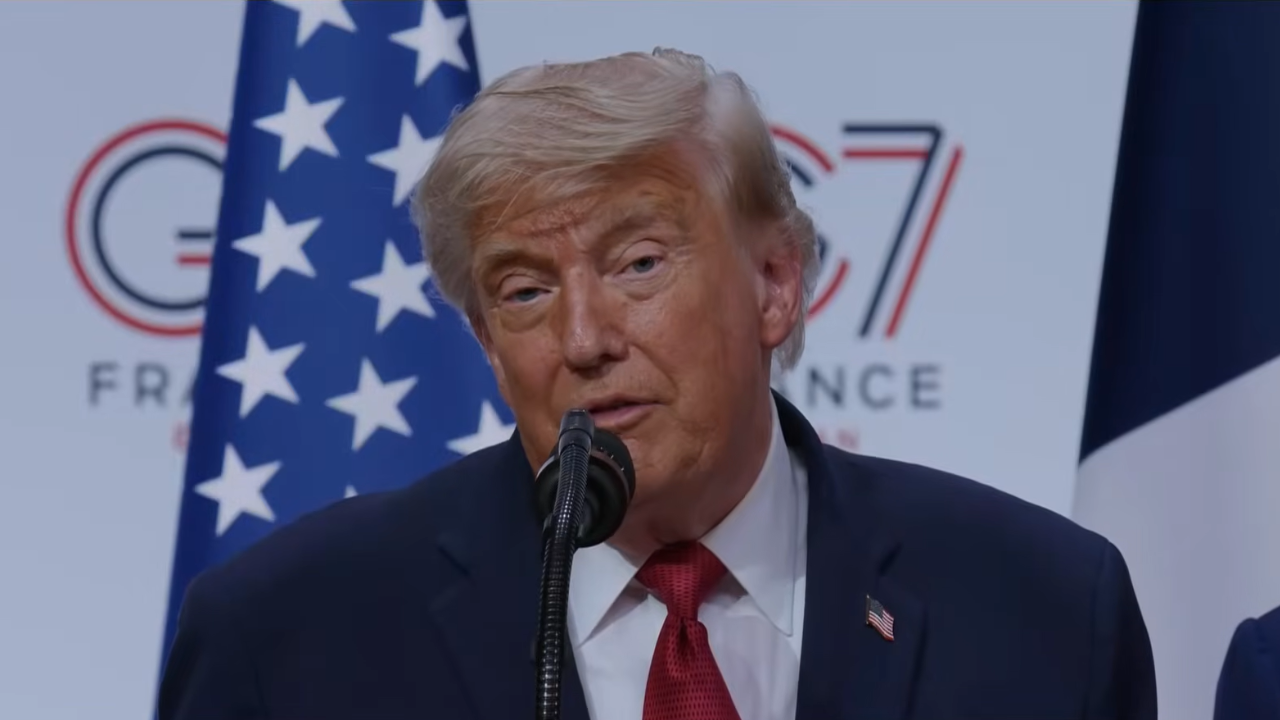
Donald Trump walked into the morning session of the G7 summit, looked at the gathered world leaders, and announced, "I am the boss." The statement, captured on a video published by the White House, was designed to project absolute American dominance on the global stage. Yet, behind the bravado lies a much more complicated reality regarding his preliminary peace deal with Iran. While Trump claims credit for avoiding a global economic meltdown by securing a memorandum of understanding with Tehran, critics argue that the administration conceded significant leverage just to get Iran back to the negotiating table.
The primary dispute centers on the Strait of Hormuz, a critical maritime chokepoint that Tehran has effectively blocked throughout its recent hostilities with the United States. Under the initial terms of the deal, Iran has agreed to lift its blockade and halt regional hostilities, offering a temporary reprieve to volatile energy markets. However, foreign policy hawks and regional allies are raising alarms, suggesting the deal favors Iranian interests by pausing economic pressure without dismantling its nuclear ambitions.
The Strategy Behind the Memorandum
The administration presents this agreement as a classic victory of maximum pressure followed by artful dealmaking. The White House insists that the United States dictated the terms, forcing a heavily sanctioned Iranian government to capitulate to preserve its domestic economy.
A closer look at the actual dynamics suggests a different mechanism at play. Iran’s newly consolidated leadership, under Supreme Leader Mojtaba Khamenei, recognized that blocking oil transit through the Strait of Hormuz gave them a potent economic weapon. By strangling global supply lines, they forced Washington to choose between an extended, costly military conflict or economic concessions. Trump’s announcement that the strait is already partially opening reveals exactly what the United States was desperate to buy back, unrestricted maritime access.
The text of the memorandum remains a preliminary framework rather than a finalized treaty. Trump himself acknowledged the fragile nature of the arrangement to reporters, stating that if Iran fails to cooperate, the United States will immediately resume military strikes. This rhetorical escalation is meant to reassure critics at home, but it highlights the core weakness of the agreement, it relies on the behavior of an adversary that has spent decades mastering asymmetric warfare.
Splitting the Western Coalition
The shockwaves from this deal are reverberating through the G7 summit in Evian. European leaders, while publicly welcoming the reduction in immediate military tensions, are privately moving to protect their own interests. The sudden shift in U.S. policy has forced traditional allies to reconsider their long-term security dependence on Washington.
Rather than relying purely on American security guarantees in the Persian Gulf, G7 members are actively drawing up independent contingency plans.
- Energy Diversification: Allied nations are fast-tracking new energy supply routes to bypass the Middle East entirely.
- Strategic Stockpiling: European capitals are mandating higher national oil reserves to cushion against future sudden blockades.
- Shifting Sanctions Priorities: With a potential easing of restrictions on Iranian commerce, European diplomats are debating whether to let certain waivers lapse on Russian oil exports, shifting their geopolitical focus back toward the war in Ukraine.
This fragmentation within the Western alliance plays directly into Tehran's long-term strategy. By driving a wedge between the United States and its European partners, Iran weakens the multi-lateral sanctions regime that took over a decade to construct.
The Regional Fallout
While Washington celebrates a diplomatic breakthrough, regional allies are calculating the cost of American compromise. Israel and various human rights groups view the memorandum as a profound betrayal. By lifting blockades and pausing hostilities without demanding the permanent dismantling of Iran's proxy networks in Lebanon and beyond, the agreement leaves local partners exposed.
The administration’s defense is rooted in macroeconomic stability. White House officials argue that a full-scale war in the Middle East would have triggered a severe global depression. From their perspective, trading temporary sanctions relief for open shipping lanes is a pragmatic calculation.
Yet, history demonstrates that temporary frameworks in this region rarely remain static. By rewarding aggressive behavior with a seat at the negotiating table, the administration may have inadvertently set a precedent that future security can always be bartered for economic relief. The final text of the agreement is scheduled for formal signing, but the structural vulnerabilities of the deal are already visible to everyone in the room.