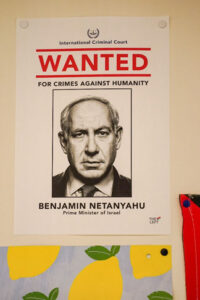
The International Criminal Court is facing an existential reckoning. Stripped of an independent police force and cornered by escalating geopolitical retaliation, the world's permanent tribunal for war crimes is fighting for its institutional survival.
When prosecutors in The Hague target sovereign leaders, the blowback is immediate and ferocious. Yet, the current onslaught against the court extends far beyond traditional diplomatic friction. It represents a coordinated effort to dismantle the architecture of global accountability through financial coercion, legal warfare, and targeted sanctions.
The Anatomy of Retaliation
To understand the current crisis, look at the mechanics of state-level pushback. The court operates entirely on the cooperation of its member states. It maintains no holding cells of its own and dispatches no sheriffs to execute warrants. When powerful nations decide that international jurisprudence is inconvenient to their strategic interests, the pressure points are applied where they hurt most: budgets, visa access, and institutional legitimacy.
Consider the fallout from recent high-profile warrant applications and issuances concerning conflicts from Gaza to Ukraine. Rather than engaging purely on legal grounds, opposing governments have resorted to extraordinary measures. Financial institutions, anxious to avoid the long arm of secondary penalties, preemptively sever ties with entities associated with the court. This creates a quiet, creeping paralysis that chokes off investigative travel, expert testimony, and victim support networks.
The weaponization of administrative penalties turns routine compliance into a high-risk legal liability. Human rights organizations and legal scholars supporting the court's mandate find themselves dragged into domestic courts just to protect their right to fund documentation work.
The Sovereignty Paradox
Critics of the tribunal frequently invoke the defense of national sovereignty. The argument states that un-elected international jurists should not dictate the legal standards of nations that never signed the Rome Statute.
This viewpoint ignores the foundational compromise upon which the institution was built. The court functions explicitly on the principle of complementarity. It only steps in when domestic judicial systems prove entirely unwilling or unable to investigate atrocities. If a national judiciary genuinely prosecutes war crimes within its own borders, The Hague has no legal footing to intervene.
The friction arises precisely when powerful states demand total immunity from external scrutiny while simultaneously expecting smaller, weaker nations to abide by global standards of conduct. This double standard exposes a deep structural fracture in international law. Justice becomes a luxury afforded only to those lacking the military or economic leverage to shield themselves.
Financial Choke Points and Administrative Strain
Behind the dramatic headlines of arrest warrants and diplomatic expulsions lies a more mundane, equally dangerous battleground: the ledger.
The court's operational budget is perpetually stretched thin. Investigative teams operating in active conflict zones require vast resources for forensic analysis, witness protection, and secure data management. When member states delay their contributions or use budget negotiations as a subtle form of political leverage, investigators are forced to make impossible choices about which mass atrocities to document.
This resource starvation leads directly to a patchwork approach to global justice. Investigators must triage human suffering. Crimes committed in regions of high geopolitical indifference receive scant attention, while cases involving major powers consume disproportionate amounts of time and capital just to survive procedural challenges.
Institutional Resilience Under Fire
Despite these compounding pressures, the institution has not folded. Judges and prosecutors continue to issue rulings based on evidentiary thresholds rather than political convenience, knowing full well the personal and professional costs involved.
Civil society coalitions have mounted aggressive legal challenges in domestic jurisdictions to push back against extra-territorial overreach, securing crucial injunctions to protect human rights defenders from arbitrary blacklisting. These legal counter-offensives prove that the rules-based order retains defenders within domestic legal systems who are willing to check executive overreach.
The path forward requires more than rhetorical defense from European capitals and middle powers. It demands concrete protective legislation, robust financial buffering, and an unwavering commitment to the principle that no individual—regardless of military backing or political office—stands above the law.
The courtroom in The Hague remains open, but its lights are flickering under a deliberate storm. The outcome of this standoff will determine whether global accountability remains an enforceable reality or degrades into an empty promise reserved exclusively for the vanquished.
This video provides additional context regarding the intense global controversy and sharp political reactions sparked by the court's arrest warrants against prominent leaders.

:max_bytes(150000):strip_icc()/lake-mead-173940030-5c25228846e0fb00014e8584.jpg)
