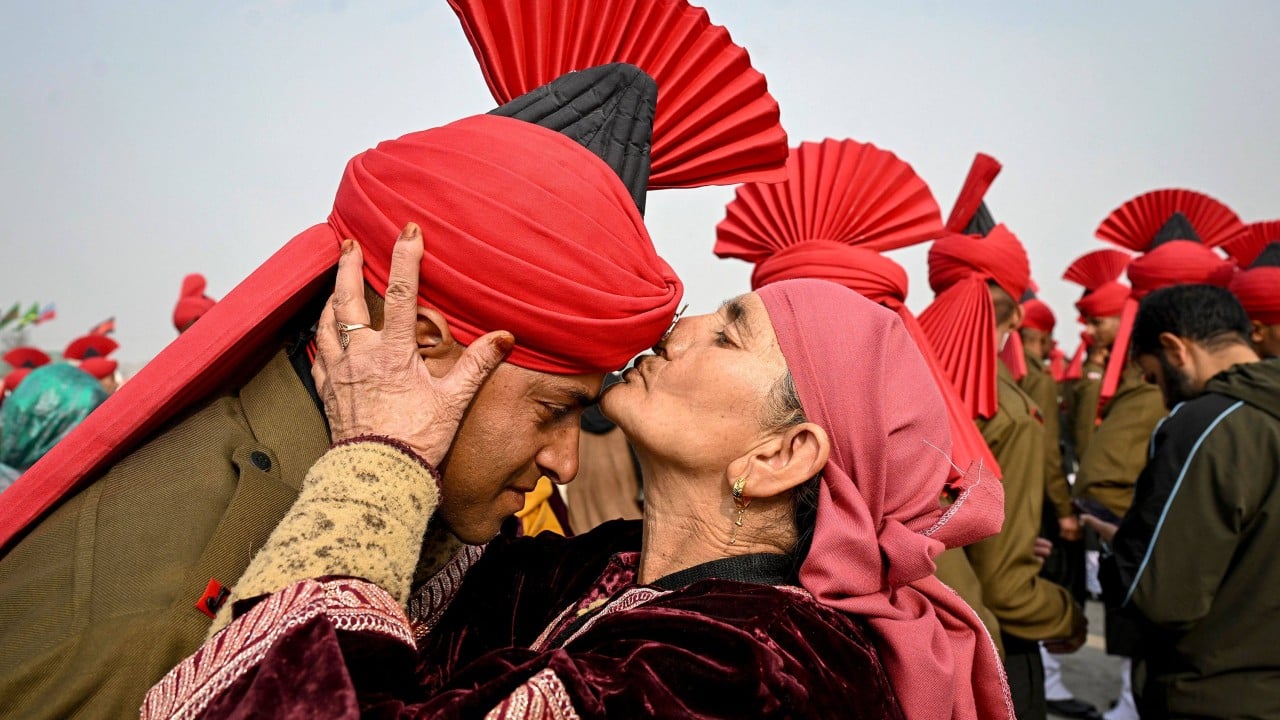
India is rewriting its military recruitment playbook to stop an impending manpower bleed along its contested borders. Facing persistent troop shortages and volatile standoffs along the Himalayan frontier with China and the Line of Control with Pakistan, defense planners in New Delhi are moving to retain significantly higher percentages of short-term soldiers inducted under the controversial Agnipath scheme. Originally designed to cap regular retention at 25 percent after four years of service, the system is colliding with harsh operational realities—forcing the armed forces to keep more trained personnel in uniform to prevent a dangerous hollowing-out of frontline combat units.
The numbers tell an unforgiving story. For years, a pandemic-induced freeze on recruitment created a cumulative deficit exceeding 100,000 personnel across the Army, Navy, and Air Force. While inductions resumed under the Agnipath model in 2022, the arithmetic of a four-year service cycle quickly revealed a structural flaw. You cannot replace seasoned mountain warfare specialists overnight.
The Arithmetic of a Self-Inflicted Troop Gap
When the Indian government unveiled the Agnipath scheme in June 2022, the stated objective was straightforward: slash a ballooning defense pension bill and lower the average age profile of the armed forces. Under the legacy system, soldiers served for 15 to 17 years before retiring with lifelong pensions and healthcare benefits. By the early 2020s, salaries and pensions consumed well over half of India’s annual defense budget, leaving dangerously thin margins for modernizing fighter jets, submarines, and artillery.
The solution seemed clean on a spreadsheet. Induct young recruits—designated as Agniveers—for a strict four-year tenure. At the end of those four years, retain only the top 25 percent for permanent service, and release the remaining 75 percent back into civilian life with a lump-sum severance package and no pension.
Then reality intervened.
To understand why military commanders are pushing to raise that retention threshold—with internal defense reviews actively weighing figures between 50 and 75 percent for combat arms—you have to look at the timeline of soldiering. Basic and advanced military training takes roughly six to ten months, depending on the branch and trade. Another few months are lost to transit, leave, and unit acclimatization. That leaves barely three years of actual operational utility before an Agniveer packs their kit and goes home.
In high-altitude theaters like Ladakh or the Siachen Glacier, acclimatization alone is a slow, physiological process. A soldier requires weeks just to adjust to hypoxic conditions above 14,000 feet before they can carry out routine patrols without risking pulmonary edema. Rotating three-quarters of a battalion out every four years destroys institutional memory at the squad level.
Why Border Realities Outweighed Pension Math
Military doctrine rarely survives contact with geography. India maintains one of the largest standing armies in the world not out of bureaucratic habit, but because it manages two active, unresolved land borders simultaneously.
Along the Line of Actual Control (LAC) with China, the 2020 Galwan Valley clashes permanently altered deployment patterns. What was once a seasonal posture—where troops pulled back from forward posts during brutal Himalayan winters—is now a year-round, forward-deployed standoff involving tens of thousands of soldiers, tanks, and heavy artillery stationed at extreme altitudes. Meanwhile, along the Line of Control (LoC) and international border with Pakistan, counter-infiltration grids and counter-insurgency operations in Jammu and Kashmir demand constant, boots-on-the-ground vigilance.
Technology helps, certainly. Drones, ground sensors, and satellite imagery have improved surveillance across rugged terrain. Yet no drone can hold a frozen ridgeline in sub-zero temperatures or conduct house-to-house clearing operations in dense forested valleys. Infantry remains the ultimate currency of territorial control.
Veterans and regimental commanders have privately warned since 2022 that a 75 percent discharge rate would trigger a catastrophic drop in unit cohesion. In the Indian Army, regiments are built on deep, multi-generational bonds—often drawn from specific regions and communities—where soldiers fight for the man standing next to them. Turning a frontline infantry battalion into a revolving door undermines the psychological trust required when artillery shells start landing.
The Hidden Bottlenecks in Technical Branches
While infantry regiments worry about cohesion, the Air Force, Navy, and technical arms of the Army face a completely different crisis: wasted training investment.
Consider a hypothetical example from an air defense or signals unit. Training a technician to maintain complex radar arrays, surface-to-air missile batteries, or encrypted communications networks requires months of specialized classroom instruction followed by years of supervised troubleshooting in the field. By the time that technician is competent enough to diagnose a fault independently under pressure, their third year of service is nearly over. Under the original 25 percent retention rule, the military would absorb the entire cost of training that specialist, only to hand them over to the private sector just as they become operationally profitable.
The Indian Navy has felt this squeeze acutely. Modern warships are floating networks of sensors, propulsion systems, and weapons platforms that require tight, cross-trained crews. Losing three-quarters of junior sailors every four years forces senior petty officers to spend their time continuously training rookies rather than focusing on combat readiness and fleet maintenance.
The Politics of Unfulfilled Civilian Promises
There is another, quieter factor driving New Delhi’s recalibration, and it has nothing to do with mountain warfare. It is domestic politics.
When Agnipath was launched, violent protests erupted across several northern Indian states—regions like Bihar, Uttar Pradesh, Haryana, and Rajasthan that traditionally supply the bulk of India’s military recruits. For generations, a permanent army job was the surest ticket out of rural poverty, conferring lifelong financial security and unmatched social prestige. Stripping away the pension and job security sparked immediate backlash.
To quell the unrest, federal ministries, state governments, and major corporate conglomerates announced quotas and preferential hiring for outgoing Agniveers in paramilitary forces, state police departments, and private security firms. On paper, the transition pipeline looked orderly.
In practice, absorption mechanisms have moved sluggishly. Paramilitary organizations like the Central Armed Police Forces (CAPF) have their own rigid recruitment structures, age limits, and internal promotion hierarchies that clash with lateral entries. Private corporations, meanwhile, have shown tepid enthusiasm for hiring 22-year-olds whose primary skill set is small-arms tactics and drill discipline.
Defense policymakers realized a volatile truth: releasing tens of thousands of militarily trained, unemployed, and frustrated young men back into economically stressed rural districts every year carries severe social and political risks. Retaining a much larger share of them inside the armed forces solves both a military deficit and a brewing domestic headache.
How the Retention Model is Shifting
Reforming the retention rate is not as simple as flipping a switch. Every soldier kept beyond the four-year mark reintroduces the exact long-term financial liability the government tried to escape in 2022. To navigate this trap, defense planners are examining tiered retention structures rather than a blanket return to the old system.
Differentiated Retention by Arm and Trade
Rather than applying a rigid 25 percent cap across the entire military, planners are looking at flexible retention ceilings tailored to operational needs. Frontline infantry battalions and specialized technical trades could retain 50 percent or more of each batch, while non-combat support roles might stick closer to the original formula.
Extended Short-Service Tenures
Another model under evaluation involves extending the initial service window from four years to seven or eight years for specific cadres. This gives the military a genuine return on its training investment without immediately triggering full 15-year pension liabilities. Soldiers exiting after seven or eight years would leave with a larger severance corpus and greater maturity, making them far more employable in civilian management and logistics roles.
Revised Compensation and Severance Mechanics
Keep more soldiers, and the wage bill climbs. To prevent pension obligations from once again cannibalizing capital expenditure for fighter jets and naval vessels, financial planners are exploring contributory pension frameworks—similar to the National Pension System used by civilian government employees—or higher lump-sum exit payouts in lieu of lifelong indexed pensions.
The Modernization Trade-Off Nobody Can Escape
Every rupee spent on manpower is a rupee not spent on hardware. That zero-sum equation has haunted South Block—the seat of India’s defense ministry—for three decades, and raising Agniveer retention brings it roaring back.
India’s military modernization wishlist is massive and urgent. The Indian Air Force is operating well below its sanctioned strength of 42 fighter squadrons, struggling to retire aging MiG-21s while waiting on delayed deliveries of indigenous Tejas jets and foreign procurement deals. The Navy needs additional conventional and nuclear-powered submarines to counter China’s rapidly expanding footprint in the Indian Ocean. The Army itself requires modernized artillery, night-fighting gear, counter-drone systems, and light tanks specifically engineered for high-altitude combat in Ladakh.
Meanwhile, Beijing operates on a vastly larger economic base, pouring resources into dual-use border infrastructure—airfields, hardened shelters, high-speed rail links, and 5G networks—right up to the disputed frontier. India cannot match China dollar-for-dollar in defense spending. Its primary asymmetric advantage on the Himalayan border has always been the grit, acclimatization, and combat experience of its infantrymen.
Diluting that human advantage to save money on pensions was a gamble that risked compromising frontline deterrence. Now, correcting that gamble threatens to squeeze the very capital budgets needed to give those soldiers modern weapons and protective gear.
What Happens Inside the Battalions Right Now
Walk into any infantry training center or forward brigade headquarters today, and the transition is already creating subtle friction. Regimental officers are tasked with evaluating Agniveers under a newly standardized, quantified assessment matrix to determine who makes the cut for permanent retention.
This introduces an unintended behavioral shift within squads. Traditionally, Indian infantry units thrived on collective sacrifice—covering for a buddy, sharing workloads, and prioritizing the unit’s reputation above individual metrics. When young recruits know they are competing directly against the men sharing their bunker for a limited number of permanent slots, cooperation can quietly curdle into hyper-competitive individualism.
Raising the retention ceiling relieves some of that pressure. If half or two-thirds of a batch knows they have a realistic shot at staying on, morale stabilizes and commanders regain the leverage to build cohesive teams rather than managing anxious competitors.
Yet an underlying tier system remains. Even with higher retention, the Indian Army will operate for the next decade with a hybrid workforce: legacy soldiers serving under the old pension rules alongside Agniveers operating under revised terms of service, doing the exact same dangerous jobs on the exact same frozen ridgelines for different long-term rewards. Managing that parity gap on the ground will test junior leadership far more than any policy paper drafted in New Delhi.


