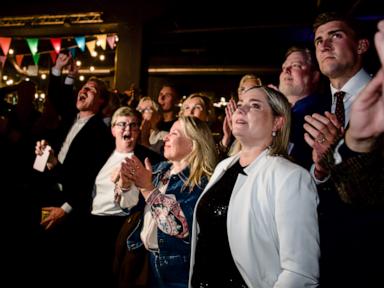
Icelandic voters have narrowly rejected a government-backed proposal to restart accession negotiations with the European Union, bringing a definitive halt to a high-stakes political gamble that divided the North Atlantic island nation. Final results published by public broadcaster RÚV confirmed that 52.8 percent of voters cast ballots against resuming the talks, while 47.2 percent supported the initiative. The referendum, called by Prime Minister Kristrún Frostadóttir’s left-leaning coalition, was intended to resolve a long-running national debate over European integration. Instead, it exposed deep geographical fractures and an unshakeable protective instinct over national resources that Brussels continues to miscalculate.
For a nation of roughly 400,000 people, the margins were agonizingly tight, yet the implications ripple far beyond the volcanic shores of Reykjavik. Brussels had viewed Iceland as a prime candidate to bolster its strategic footprint in the Arctic, hoping that global instability and shifting geopolitical winds would soften local resistance. That calculation ignored the bedrock principles of Icelandic sovereignty, leaving European officials to contend with a rejection that stings all the more because it targeted merely the prospect of negotiations rather than full membership itself.
The Geopolitical Catalyst That Backfired
The path to this referendum was forged in unusual heat. Prime Minister Frostadóttir’s government aggressively moved up a vote originally slated for next year, reacting directly to external pressures. United States President Donald Trump had repeatedly referenced nearby Greenland—frequently confusing it with Iceland—while discussing strategic territorial ambitions in the Arctic.
Proponents of the "Yes" movement attempted to weaponize this anxiety. They argued that closer institutional ties with Europe and the potential adoption of the euro would provide a stabilizing financial shield and a reliable geopolitical anchor against erratic foreign threats.
It was a rhetorical strategy built on fear, and it fundamentally misread the electorate. Icelanders are already tightly integrated with the continent through the European Economic Area (EEA) and the Schengen free-travel zone. They enjoy frictionless access to the single market without surrendering policy controls. Telling a fiercely independent people that they needed formal EU integration for protection against distant rhetorical threats fell flat, particularly when the country already maintains a secure posture as a member of NATO.
The Fishing Industry Defence
At the heart of the "No" campaign lay an economic juggernaut and a pillar of national identity: the fishing sector. Marine products account for nearly 40 percent of Iceland's total goods exports. To the coastal communities and fishing syndicates that drove the opposition, the European Union's Common Fisheries Policy represents an existential threat.
The arithmetic of the industry is simple. Iceland spent decades reclaiming absolute control over its surrounding waters, famously prevailing over the British Royal Navy in the 1970s during the Cod Wars. Handing any degree of management authority over those waters to Brussels—where foreign trawlers from nations like Spain or the Netherlands could potentially secure quotas—was treated as a non-starter.
Around 90 percent of companies within Iceland's fisheries sector mobilized against the referendum. They pointed out that the country’s economic recovery following its devastating 2008 financial collapse was proof positive that managing its own monetary and marine policies independently yields better results than submitting to centralized European bureaucracy.
A Geography of Division
The night-long vote count laid bare a stark demographic split. Reykjavik stood almost entirely alone as the lone urban enclave where a majority backed restarting talks. In the capital, supporters argued that joining the bloc could eventually drag down stubbornly high domestic interest rates and tame inflation.
Step outside the capital region, however, and the sentiment flipped decisively. Rural constituencies and coastal towns rejected the measure by margins approaching three to two in some districts. For these voters, the push for EU talks felt like an urban project driven by technocrats who were disconnected from the realities of rural economies, farming, and marine stewardship.
The phrasing of the ballot paper also hampered the "Yes" campaign. Voters were asked a straightforward question: whether Iceland should resume accession negotiations. Because any final treaty would ultimately require a second, separate referendum, proponents framed a "Yes" vote as a harmless exploratory step—a metaphorical toe in the water.
Critics of the measure countered that a "Yes" vote was an open-ended commitment to a bureaucratic labyrinth. The "No" side offered clarity: a definitive rejection of a process that they argued would inevitably erode national autonomy. Slogans like the "Yes" camp's "Já til að sjá" ("yes to see") appeared unmoored and vague when placed beside the resolute messaging of their opponents.
The Brussels Blind Spot
For the European Commission, the outcome is a sobering reality check. Enlargement has dominated EU policy discussions following regional security shifts in Eastern Europe. Brussels has grown accustomed to courting aspiring states eager for economic integration.
Iceland represents a different category entirely: an ultra-wealthy, highly developed nation that looks at the bloc's regulatory weight, agricultural subsidies, and bureaucratic friction and decides the juice is simply not worth the squeeze. Senior diplomats in Europe had hoped to showcase Iceland as a model of Arctic cooperation and advanced integration. Instead, the vote highlights the limits of expansionism when dealing with micro-economies that fiercely guard their legislative independence.
Prime Minister Frostadóttir has confirmed that her administration will respect the outcome, ensuring that the matter will remain off the formal political agenda until at least the end of her current mandate in 2028. Parliament may now move to formally scrap the remnants of the long-dormant membership application, cleanly severing a bureaucratic ghost that has haunted Icelandic politics for over a decade.
The debate is settled. For the foreseeable future, Iceland remains anchored safely outside the European Union, navigating the global economy entirely on its own terms.


