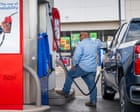
The fragile peace that temporarily kept American gas stations from erupting into chaos has shattered, sending diesel fuel soaring past $5 a gallon and pushing regular unleaded right back to the brink of $4. While mainstream outlets frame this as a simple, incremental creep in retail prices, the reality is far more volatile. A high-stakes game of geopolitical chicken is unfolding in the Strait of Hormuz, and Washington's erratic policy shifts are actively fueling the fire.
This is not a story about minor market fluctuations. It is a chronicle of a severely depleted global supply system colliding with unpredictable, whim-driven foreign policy that has turned a vital global trade chokepoint into an active war zone.
The Illusion of the June Truce
To understand why your weekly fill-up suddenly costs significantly more, you have to look back to the short-lived June memorandum of understanding between the United States and Iran. That agreement temporarily cooled a hot war, allowing a brief sigh of relief at the pump and a momentary dip in energy markets.
It was a mirage.
Beneath the diplomatic pleasantries, neither Washington nor Tehran resolved the fundamental dispute: who actually controls navigation through the narrow Strait of Hormuz. When the truce dissolved, it did so with spectacular violence. Following Iranian attacks on commercial shipping and American military assets in the Gulf, the U.S. launched several consecutive nights of military airstrikes deep into Iran. Tehran responded by declaring the Strait of Hormuz closed. In retaliation, the U.S. imposed a strict naval blockade on all shipping traffic heading to or from Iranian ports.
Tanker traffic through the strait has effectively ground to a halt. This is not just any waterway; it is the transit route for roughly 20% of the world’s petroleum and liquefied natural gas (LNG).
Policymaking by Whim
If military escalation laid the dry tinder, unpredictable policy announcements from the White House acted as the match.
In a sudden move, the administration announced a plan for the U.S. military to essentially seize control of the Strait of Hormuz and levy a mandatory 20% protection fee on all cargo passing through the waterway. The logic was to force global shipping companies to pay for the cost of their own naval escorts.
The shipping industry and key international allies reacted with immediate fury, prompting the administration to abruptly abandon the transit fee proposal less than 48 hours later.
But the damage to the markets was already done. Crude oil prices, which had hovered in a stable range, instantly spiked up to $87 a barrel before paring back some of those gains once the toll proposal was retracted.
Wholesale energy traders do not hate high prices half as much as they hate unpredictability. When policy is made and unmade via sudden public commentary, risk premiums skyrocket. Bankers and fuel buyers are forced to price in the absolute worst-case scenario because they have no way of knowing what policy will be announced next.
Why the Market is Vulnerable This Time
A common counter-argument from defenders of the current policy is that the U.S. is now the world's leading oil producer, meaning domestic consumers should be insulated from Persian Gulf disruptions. This is dangerously naive.
Oil is a fungible global commodity. When a major source of supply is threatened, buyers in Europe and Asia bid up the price of oil everywhere else, including the crude produced in Texas and North Dakota.
More importantly, the global buffer has been eroded.
Global Crude Oil Vulnerability Map (Mid-2026)
+-----------------------------------------------------------------+
|  [Strait of Hormuz Blockade] --> 20% of Global Oil/LNG Stuck    |
+-----------------------------------------------------------------+
                                |
                                v
+-----------------------------------------------------------------+
|  [Depleted Global Inventories] --> Lowest levels since March     |
+-----------------------------------------------------------------+
                                |
                                v
+-----------------------------------------------------------------+
|  [Refinery Capacity Squeeze]  --> Crude unavailable for plants  |
+-----------------------------------------------------------------+
                                |
                                v
+-----------------------------------------------------------------+
|  [The Result] --> Retail Diesel > $5/gal, Gas approaching $4    |
+-----------------------------------------------------------------+
During the previous round of intense fighting in the spring, Western nations aggressively drew down their strategic stockpiles to artificially keep consumer prices low. Those reserves were never fully replenished.
We are starting this renewed crisis from a much weaker inventory position. With the upcoming conclusion of the Strategic Petroleum Reserve release programs, there is no remaining federal safety valve to depress prices.
Compounding this is a parallel crisis in refining capacity. Due to geopolitical tensions and structural supply shifts, many global refineries have been starved of the specific heavy crude grades they need to operate efficiently. This has triggered a record tightness in refined product markets. Even if crude prices remain somewhat suppressed, the price of processing that crude into actual gasoline and diesel is higher than ever.
The Hidden Tax on Everything
While a jump in regular unleaded gas hurts the average driver’s wallet, the real threat to the broader economy is the quiet surge in diesel.
Diesel is the literal fuel of commerce. It powers the container ships, the freight trains, and the heavy-duty trucks that move every physical good from ports to store shelves. When diesel crosses the $5-a-gallon threshold, it acts as an immediate, regressive tax on the entire supply chain.
A trucking company operating on thin margins cannot simply absorb a 25% increase in fuel costs over the course of a year. They pass those surcharges directly to the distributors, who pass them to the retailers, who ultimately pass them to the consumer.
If this standoff in the Strait of Hormuz drags on, it will not just be fuel prices that rise. The cost of groceries, building materials, and consumer goods will inevitably follow, threatening to trigger a fresh wave of inflation that central banks are poorly equipped to fight.
The administration is attempting to project strength through unilateral military action and bold economic threats. But by treating a delicate global supply chain as a theater for erratic, transactional policymaking, they are exposing the very domestic economy they claim to protect to severe structural pain. Tanker traffic has stopped, global stockpiles are depleted, and the margin for error has evaporated.