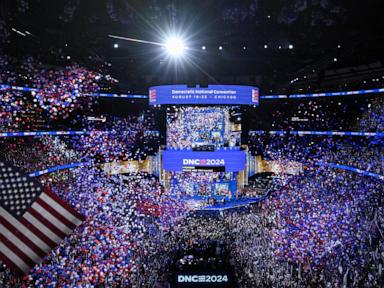
The Democratic National Committee is locking horns over who gets to vote first in the 2028 presidential nominating process. With the party’s Rules and Bylaws Committee preparing preliminary votes on the early primary calendar, twelve states are waging an aggressive behind-the-scenes war to capture the opening slots. Without an incumbent president in the White House to dictate order, a 49-member panel is attempting to dismantle decades of tradition, balance warring regional bosses, and avoid another disastrous opening night meltdown. The outcome will single-handedly decide which candidates survive past January 2028 and which are crushed before the first delegate is even counted.
The contest for the early window is not merely an administrative exercise in scheduling. It is a raw calculation of party power. For decades, Iowa and New Hampshire held an iron grip on the primary calendar, creating an entry barrier that rewarded retail campaigning in small, overwhelmingly white states. That system collapsed under the weight of the botched 2020 Iowa caucus app, followed by Joe Biden's heavy-handed move to elevate South Carolina in 2024 to reward the Black electorate that saved his political campaign. Learn more on a connected topic: this related article.
Now, the political chessboard is wide open once again. Twelve states have submitted applications to be part of the four or five privileged slots permitted in the initial window. Delaware, Georgia, Illinois, Iowa, Michigan, Nevada, New Hampshire, New Mexico, North Carolina, South Carolina, Tennessee, and Virginia are all demanding a piece of the pie.
The Vacuum at the Top
Presidential nominating calendars are usually built around the personal interests of an incumbent president or an undisputed front-runner. In late 2022, Joe Biden unilaterally dictated the primary calendar to the committee, stripping Iowa of its opening spot and placing South Carolina at the front of the line. It was a move aimed at consolidating his base and punishing states that had rejected him four years earlier. Further journalism by USA Today explores comparable perspectives on this issue.
That top-down command structure is gone. Without a Democrat occupying the Oval Office, the DNC lacks a singular executive authority to enforce discipline. DNC Chair Ken Martin has maintained a hands-off approach, leaving the 49 members of the Rules and Bylaws Committee to negotiate directly among themselves.
Party insiders describe the current atmosphere as an unruly free-for-all. State party chairs, political consultants, and prospective presidential campaigns are working the committee members behind closed doors. Everyone wants a primary calendar that favors their specific candidate profile or geographic base.
Small-state advocates argue that cheap media markets are essential. If an early state requires tens of millions of dollars in advertising just to reach voters, grass-roots candidates will be eliminated before the election even begins. Big-state advocates counter that nominating candidates in tiny, unrepresentative markets leaves the party unprepared for the brutal reality of a national general election.
The committee co-chairs, Minyon Moore and James Roosevelt Jr., face an almost impossible task. They must forge a consensus among committee members who represent fierce, competing interests. Every vote on the calendar is implicitly a vote for or against specific factions within the national party.
The Diverse Coalition Versus the Battleground Reality
The central ideological debate inside the committee pits demographic representation against electoral utility.
On one side stand proponents of South Carolina and Georgia. They argue that Black voters form the backbone of the party and must have the first say in choosing the presidential nominee. South Carolina Democratic leaders point out that their state revived Biden’s stalled nomination in 2020 and proved its value again in 2024. They insist that putting a Southern state with a heavy Black population first forces candidates to build multi-racial coalitions from day one.
Opponents of prioritizing the Deep South offer a stark counter-argument in private. Neither South Carolina nor Georgia guarantees electoral votes in November. South Carolina remains a reliably red state in general elections, while Georgia is a high-cost swing state where political advertising consumes campaign funds at an alarming rate.
Midwestern leaders are making a aggressive push for states like Michigan and Illinois. Michigan offers a dense mix of union labor, suburban voters, rural communities, and significant Black and Arab American populations. It is also an absolute necessity on any viable route to 270 electoral votes. Supporters argue that testing prospective nominees in a true presidential battleground yields a far more durable general election candidate.
However, moving a state like Michigan into the very first spot brings major logistical problems. Michigan is a massive state with multiple major media markets including Detroit and Grand Rapids. Running a statewide campaign there requires substantial infrastructure and multi-million-dollar ad buys. If Michigan goes first, lower-tier candidates without deep-pocketed donors will be wiped out before they can build momentum.
The Rogue State Threat and the Law of Unintended Consequences
The most dangerous obstacle facing the committee is not finding consensus on paper, but enforcing it on the ground.
New Hampshire state law mandates that its secretary of state set the presidential primary at least seven days before any similar contest in any other state. When the DNC attempted to move New Hampshire down the calendar in 2024, state officials simply ignored the national party, moved their primary ahead anyway, and forced national Democrats into a chaotic write-in campaign for Biden.
New Hampshire is preparing to do it again. State party leaders have made it clear that no matter what the DNC votes on in Washington, New Hampshire law will govern their primary date. Iowa Democrats are similarly refusing to go quietly into the night, exploring options for rogue caucuses or alternative voting windows to retain their historic influence.
To stop a wave of unauthorized primaries, the DNC has enacted stringent penalties. Under rules updated by the committee, any candidate who actively campaigns, places advertising, or puts their name on the ballot in an unapproved early primary state faces severe retaliation. The penalties include:
- Immediate forfeiture of debate stage access at all official party-sanctioned presidential debates.
- Automatic stripping of the rogue state’s delegate allotment at the national nominating convention.
- Ban on national party funding and operational support for state party committees that violate the calendar sequence.
These rules create a legal landmine for potential 2028 contenders. If New Hampshire holds an unauthorized primary, prospective candidates will be forced to choose between breaking national party rules or snubbing the voters of an essential state. A candidate who skips New Hampshire risks alienating local activists and losing press coverage, while a candidate who participates risks being banned from the national debate stage.
Several potential 2028 candidates have already indicated privately that they might ignore the DNC debate framework entirely if the sanctions prove too punitive. If major candidates decide they can bypass party debates by leveraging podcasts, independent media, and digital advertising, the DNC’s leverage disappears completely.
Money, Media Markets, and Grassroots Survival
The decision over early states will dictate the financial architecture of the entire 2028 primary campaign.
In a traditional early state like New Hampshire or Nevada, a candidate can rent a van, hire a small staff, and spend months meeting voters in diners, union halls, and town hall meetings. This retail approach gives lesser-known governors, senators, and congress members a fighting chance to overcome well-funded establishment front-runners.
If the committee elevates states dominated by expensive media markets—such as Illinois, Georgia, or Virginia—the nature of primary politics changes overnight. Retail politics gets replaced by broadcast television campaigns.
| State Candidate | Regional Classification | Primary Market Type | Financial Barrier | Campaign Mechanics |
|---|---|---|---|---|
| New Hampshire | East | Low-Cost Local | Low | Retail town halls, house parties, grassroots organizer mobilization |
| South Carolina | South | Moderate Regional | Medium | Church networks, local radio, direct voter contact |
| Nevada | West | Concentrated Suburban | Medium | Union door-knocking, direct mail, targeted digital ad buys |
| Georgia | South | Expensive Metropolitan | Extremely High | Statewide broadcast television, heavy digital media blitzes |
| Michigan | Midwest | Multi-Market Battleground | High | Regional TV buys, labor union turn-out operations |
| Illinois | Midwest | Major Metropolitan | Extremely High | Heavy Chicago ad buys, machine political alignments |
A calendar dominated by high-cost states favors two types of candidates: those who enter the race with built-in national name recognition, and those who have cultivated relationships with Silicon Valley and Wall Street megadonors. Grassroots candidates with limited early funding will be priced out of the race before voters even cast a ballot.
This dynamic creates a profound conflict within the Democratic coalition. While party leaders publicly preach the importance of lowering barriers for non-traditional candidates, adopting a big-state early calendar does the exact opposite. It cements the dominance of capital over organizing.
The Fragile Path to the August Floor
The Rules and Bylaws Committee plan is only a draft. The full Democratic National Committee must vote to ratify the final calendar when it convenes in August.
Between now and that final vote, the political pressure will reach a breaking point. Delegations from excluded states are threatening floor fights. State lawmakers in contested states are threatening to pass legislation that overrides DNC directives. Meanwhile, potential candidates are carefully monitoring the rules to decide when to launch their exploratory committees.
The committee believes it is constructing a modern, equitable calendar designed to test candidates in representative environments. In reality, it is walking straight into a political trap of its own making. By attempting to please every faction, region, and demographic group simultaneously, the party risks creating a fractured process that satisfies no one and hands Republicans an early structural advantage.
If state party leaders refuse to back down and candidates elect to bypass party sanctions, the 2028 primary calendar will not be remembered as a victory for party modernization. It will be remembered as the moment the national party lost control of its own nominating process.