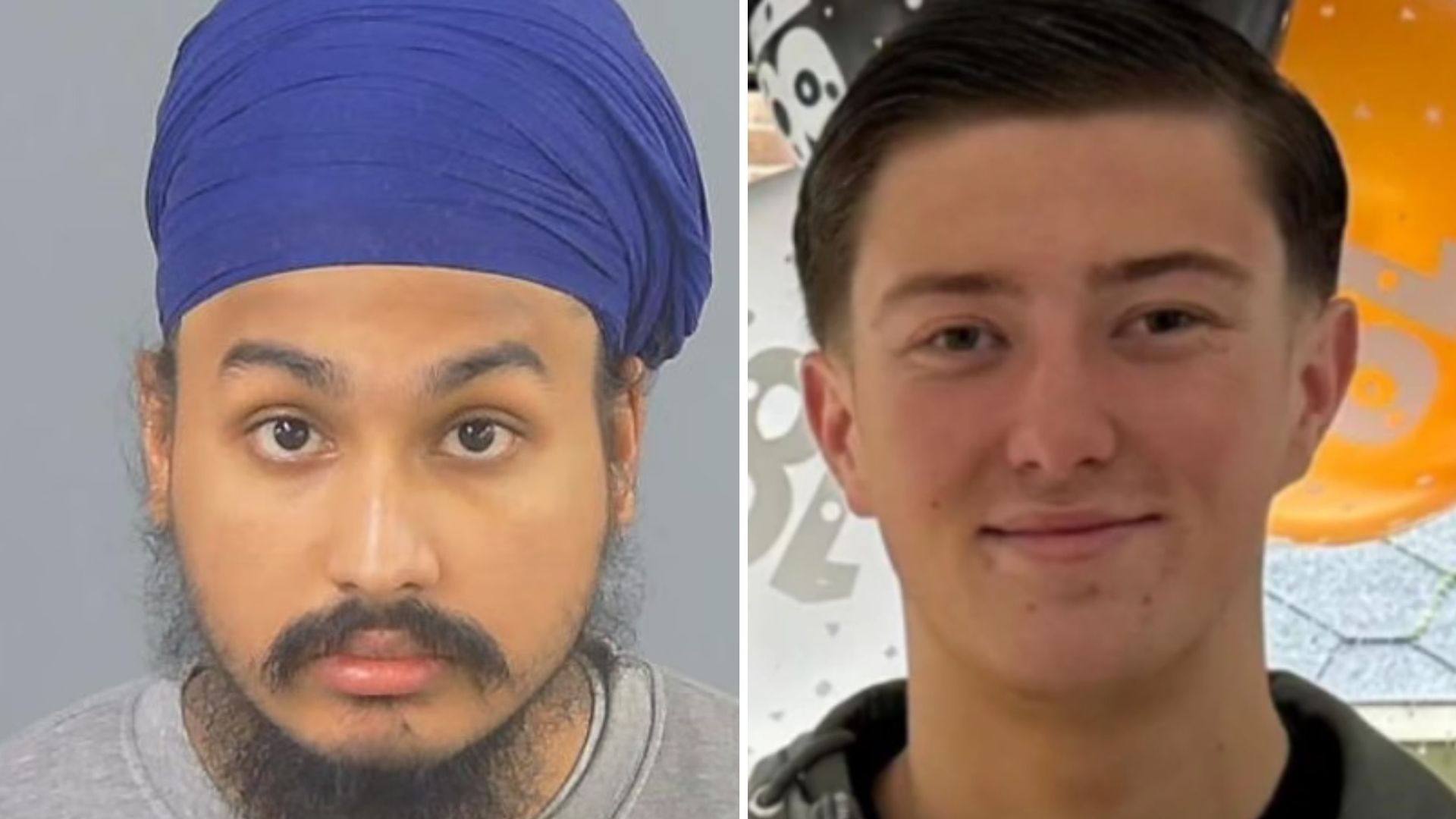
The fatal stabbing of 18-year-old university student Henry Nowak in Southampton last December was already a flashpoint for national outrage. When Solicitor General Ellie Reeves KC referred the 21-year minimum sentence of his killer, Vickrum Digwa, to the Court of Appeal under the Unduly Lenient Sentence scheme, it confirmed what legal analysts and the public had suspected. The justice system is struggling to balance cultural exemptions against public safety.
By sending the case to the Court of Appeal, the government is forcing a reckoning. The central issue is not just the length of a prison sentence, but how the law treats lethal weapons carried under the guise of religious tradition.
The Tension in the Sentencing Guidelines
Vickrum Digwa was convicted of murder on May 28, 2026, after a trial that exposed a sequence of calculated deception. Following the attack, Digwa spun a narrative to arriving police officers, claiming he was the victim of a racist assault. This deception led Hampshire constabulary officers to handcuff and arrest a dying Nowak, who was pleading for breath, while Digwa watched in silence.
The legal controversy that triggered the Solicitor General's intervention lies within the sentencing mechanics handled by Judge William Mousley KC at Southampton Crown Court.
Under English law, the mandatory sentence for murder is life imprisonment. The judge's duty is to set the minimum term—the tariff—that the offender must serve before becoming eligible to apply for parole. For a murder involving a knife taken to the scene with intent, the standard statutory starting point is 25 years.
The defense successfully argued down this baseline. Jeremy Wainwright KC persuaded the court that Digwa carried the 21cm kirpan daily as a genuine expression of his Sikh faith, rather than preparing for an offensive attack. Consequently, the judge lowered the starting point to 15 years, eventually scaling it up to a 21-year minimum after accounting for aggravating factors. These factors included Digwa's post-offense lies and the fact that his mother, Kiran Kaur, assisted him by hiding the murder weapon.
This 15-year starting point is the core of the current legal friction. Critics argue that treating a 21cm blade as a passive religious item creates a dangerous loophole. It essentially lowers the judicial starting point for individuals who carry lethal weapons under cultural exemptions, even when those weapons are ultimately used to commit murder.
The Reality of Public Carry Exemptions
The Criminal Justice Act 1988 contains specific exemptions allowing individuals to carry bladed articles in public for religious reasons. This accommodation was designed to protect the rights of orthodox Sikhs to carry the kirpan. However, the Nowak case highlights a growing disconnect between the original spirit of this law and modern public safety realities.
During the trial, the court noted that Digwa identified with the Nihang order of Sikhs, a sect known for carrying martial symbols. Yet, mainstream Sikh scholars testified that a blade of that scale is by no means a universal requirement of the faith.
- The Size Discrepancy: Most ceremonial kirpans carried by British Sikhs are small, symbolic, and often blunt tokens worn beneath clothing.
- The Weapon of Offense: Digwa carried a functional, 21cm combat-ready dagger in a public space.
- The Intent Shift: The trial judge explicitly noted that whatever legal reason existed for carrying the blade ended the moment Digwa removed it from its sheath to stab an unarmed student five times.
By reducing the sentencing baseline because the weapon was initially carried for religious reasons, the court inadvertently signaled that the presence of a large blade is less egregious if wrapped in cultural justification. The Court of Appeal will now have to determine whether a defendant’s subjective belief about a weapon can legally mitigate the severity of taking that weapon into a public space where it eventually kills someone.
Exploiting the Operational Blindspots
The wider public anger surrounding the Nowak case stems heavily from released body-worn camera footage showing the immediate aftermath of the stabbing. The footage revealed a chaotic scene where police officers, primed by Digwa's initial emergency call, treated the dying teenager as the active aggressor.
This specific failure has been weaponized across the political landscape. Populist figures and commentators have seized upon the footage to allege "two-tier policing," claiming that officers were paralyzed by a fear of appearing culturally insensitive, which led them to trust Digwa's narrative over the visible condition of the victim.
The reality on the ground is more complex, though no less troubling. The attending officers responded to a pre-reported scenario of a racist assault. They were met with a highly coordinated wall of deception from Digwa and his family. For three critical minutes, officers focused on restraint rather than triage.
While the Independent Office for Police Conduct continues to investigate the actions of the Hampshire officers, the legal focus remains on Digwa's exploitation of the system. He used his identity both as a shield to justify carrying the weapon and as a weapon itself to manipulate law enforcement while his victim lost consciousness.
The Push for Legislative Reform
The referral to the Court of Appeal is only the first step in a broader challenge to current UK knife legislation. Henry Nowak’s family has explicitly distanced themselves from political groups seeking to use the tragedy to stir division. Instead, they have directed their energy toward a concrete goal: reforming the laws governing ceremonial blades.
Mark Nowak, Henry's father, has called for a formal government review regarding the maximum permissible length of knives carried under religious exemptions. The argument is straightforward. If a ceremonial object is intended strictly as a symbol of faith, it does not require a 21cm live blade capable of inflicting catastrophic internal trauma.
The upcoming Court of Appeal review will set a significant legal precedent. If the senior judges decide to increase Digwa’s minimum tariff, it will send a clear message to the lower courts. The privilege of a cultural exemption cannot be used to de-escalate the sentencing severity of a brutal murder.
British law has long prided itself on accommodation, but accommodation ends where public endangerment begins. The high court must now decide exactly where that line is drawn.