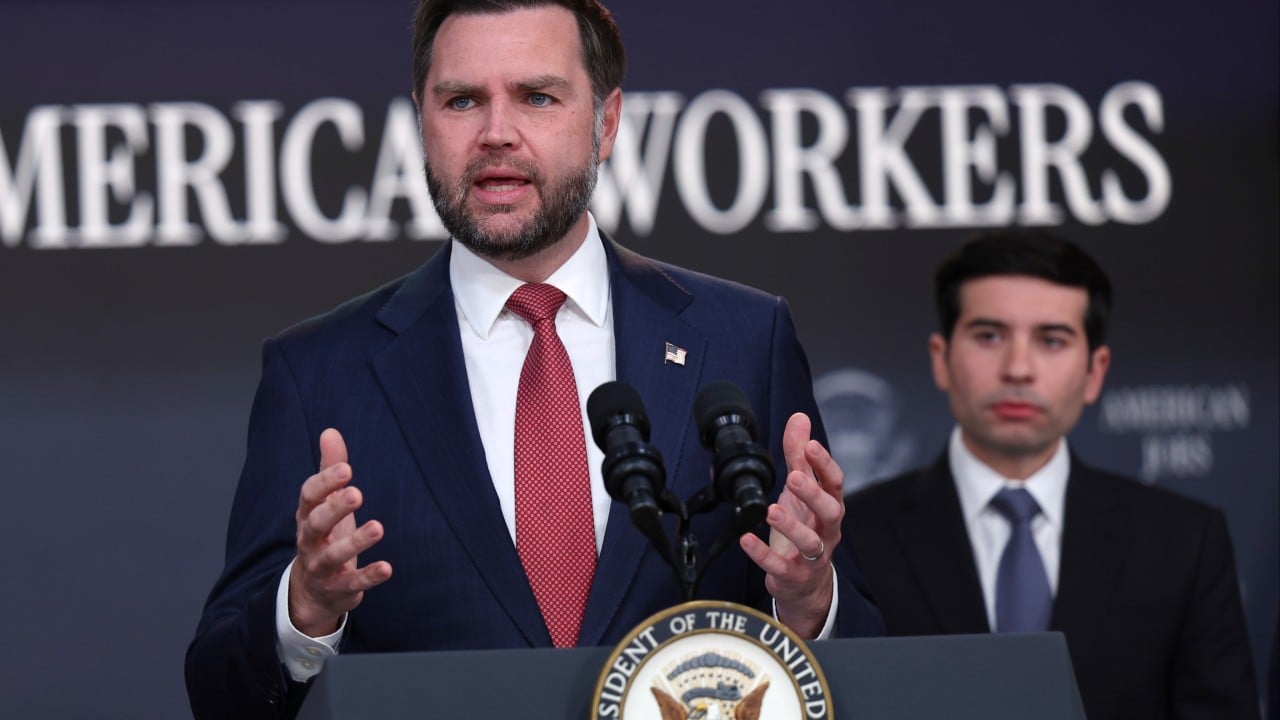
The Department of Labor did not whisper. It dropped a administrative hammer.
When the federal government barred Microsoft, Adobe, and six massive IT outsourcing contractors—including Infosys, Tata Consultancy Services, Cognizant, Wipro, HCL, and Capgemini—from the PERM labor certification pipeline, the shockwave went far beyond corporate HR corridors. For thousands of specialized engineers, data scientists, and developers currently tethered to H-1B visas, the path to permanent residency froze overnight. Expanding on this idea, you can find more in: The Anatomy of Presidential Tech Accolades: Structural Incentives and Innovation Policy.
The official justification pointed to systemic fraud and an aggressive federal mandate to prioritize domestic hiring. Yet beneath the public posturing lies a structural collision between corporate dependency on global talent and an administration determined to rewrite the rules of immigration by executive fiat.
To understand why this specific freeze matters, one must look past the press releases. The PERM process is the mandatory bedrock of the employment-based green card system. Before an employer can sponsor a foreign national for permanent residence, they must test the domestic labor market, prove that no qualified, willing, and able American worker is available for the role, and secure certification from the Department of Labor. Experts at Wired have shared their thoughts on this situation.
By suspending these specific giants, regulators have effectively severed the pipeline that turns temporary technological migration into permanent settlement. Workers already residing in the United States on H-1B visas retain their current legal status, but their multi-year trajectory toward a green card is stuck in purgatory.
Corporate responses have ranged from guarded legal maneuvering to quiet panic. Microsoft insisted it remains committed to following regulatory frameworks while navigating the sudden disruption. The outsourcing firms, whose business models rely heavily on moving technical personnel through temporary visa cycles before transitioning them to green cards, face a far more complicated existential puzzle.
When a major enterprise loses its ability to sponsor permanent residency, employee retention transforms into a crisis. Top-tier engineering talent does not wait indefinitely in regulatory limbo. The global market offers alternative destinations. Canada, the United Kingdom, and various European hubs have spent years rolling out targeted tech visas designed precisely to absorb talent frustrated by American immigration friction.
Outbound repatriation is no longer a theoretical risk. It is an operational reality. Engineers who spent a decade building core cloud infrastructure, artificial intelligence pipelines, and enterprise software in Redmond or Silicon Valley are actively fielding calls from international recruiters.
The political calculus driving these suspensions is straightforward, but the economic second-order effects are far messier. Proponents of the crackdown argue that heavy reliance on foreign tech labor depresses domestic wages and disincentivizes long-term investment in American STEM education. That argument has resonance among labor advocates who point to historical abuses within outsourcing models, where temporary visa holders lacked the mobility to negotiate fair compensation.
Yet the counter-argument from engineering leaders is equally stark. Modern software architecture is global, highly specialized, and acutely scarce. Restricting the flow of permanent residency does not automatically conjure thousands of domestic senior systems architects out of thin air. Instead, it incentivizes multinational corporations to accelerate the migration of high-value engineering teams to offshore development centers in Vancouver, London, Zurich, and Bangalore.
Work follows talent. If talent cannot secure a long-term future inside the United States, the corporate entities employing them will simply shift the footprint of their core engineering operations outside American borders.
The immediate future for affected employees remains grimly uncertain. Legal challenges will crawl through federal courts, but litigation moves slowly while visa clocks tick down. As administrative pressure on high-skilled immigration intensifies, the line between protecting domestic labor and dismantling the machinery of global technological innovation continues to blur.
The freeze is active, the administrative audits are widening, and the long-term geography of the American tech sector is quietly being redrawn.