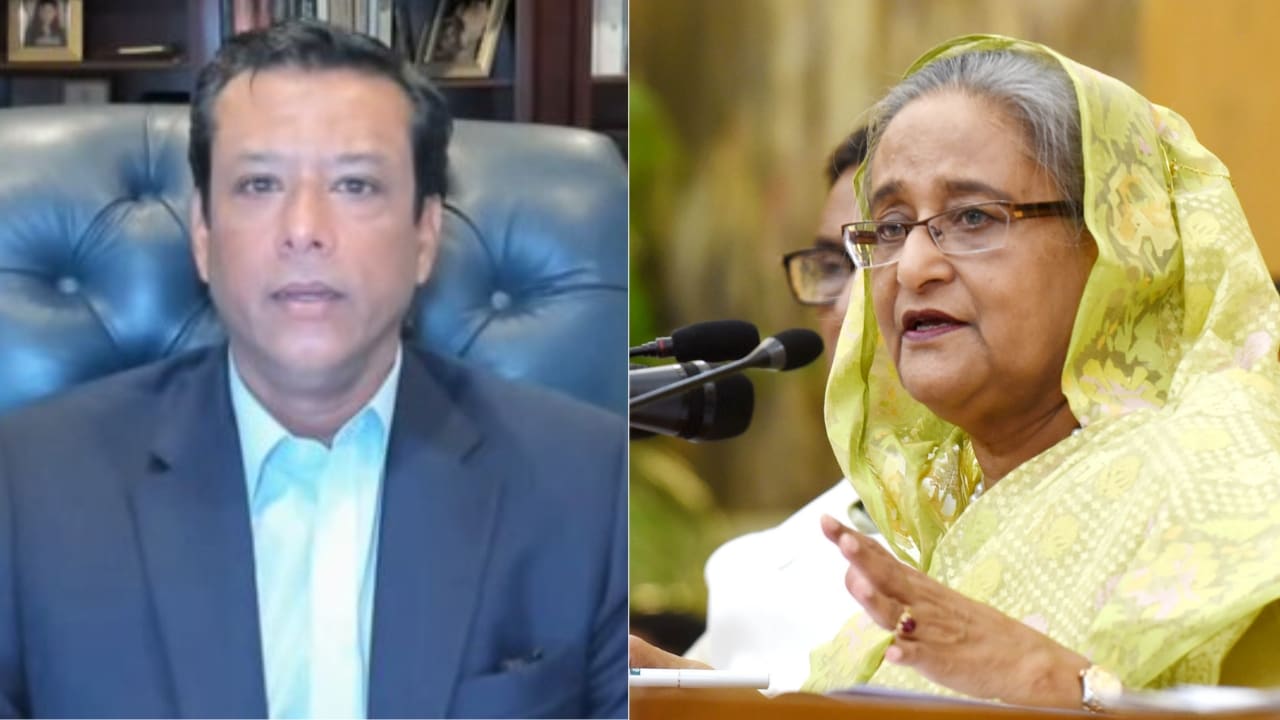
Geopolitical transformations rarely happen overnight, but the strategic pivot occurring on India's eastern flank carries the heavy footprint of historical inevitability. When Sajeeb Wazed, son of ousted former Bangladeshi Prime Minister Sheikh Hasina, publicly asserted that Bangladesh has transformed into "another Pakistan," mainstream diplomatic circles treated it as partisan hyperbole. Decades spent observing South Asian statecraft suggest a different reality. Beneath the surface rhetoric lies a stark security shift that threatens to upend regional stability, reconfigure intelligence architectures, and present New Delhi with an acute strategic dilemma.
To understand why this comparison resonates, one must examine the mechanics of the transition taking place in Dhaka since the upheaval of August 2024. For fifteen years under the Awami League, the state maintained an uncompromising posture against cross-border militant networks. Secessionist groups operating in India's northeast found their safe havens dismantled. Radical Islamist entities, from Jamaat-ul-Mujahideen Bangladesh to international jihadist fragments, faced systematic prosecution, incarceration, or exile.
The political realignment that followed Hasina's departure systematically dismantled these structural safeguards. Reports from intelligence monitors and local journalists indicate that numerous convicted extremists have secured early releases or legal amnesties. Public gatherings featuring hardline ideological elements once driven underground are no longer anomalies; they point to an institutional tolerance that mirrors the historical trajectory of Pakistan's internal security compromises during the late twentieth century.
Wazed's warning regarding the unhindered operational space now afforded to external intelligence agencies—specifically Pakistan's Inter-Services Intelligence (ISI)—touches upon a long-standing vulnerability. During periods of strained bilateral ties between Dhaka and New Delhi prior to 2009, Bangladeshi territory frequently served as a launchpad for covert operations directed against Indian infrastructure. The return of porous intelligence cooperation and the rehabilitation of anti-India proxy elements threaten to resurrect a security threat matrix that New Delhi spent a generation neutralizing.
The economic dimensions of this political crisis compound the security anxiety. Industrial contraction, soaring bank default rates, and fractured supply chains have weakened the administrative capacity of the state. Historical precedent demonstrates that when central authority fragments and economic stability falters, radical factions fill the institutional vacuum. Extremism thrives not merely on ideology, but on the administrative paralysis of weak states.
Critics of the Hasina administration argue that her authoritarian slide invited the initial popular backlash, a point that cannot be dismissed lightly. Authoritarian consolidation often creates brittle political systems incapable of absorbing internal dissent without shattering. Yet, acknowledging the domestic governance failures of the past regime does not negate the present danger. The current structural drift toward religious nationalism and regional realignment is creating a security deficit that extends far beyond domestic politics.
For India's security planners, the eastern border can no longer be treated as a tranquil frontier. Managing an adversarial or unstable state on both western and eastern borders forces a costly reallocation of military and intelligence assets. The geopolitical architecture of South Asia rests on a delicate balance; when the eastern anchor slips, the shockwaves register immediately from Assam to New Delhi.
The transformation of Bangladesh from a cooperative neighbor into a volatile strategic unknown is a process rooted in institutional erosion, political vengeance, and shifting regional alignments. The warning delivered from exile is sharp, unvarnished, and demands a rigorous appraisal of realities on the ground.
Check out this Bangladesh crisis discussion for a deeper analysis of the political shifts and regional reactions following the ouster of Sheikh Hasina.


