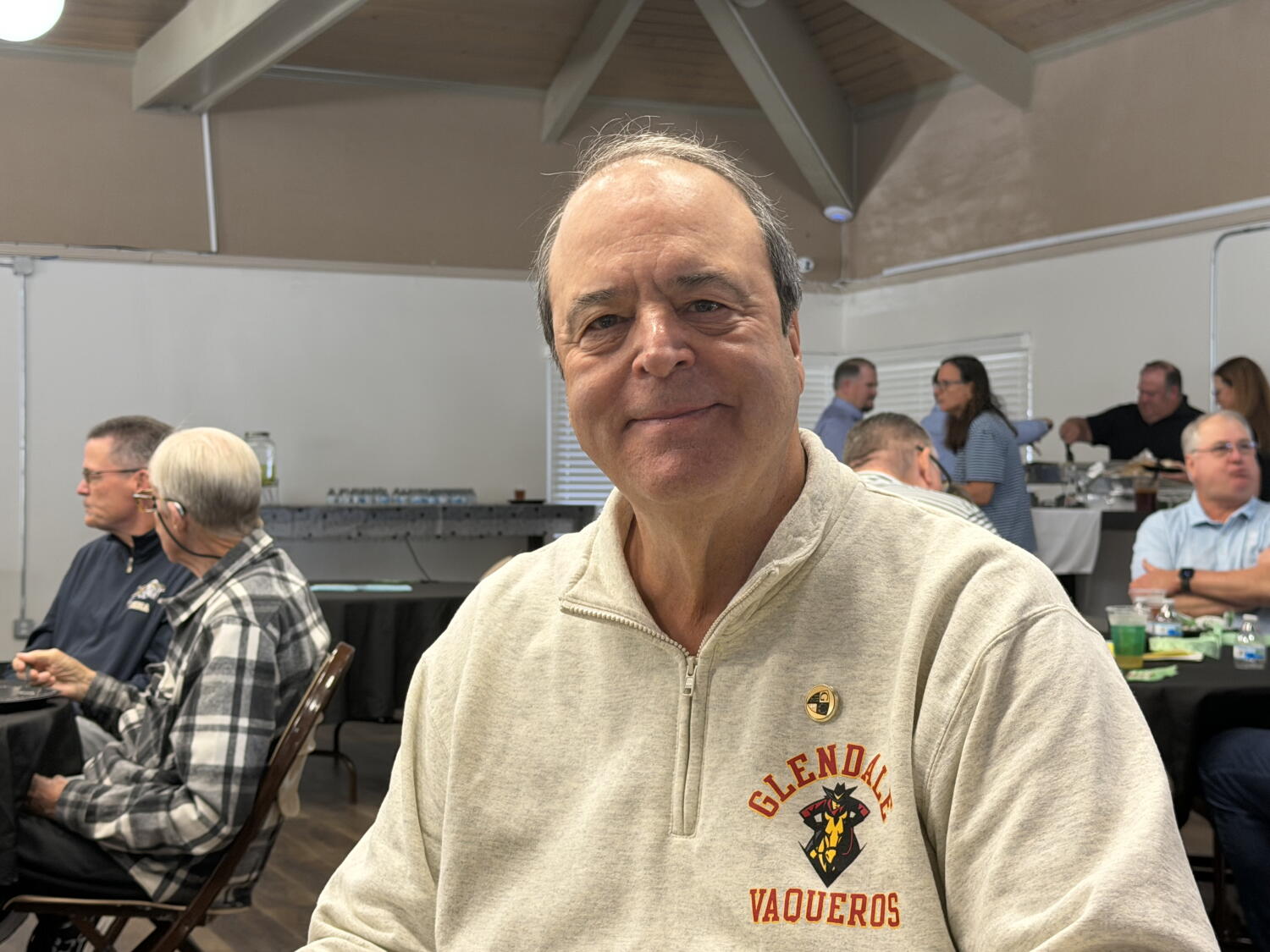
Spiro Psaltis has spent forty years announcing Glendale High football games, turning a public-address microphone into an acoustic anchor for generations of families, players, and coaches. Forty seasons on a press box headset means hearing every shift in high school athletics from the inside, from handwritten rosters and clunky analog boards to hyper-amplified stadiums and instant replay clips. Most coverage treats a milestone like year forty as a warm nostalgia piece. That misses the real story. Behind every long-serving voice on a high school stadium microphone sits a quiet structural strain that athletic departments rarely address until the booth goes silent.
Spend enough years covering prep sports and you stop romanticizing the press box. You start looking at the wiring, the staffing gaps, the unpaid hours, and the fragile institutional memory holding Friday nights together. A veteran announcer who knows the cadence of a school's traditions, the pronunciation of every family name, and the exact moment to let crowd noise breathe provides something no automated sound system or rotating student crew can fake. Yet forty years of service also exposes how easily schools lean on institutional devotion instead of building succession plans, clear guidelines, and sustainable support for the people running game-day audio.
Why Forty Years Behind the Microphone Matters More Than Nostalgia
Milestone anniversaries in high school sports tend to get flattened into sentimental tributes. A coach gets a plaque, a longtime booster gets a wave at midfield, and the announcer gets a line in the program. None of that explains the mechanics of why forty years at a single school is rare or why it carries real operational weight.
An experienced stadium announcer operates as part traffic controller, part historian, and part safety valve. High school football moves fast, and game operations are notoriously messy. Rosters arrive late or contain wrong jersey numbers. Officials throw flags without immediate explanation. Weather delays stretch halftime into an awkward waiting game, and tempers on a packed sideline can flare over a single call. The person on the PA sets the temperature of the venue. Read a penalty calmly and clearly, and half the tension in the stands evaporates. Shout over every play like a carnival barker, and the whole night feels combative.
Over four decades, that judgment compounds. A veteran knows the difference between a routine second-and-eight and a momentum-shifting fourth-down gamble that deserves vocal lift. They know when to hold back so the marching band or student section owns the moment. That restraint comes from repetition, pattern recognition, and thick skin developed across hundreds of games in heat, wind, rain, and high-stakes rivalry nights.
The Hidden Craft of Game-Day Pacing
Good public-address announcing sounds effortless, which is precisely why people underestimate it. Anyone with a booming voice can read a name into a microphone. Doing it cleanly for three hours without stepping on referees, band directors, or cheerleaders requires timing that only comes from live reps.
Consider a hypothetical example of a chaotic Friday night drive inside the red zone. A quarterback scrambles out of bounds, a holding penalty comes in on the play, the clock stops for an injury check, and the chain gang shifts markers twice before the next snap. A novice announcer either talks nonstop to fill dead air or blurs through critical yardage and down information. A seasoned voice waits for the whistle to settle, confirms the spot and penalty with the spotter or press box crew, delivers the down, distance, and tackler cleanly, and leaves space before the huddle breaks.
That discipline protects clarity for everyone in the stadium, especially parents sitting high in the bleachers who cannot read jersey numbers from eighty yards away. When a veteran like Psaltis anchors that rhythm for four decades, the voice becomes part of the architecture of Glendale High football itself.
The Fragility Behind Long-Tenured Prep Sports Roles
Longevity looks flattering from the outside. From an operations standpoint, it often masks a deeper vulnerability.
Across high school athletics nationwide, key game-day roles frequently rely on dedicated individuals who stick around for decades out of loyalty to their alma mater, their kids, or the community. Public-address announcers, clock operators, chain crews, and scorekeepers rarely enjoy thick job security, formal training pipelines, or clear continuity plans. Many work for modest stipends or purely on a volunteer basis, absorbing hours of prep work before kickoff that never show up on a time sheet.
When one person holds a post for forty years, everyone gets comfortable. Administrators stop thinking about who sits in that chair next. Nobody writes down the unspoken rules of how the booth operates, how local traditions are honored, or how audio equipment is patched when a mixer acts up ten minutes before the national anthem.
Succession Gaps Nobody Plans For
The hardest transition in local sports is rarely the first game after a legend steps down. It is the third or fourth game, once the novelty wears off and routine problems surface.
A new announcer stepping into a forty-year legacy faces an impossible comparison from the opening kickoff. If they mimic the predecessor, they sound like a cheap impression. If they try to reinvent everything overnight, alumni complain that the game does not feel right anymore. Without a structured handoff—sitting in the booth together for a season, sharing roster prep habits, reviewing expectations around sportsmanship and neutrality—schools risk turning a proud tradition into a rocky adjustment period.
There is also a practical question about modern expectations. Today's high school stadiums blend traditional PA announcements with video boards, music cues, sponsor reads, and social media highlights. A veteran announcer who has mastered the classic craft may still have to navigate shifting school policies on music, crowd prompts, and broadcast feeds. Supporting long-serving voices means adapting the workflow around them rather than dumping technical friction onto people who already carry institutional weight.
Neutrality, Spectacle, and the Changing Stadium Environment
High school football has grown louder and more theatrical over the last several decades. Sound systems are bigger. Music plays more often between whistles. Student sections choreograph chants, and community pride runs hot from August scrimmages through November playoffs.
That environment tests every public-address announcer's boundaries. A stadium microphone is a civic instrument, not a private megaphone. When emotions run high during a tight fourth quarter or a disputed call, the temptation to lean into bias—even subtly—grows stronger. High-level high school announcing demands restraint: celebrating big plays for both sides with basic fairness, keeping callouts factual, and never goading opposing fans or officials.
| Dimension | Traditional PA Craft | Modern Stadium Reality | Operational Risk for Schools |
|---|---|---|---|
| Primary Role | Clear information and game flow | Atmosphere, cues, and entertainment | Noise clutter drowning out basic facts |
| Prep Work | Roster study, pronunciations, history | Audio cues, run-of-show scripts, tech checks | Burnout when unpaid prep time balloons |
| Crowd Tone | Steady, authoritative, measured | High-energy, reactive, amplified | Escalating tension during close games |
| Continuity | Deep institutional memory in one voice | Shifting staff, volunteers, and tech setups | Abrupt drop-off when a veteran retires |
Balancing tradition with modern energy is not easy. Some fans want the crisp, old-school cadence that treats high school sports with dignity and clarity. Others expect a louder, faster-paced stadium show modeled on college and pro broadcasts. High school football is not college football, though. High school players are teenagers learning under pressure, and the tone set from the press box shapes how adults in the stands behave.
What Athletic Departments Should Actually Learn From a Forty-Year Run
Celebrating forty years of announcing Glendale High football games should push athletic directors and school leaders to examine how they treat the backbone of game-day operations. Sentiment is cheap. Institutional care takes structure.
First, schools should document game-day workflows before a crisis or sudden retirement forces the issue. That means writing down simple, practical guides covering pregame checklists, emergency weather or medical protocols, pronunciation notes, and expectations for tone and sportsmanship. A veteran announcer's habits are gold; capturing them on paper helps the next generation without erasing personality.
Second, athletic programs should pair veterans with apprentices during non-conference or junior varsity games. Giving an interested student, broadcaster, or community member real booth reps alongside a seasoned announcer builds skill under low-stakes conditions. It also creates a natural bench so a school is never scrambling at 4:00 p.m. on a Friday because a regular crew member is sick or traveling.
Third, leaders need to audit booth equipment and acoustics honestly. Nothing undercuts a great voice faster than a buzzing mic, blown speaker, or muddy mix that leaves half the stadium straining to understand a word. Good sound is basic infrastructure, yet it routinely gets ignored until something fails mid-game.
Forty seasons at Glendale High shows what consistency looks like when someone actually cares about the craft. Whether a school has a voice with four decades of history or is building a crew from scratch, the real test is whether the program respects the work behind the microphone enough to protect its standards for the next forty years.