The consumer electronics industry loves a phantom menace. For years, the corporate boardrooms of Shenzhen and Cupertino have stared each other down over a single, stubborn hardware category that refused to go mainstream. Foldables were supposed to be a niche playground for early adopters willing to accept squishy screens and astronomical price tags.
That narrative is dying. You might also find this related article useful: The Real Reason Democratic Campaigns Are Losing the Technological Arms Race.
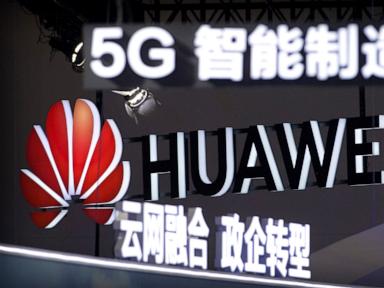
As global heavyweights Huawei and Xiaomi flood the market with fresh hardware, the structural realities of the mobile sector are shifting. This is not a polite race for consumer affection. It is a desperate, high-stakes pre-emptive strike designed to fortify domestic supply chains and capture market share before Apple formally enters the arena.
Understanding why Chinese manufacturers are accelerating their hardware schedules requires looking past the glossy marketing material. The timing of these rollouts is precise. Competitors are racing to define the vocabulary of the folding form factor before a single Cupertino device hits store shelves. As reported in recent reports by CNET, the results are notable.
The Pre-Emptive Strike in Shenzhen
When Xiaomi and Huawei roll out advanced folding hardware just hours before a scheduled Apple product showcase, nobody should mistake the timing for coincidence. It is a calculated psychological and industrial maneuver. By setting the baseline specs, pricing thresholds, and design language first, these brands attempt to anchor consumer expectations.
Huawei continues to double down on complex multi-hinge architectures, pushing the physical limits of thinness with devices like its second-generation tri-fold hardware. Meanwhile, Xiaomi leans into wide, passport-styled book formats that mirror the proportions anticipated from American designers.
These machines are marvels of modern engineering. They pack multi-thousand-nit displays, massive silicon-carbon batteries, and heavy multi-camera arrays co-engineered with historic optical brands. Yet, their existence right now is fundamentally defensive.
Domestic manufacturers recognize a brutal truth. Once Apple adopts a new form factor, the gravitational pull of the iOS ecosystem reshapes consumer desire overnight. To survive that migration, local giants must establish that they arrived first, built it thinner, and packed it with more raw features.
The Hardware Trade-Offs Nobody Mentions
Marketing departments love to talk about breakthroughs. Engineers tend to whisper about compromises. Building a device that bends in half remains an exercise in aggressive physics management, and every millimeter saved introduces structural debt.
Consider the physical footprint. The push toward a broader, shorter aspect ratio—often called the passport format—fixes the cramped, TV-remote exterior screens that plagued earlier generations. Users can finally type normal text messages while the device remains closed.
However, achieving this requires thinning out internal components to a dangerous degree.
Battery capacity suffers under the weight of dual screens, forcing manufacturers to experiment with denser cell chemistries that spark persistent safety and longevity debates. Thermal dissipation is another silent crisis. When a smartphone measures only a few millimeters thick when unfolded, routing heat away from high-performance processing chips becomes nearly impossible without aggressive thermal throttling.
Then there is the camera array. Because folding chassis leave virtually no internal volume for periscope zoom modules or large sensor assemblies, manufacturers are forced to choose between sleek thickness and photographic supremacy. Xiaomi pushes a triple-camera layout at the expense of pocket comfort, while early indications suggest Apple may drop dedicated telephoto hardware entirely on its initial folding iteration due to interior space constraints.
Physics does not care about quarterly earnings reports. Every engineering choice is a subtraction.
The Domestic Chip Supply Pivot
Perhaps the most overlooked angle of this unfolding arms race involves semiconductors. For years, relying on foreign silicon foundries dictated the rhythm of Asian hardware releases. That dependency is actively fracturing.
The latest wave of hardware arriving from Chinese powerhouses features deep integration with domestic memory suppliers like ChangXin Memory Technologies and proprietary application processors built on advanced nodes. This is not merely about boasting higher benchmark scores against competing chips. It represents an insulated industrial strategy.
By building out domestic supply chains for high-end foldable components, these conglomerates are insulating themselves against geopolitical trade friction. If global semiconductor access tightens further, their high-margin folding lines will keep moving.
Apple approaches this entirely differently. Relying on exclusive access to cutting-edge foundry nodes allows Cupertino to design custom silicon with unmatched efficiency, but it leaves them vulnerable to the whims of single-source manufacturing bottlenecks. The software side tells a parallel story. Android adaptations for folding screens have matured through years of messy, public trial and error.
Multitasking windows, app continuity, and desktop-class taskbars on foldable displays did not happen overnight. Google and its hardware partners spent half a decade figuring out how to make software behave when a screen changes shape mid-sentence. Apple enters this ecosystem with the advantage of observing those mistakes, allowing them to deploy a polished software experience that feels native from day one.
The Margin Trap
Price remains the ultimate barrier to mass adoption. Premium foldables routinely clear the two-thousand-dollar threshold, turning a consumer electronics purchase into a luxury investment.
At this price point, the target audience shrinks dramatically. Most mainstream buyers look at a four-figure price tag and conclude that a slightly larger screen is not worth the cost of a used automobile. Furthermore, resale values for folding hardware historically plummet faster than traditional slab phones due to consumer anxiety over long-term hinge fatigue and screen delamination.
This creates a dangerous margin trap for manufacturers. They must invest billions into research and development for specialized hinges, ultra-thin glass layers, and proprietary adhesives, yet the addressable market remains artificially restricted by cost.
Cutting prices means accepting razor-thin margins on devices that are already expensive to build. Keeping prices high means the form factor remains trapped in an elite bubble, incapable of achieving the volume required to truly displace the traditional candy-bar smartphone.
The upcoming market collision will test whether brand loyalty can overcome structural consumer hesitation. Huawei and Xiaomi have successfully built the hardware ladder, but walking up it requires convincing a skeptical public that a bending screen is an essential utility rather than an expensive parlor trick.
The folding screen era is no longer a distant roadmap projection. It is here, crowded, and fiercely contested.
The market will decide whether the pioneers who rushed out first can hold their ground once the Cupertino machine finally unfolds its hand.