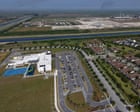
The modern digital economy runs on immense physical weight. When a multi-billion-dollar technology corporation designs a facility to power artificial intelligence models, it looks for cheap land, relaxed regulatory hurdles, and massive utility access. Increasingly, those vectors point straight toward the fragile perimeter of the Florida Everglades.
Proposals like the heavily debated Project Tango in Palm Beach County have brought a fundamental collision to light. Tech developers want to plant massive hyperscale campuses right at the edge of a six-billion-dollar wetland restoration zone. The resulting battle lines reveal an urgent clash between the insatiable power demands of machine learning infrastructure and the precarious hydrology of America's most unique subtropical wilderness.
The Scale of the Energy Appetite
Traditional server farms used to occupy quiet office parks. Artificial intelligence infrastructure operates on an entirely different magnitude. Modern graphics processing units crunch trillions of parameters simultaneously, pulling continuous currents of electricity that rival small industrial cities.
A single hyperscale complex demanding six hundred megawatts requires power generation equivalent to what is consumed by hundreds of thousands of homes. To satisfy this load, developers tether their blueprints directly to regional utilities. In South Florida, that often means leaning on massive natural gas plants situated dangerously close to protected ecological zones.
The grid upgrades required to feed these silicon behemoths do not appear out of thin air. Transmission corridors must expand, substations must multiply, and baseline emissions climb. Citizens living blocks away from these proposed sites face the prospect of higher utility bills and degraded air quality, all to service servers running large language models thousands of miles away.
Thermal Dynamics and Water Security
Electricity turns into heat. Dissipating that heat requires millions of gallons of cooling water every day. While developers frequently point to closed-loop or recirculating designs on paper, the physical reality of keeping thousands of densely packed server racks from melting remains resource-intensive.
The Everglades watershed operates like a complex, fragile spiderweb rather than a simple drainage ditch. Decades of engineering went into plumbing the region to restore natural sheet flow and prevent catastrophic dry-season drops. Introducing massive artificial thermal loads and industrial footprints into this equation creates multi-layered hazards.
When warm water enters a strained aquatic system, it changes the fundamental chemistry. Lake Okeechobee and its surrounding canals already battle periodic outbreaks of toxic blue-green algae. These cyanobacteria blooms produce harmful microcystins that choke aquatic life and trigger public health warnings. Pumping additional warmth or industrial discharge near these basins risks aggravating conditions that state environmental agencies have spent generations trying to fix.
Furthermore, local residents in adjacent rural communities often rely on private shallow wells rather than municipal water lines. The specter of an industrial sinkhole draining or contaminating the local aquifer transforms a theoretical zoning debate into an existential survival issue for families living down the canal.
The Employment Mirage
Proponents of rapid digital expansion lean heavily on promises of economic vitality. Construction phases inject millions of dollars into local economies, hiring hundreds of trade workers to lay concrete, pull cables, and erect steel frames.
Once the servers are online, however, the economic footprint shifts dramatically. Hyperscale installations are heavily automated. A facility spanning a million square feet might operate with a permanent staff numbering in the dozens rather than the hundreds.
Communities trade away precious acres of open land, absorb permanent strains on their water tables, and accept the low-frequency drone of industrial cooling fans for a handful of long-term operational positions. The trade-off forces local governing boards to ask whether short-term tax revenue justifies long-term ecological vulnerability.
Across the state, local governments are pushing back. Moratoriums and outright rejections are becoming common responses as municipal leaders realize that data center blueprints drafted in corporate boardrooms rarely account for local environmental realities. The push for digital dominance crashes hard against the physical limits of geography.
The concrete gets poured, the servers hum, and the water keeps evaporating.